
Melting strip aluminum coil aluminum foil Aluminum
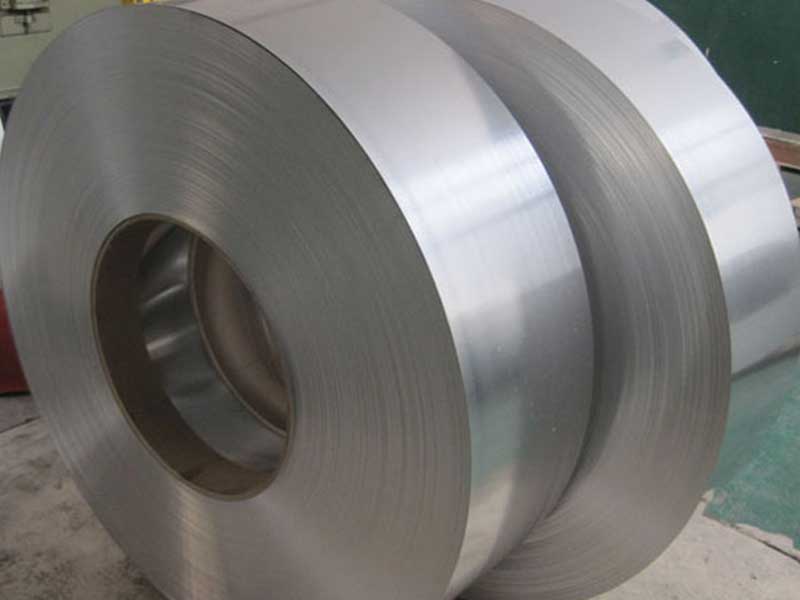
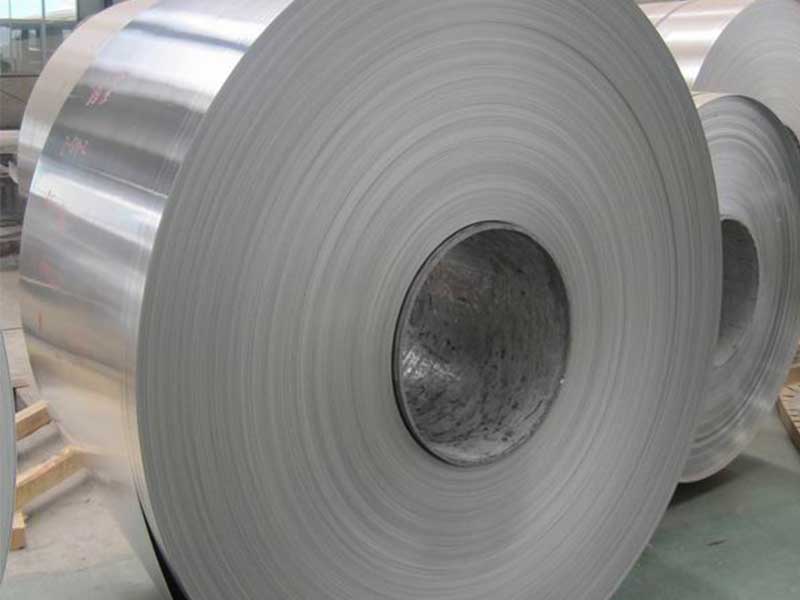
Melting strip aluminum coil and aluminum foil are engineered aluminum flat-rolled products designed for fast, clean melting, stable chemistry, and high processing efficiency. In aluminum plants and downstream casting facilities, these products are commonly used as charge material, alloying carriers, deoxidation/trim additions, and thermal-efficient feedstock for remelt operations. Their value comes from a combination of controlled thickness, high surface quality, predictable composition, and excellent melt yield-all of which translate into lower energy cost, reduced dross, and tighter control of final alloy properties.
1) What is "melting strip" aluminum coil/foil?
Melting strip refers to aluminum produced in coil or foil form (thin gauge, continuous length) intended primarily for rapid melting and efficient charging. Compared with bulky ingot or thick scrap, melting strip/foil offers:
- High surface area-to-mass ratio → quicker heat absorption and melt-down
- Uniform geometry → stable feeding, easier automated charging
- Traceable chemistry → more consistent final alloy control
- Cleaner feedstock options → reduced inclusions, lower dross generation
Depending on the application, melting strip may be supplied in purity grades (1xxx) or common wrought alloys (3xxx/5xxx) as well as casting-oriented chemistries agreed by specification.
2) features and customer benefits
Performance highlights (what users notice immediately)
- Fast melt-down & better furnace productivity: Thin gauge material melts quicker, shortening holding time and improving throughput.
- High melt yield: Cleaner surfaces and controlled oxide levels reduce dross, improving metal recovery.
- Tight chemistry control: Predictable composition reduces corrective alloying and quality rework.
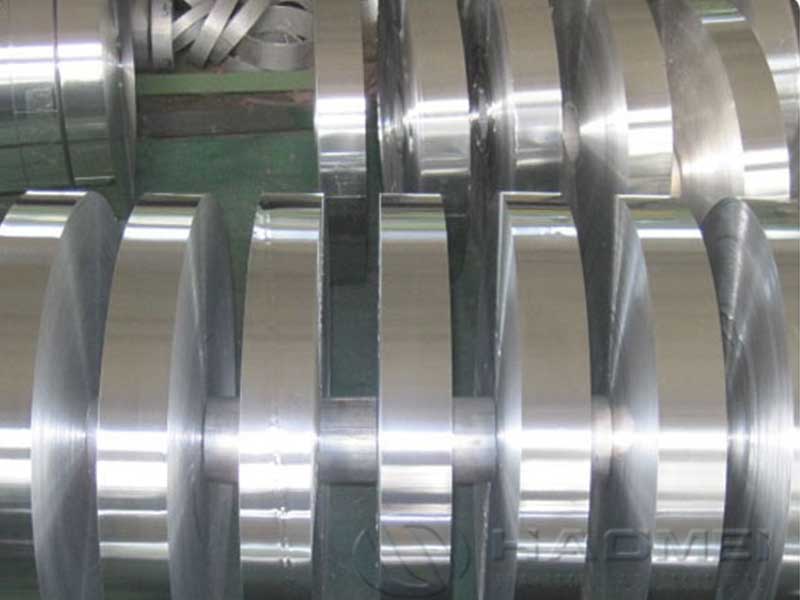
- Stable feeding & handling: Coils can be slit, chopped, or fed continuously-ideal for automated systems.
- Flexible formats: Coil, strip, or foil cut-to-length packages fit different charging practices.
Practical benefits (what shows in cost and quality)
- Lower specific energy consumption (kWh/ton) through faster melt cycles
- Reduced flux consumption and skim losses
- Improved consistency of downstream casting (fewer chemistry swings, fewer inclusion-related defects)
3) Typical alloy options (chemical composition)
Below are representative compositions frequently requested for melting strip/foil. Actual supply should be confirmed by purchase specification and test certificate.
Chemical composition (typical, wt.%)
| Alloy | Si | Fe | Cu | Mn | Mg | Zn | Ti | Al |
|---|---|---|---|---|---|---|---|---|
| 1050 (1xxx) | ≤0.25 | ≤0.40 | ≤0.05 | ≤0.05 | ≤0.05 | ≤0.05 | ≤0.03 | Balance |
| 1060 (1xxx) | ≤0.25 | ≤0.35 | ≤0.05 | ≤0.03 | ≤0.03 | ≤0.05 | ≤0.03 | Balance |
| 3003 (3xxx) | ≤0.60 | ≤0.70 | 0.05–0.20 | 1.0–1.5 | - | ≤0.10 | ≤0.10 | Balance |
| 3004 (3xxx) | ≤0.30 | ≤0.70 | ≤0.25 | 1.0–1.5 | 0.8–1.3 | ≤0.25 | ≤0.10 | Balance |
| 5052 (5xxx) | ≤0.25 | ≤0.40 | ≤0.10 | ≤0.10 | 2.2–2.8 | ≤0.10 | ≤0.10 | Balance |
Selection guidance
- 1xxx (1050/1060): best for clean remelt, dilution, and general charge when you want minimal alloying impact.
- 3xxx (3003/3004): useful where Mn is desired and controlled.
- 5xxx (5052): suited for Mg-bearing melts (note: Mg oxidation requires good furnace practice).
4) Technical specifications (product form and tolerances)
Melting strip is typically optimized for melt efficiency and handling safety, not for final forming appearance. Still, coil/foil quality matters because surface contamination directly affects dross and melt cleanliness.
Typical technical specifications
| Parameter | Typical range / option | Notes |
|---|---|---|
| Form | Coil / slit coil / cut sheet / chopped strip | For manual or automated charging |
| Thickness | 0.02–3.00 mm | Foil: ~0.02–0.20 mm; strip: ~0.20–3.00 mm |
| Width | 20–1600 mm | Slit widths available for feeders |
| Coil ID | 150 / 300 / 400 / 500 mm | Select based on decoiler |
| Coil OD | Up to ~1200–1800 mm | Depends on thickness and handling limits |
| Temper | O / H14 / H16 / H18 (as specified) | For handling stiffness and flatness |
| Surface | Mill finish (standard), degreased optional | Cleaner surface → lower smoke/dross |
| Edge | Slit edge / trimmed edge | Trimmed edges reduce loose burrs |
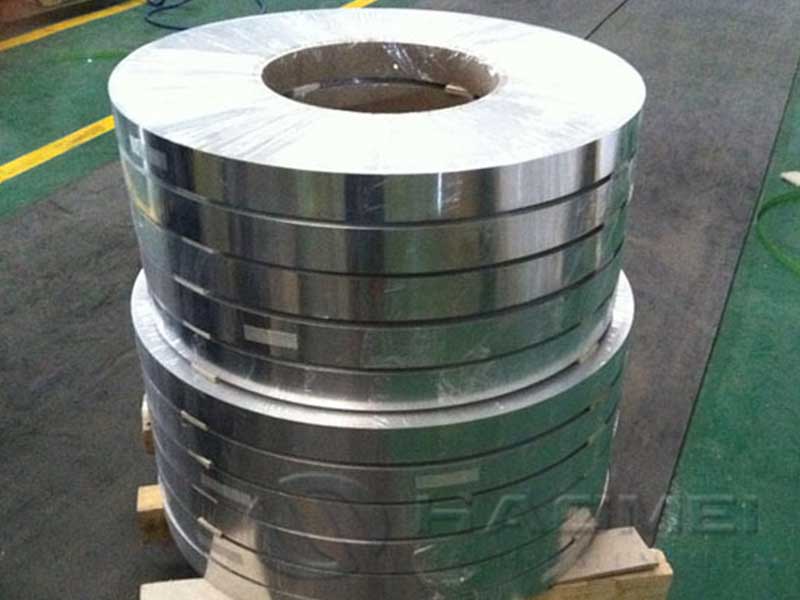
| Packaging | Eye-to-wall/eye-to-sky, strapped, moisture barrier optional | Helps prevent corrosion/water pickup |
Quality options that matter for melting
- Low-oil / degreased supply (reduces furnace smoke and hydrocarbon pickup)
- Controlled moisture and clean packaging (minimizes steam explosions and hydrogen porosity risk)
- Low inclusion / low particulate surface (improves melt cleanliness)
5) Mechanical & physical properties (useful for handling and feeding)
Even when the end goal is melting, mechanical properties affect coil rigidity, feeding stability, and operator safety.
Typical mechanical properties (indicative)
| Alloy / temper | Tensile strength (MPa) | Yield strength (MPa) | Elongation (%) |
|---|---|---|---|
| 1050-O | 60–95 | 20–35 | 20–35 |
| 1050-H18 | 110–145 | 95–125 | 1–4 |
| 3003-H14 | 130–170 | 110–150 | 3–10 |
| 5052-H32 | 210–260 | 140–200 | 8–15 |
physical properties (Al base)
| Property | Typical value |
|---|---|
| Density | ~2.70 g/cm³ |
| Thermal conductivity | ~205–235 W/m·K (pure Al higher) |
| Solidus / liquidus (approx.) | ~585–660°C (depends on alloy) |
| Specific heat (approx.) | ~0.90 kJ/kg·K |
6) Melting performance metrics (what drives ROI)
Typical melting-related performance (process-dependent)
| Metric | What "good" looks like | Why it matters |
|---|---|---|
| Melt-down time | Reduced vs. thick charge | Higher furnace throughput |
| Dross generation | Lower with clean, dry surface | More recovered metal |
| Metal yield | Higher and more stable | Direct cost improvement |
| Chemistry stability | Tight deviation heat-to-heat | Less re-alloying, fewer rejects |
| Hydrogen pickup risk | Lower with dry, low-oil material | Better casting quality |
Operational note: Thin foil melts extremely fast but can oxidize quickly if charged improperly. Many plants use bundled/chopped strip, submerged charging, or controlled feed rates to maximize recovery.
7) Applications and potential use cases
Common use cases
- Foundry and remelt charge material: Rapid melt feedstock for secondary aluminum operations.
- Alloy trimming and dilution: 1xxx coils for adjusting chemistry without introducing unknown elements.
- Automated furnace feeding systems: Slit strip for continuous, measured charging-ideal for rotary furnaces and reverberatory furnaces with feed ports.
- Deoxidation / metallurgical adjustments (process-specific): Certain operations use controlled aluminum additions for melt treatment steps.
- Caster support operations: Clean, traceable aluminum for maintaining steady casting conditions.
Industry examples
- Automotive castings: stable chemistry feed → fewer porosity and inclusion defects
- Packaging alloy remelt: consistent Mn/Mg control when using 3xxx/5xxx strip
- Electrical/conductive applications: high-purity 1xxx helps maintain conductivity targets
8) How to choose the right melting strip/foil
Quick selection table
| Customer priority | Recommended approach |
|---|---|
| Maximum melt cleanliness | 1050/1060, degreased, dry packaging |
| Fastest melt-down | Thin strip/foil; consider chopped/bundled format |
| Chemistry contribution needed | 3003/3004 (Mn) or 5052 (Mg) as specified |
| Automated feeding | Slit coil with stable temper (e.g., H14/H16) and controlled coil geometry |
| Lowest dross | Clean surface + optimized charge method (submerged/covered charging) |
Melting strip aluminum coil and aluminum foil are purpose-built to make remelt operations faster, cleaner, and more controllable. By combining predictable alloy chemistry, thin-gauge melt efficiency, and packaging/format options tailored to furnace charging, these products help customers reduce melt losses, stabilize production quality, and improve overall energy and cost performance.
https://www.al-alloy.com/a/melting-strip-aluminum-coil-aluminum-foil-aluminum.html