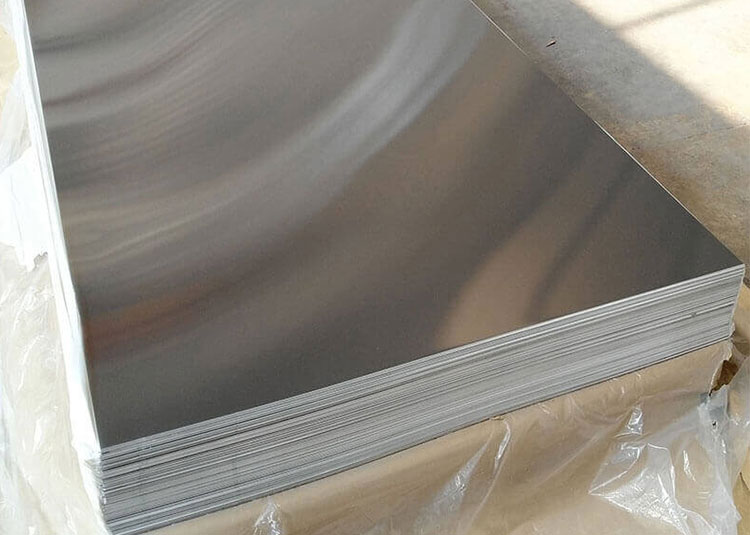

40mm Thickness 2024 T3 Aluminum Plate
A 40mm thickness 2024 T3 aluminum plate sits in an interesting place in the world of engineering materials. It is not a thin sheet chosen for easy forming, and it is not a massive forging meant only for brute structural duty. It is a plate that often represents a deliberate decision: the designer wants high strength, good fatigue performance, reliable machinability, and a material that has already proven itself in aerospace, transportation, tooling, and precision mechanical components. In that sense, 40mm 2024 T3 plate is less of a commodity and more of a statement about performance priorities.
What makes this plate so distinctive is the alloy behind it. Aluminum 2024 belongs to the Al-Cu-Mg series, a family well known for combining low weight with relatively high mechanical strength. Compared with general-purpose aluminum alloys, 2024 offers a much stronger response where structural loads matter. The T3 temper further shapes its identity. T3 means the material has been solution heat-treated, cold worked, and then naturally aged. This temper typically gives a valuable balance of strength, toughness, and dimensional stability, which is why it appears so often in aircraft structures and demanding machined parts.
At 40mm thickness, however, the conversation becomes more practical. A plate of this size is substantial enough that buyers and engineers start paying close attention to through-thickness properties, residual stress, flatness, ultrasonic quality, and machining response after stock removal. Thin material can sometimes hide metallurgical subtleties. Thick plate cannot. That is why choosing a 40mm 2024 T3 aluminum plate is as much about supply quality and processing control as it is about alloy designation.
From a chemical standpoint, 2024 is built around copper as the primary alloying element, supported by magnesium and manganese. These additions are responsible for the alloy's characteristic strength and fatigue resistance.
| Element | Typical Content (%) |
|---|---|
| Copper, Cu | 3.8 – 4.9 |
| Magnesium, Mg | 1.2 – 1.8 |
| Manganese, Mn | 0.3 – 0.9 |
| Iron, Fe | 0.50 max |
| Silicon, Si | 0.50 max |
| Zinc, Zn | 0.25 max |
| Titanium, Ti | 0.15 max |
| Chromium, Cr | 0.10 max |
| Other, each | 0.05 max |
| Other, total | 0.15 max |
| Aluminum, Al | Remainder |
These values explain much of the alloy's behavior. Copper raises strength significantly, but it also reduces corrosion resistance compared with alloys such as 5052 or 6061. This is one of the defining trade-offs of 2024. It is a material selected for mechanical performance first, with corrosion management handled through design, coating, cladding, sealing, or controlled service environment.
For a 40mm thick plate in T3 temper, the mechanical properties can vary depending on specification, plate processing route, and test direction, but typical values are often in the following range:
| Property | Typical Value |
|---|---|
| Density | 2.78 g/cm³ |
| Tensile Strength | 430 – 470 MPa |
| Yield Strength | 280 – 325 MPa |
| Elongation | 10 – 16% |
| Brinell Hardness | 120 – 135 HB |
| Elastic Modulus | 73 GPa |
| Thermal Conductivity | 120 – 140 W/m·K |
| Electrical Conductivity | approx. 30% IACS |
| Melting Range | 500 – 638°C |
In practical terms, these numbers tell a useful story. The plate is strong enough to replace heavier steel sections in some applications where weight reduction matters, yet still machinable enough for complex components. It can handle repeated loading better than many common aluminum grades, which is why it has long been associated with wing structures, fuselage frames, bulkheads, and high-performance fittings. In industrial settings, the same strengths make it suitable for jigs, molds, backing plates, machine parts, transport brackets, and structural members where every kilogram counts.
Still, 40mm thickness introduces a design mood that is different from using 2024 in thinner gauges. When the section gets thicker, machining strategy becomes critical. Large pockets, deep cavity milling, and asymmetrical material removal can release internal stresses and affect flatness. Buyers who understand this often request stress-relieved plate where available, or they plan machining sequences to remove material in balanced steps. This is not a flaw of the alloy. It is simply the reality of working with a high-strength heat-treated plate in a substantial thickness.
Another point worth emphasizing is corrosion behavior. Bare 2024 T3 is not the first choice for marine exposure or chemically aggressive outdoor service without protection. The copper that gives it strength also makes it more vulnerable to atmospheric and galvanic corrosion. In real-world use, this means surface treatment is often part of the material strategy rather than an afterthought. Anodizing, conversion coating, primer systems, and sealing methods can all improve service life. In aerospace supply chains, alclad variants are also common for improved surface corrosion resistance, though plate selection depends on final part geometry and machining allowance.
When evaluating a supplier for 40mm 2024 T3 aluminum plate, standards matter. Common product and quality references include ASTM B209 for aluminum and aluminum-alloy sheet and plate, AMS aerospace material standards such as AMS 4037 or related specifications depending on form and temper, and EN 485 or EN 573 references for European supply contexts. For critical structural use, many customers also request mill test certificates, mechanical test reports, ultrasonic inspection, and traceability by heat number. For a thick plate, these documents are not administrative extras. They are part of the material itself, because quality is only meaningful when it can be verified.
The T3 temper deserves a final look because it shapes the working personality of this plate. T3 is not simply "hard" or "strong." It offers a useful middle ground. It is stronger than annealed condition, but it still retains enough workability for precision machining and some limited fabrication tasks. In many workshops, 2024 T3 is appreciated because it cuts cleanly, forms chips predictably, and can hold tight tolerances with a good surface finish. That makes it attractive not only to aerospace manufacturers but also to performance-focused machine shops that need consistency from one plate to the next.
Welding, however, is not where 2024 T3 shines. Like many high-copper aluminum alloys, its weldability is poor, and fusion welding can significantly reduce mechanical properties or create cracking concerns. In applications requiring assembly, designers often prefer mechanical fastening, riveting, or specialized joining methods. This limitation is well known, and in many of the alloy's classic applications, it is not a problem because the entire design philosophy already leans toward bolted or riveted structures.
That is why 40mm 2024 T3 plate continues to hold its place. It is not fashionable material. It is proven material. And in engineering, proven often wins.
https://www.al-alloy.com/a/40mm-thickness-2024-t3-aluminum-plate.html