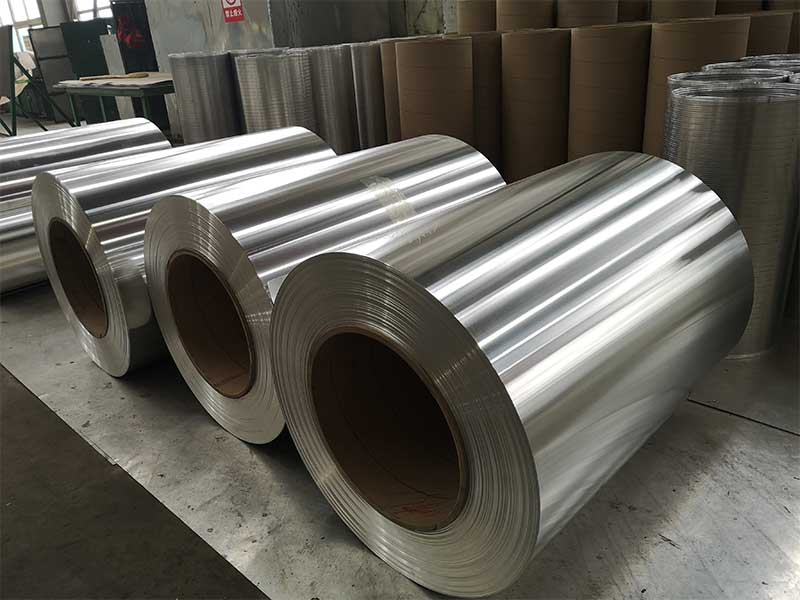

5052 Aluminum Coil Jumbo Roll Sheet
There is a quiet kind of strength in 5052 aluminum coil jumbo roll sheet. It does not announce itself with the prestige of aerospace alloys or the hardness of high-strength structural plate. Instead, it earns its place in factories, workshops, and fabrication lines by doing something more valuable: it performs reliably, again and again, in environments where formability, corrosion resistance, and practical durability matter more than spectacle.
Seen from the perspective of a manufacturer, 5052 is less a raw material and more a dependable working partner. It bends willingly, resists harsh moisture, accepts finishing well, and keeps production efficient. In jumbo coil form, that practicality becomes even more pronounced. Large rolls support continuous stamping, slitting, profiling, and panel production, reducing changeover time and helping downstream users maintain stable quality across long runs.
At its core, 5052 aluminum belongs to the Al-Mg series, with magnesium as the principal alloying element. This composition gives the alloy a notably attractive balance of properties. It is stronger than many commercially pure aluminum grades, especially 1xxx series products, while still retaining excellent workability. It is especially respected in applications exposed to marine atmosphere, industrial humidity, fuel, detergent environments, and general outdoor weathering.
Why 5052 stands out in coil jumbo roll sheet form
The phrase "jumbo roll sheet" may sound contradictory at first, but in industrial language it reflects a very real supply format. The material is produced as a wide rolled coil, often in substantial parent coil weights, then fed into processes that convert it into sheets, blanks, strips, panels, or formed products. For buyers, this means flexibility. A single jumbo coil can support multiple finished dimensions with tighter process control and lower handling losses.
This format is particularly valuable where surface consistency is important. Roofing panels, appliance liners, transportation panels, sign boards, enclosure skins, and tank components all benefit from uniform mechanical properties and stable thickness distribution across the coil length. With 5052, manufacturers often find that they can balance production speed with formability more easily than with harder, less forgiving alloys.
Another reason for its popularity is its response to fabrication. 5052 aluminum coil performs well in bending, rolling, spinning, and moderate drawing operations. It also shows excellent weldability, especially with common arc welding methods. That combination makes it a natural choice for products that begin as flat rolled stock but end their life as curved, folded, riveted, or welded assemblies.
Chemical composition and alloy character
The personality of 5052 comes from chemistry. Magnesium contributes strength and corrosion resistance, while chromium helps improve structural stability and resistance to stress-related changes.
Below is a typical chemical composition table for AA 5052 aluminum alloy, generally aligned with common international specifications such as ASTM B209, EN 485, and GB/T 3880, depending on delivery region and customer agreement.
| Element | Content (%) |
|---|---|
| Aluminum (Al) | Balance |
| Magnesium (Mg) | 2.2–2.8 |
| Chromium (Cr) | 0.15–0.35 |
| Silicon (Si) | 0.25 max |
| Iron (Fe) | 0.40 max |
| Copper (Cu) | 0.10 max |
| Manganese (Mn) | 0.10 max |
| Zinc (Zn) | 0.10 max |
| Others, each | 0.05 max |
| Others, total | 0.15 max |
This chemistry makes 5052 especially suitable for service in corrosive conditions. It is often chosen where the environment is too demanding for ordinary low-alloy sheet, but where very high strength is not the main design target.
Mechanical properties and temper conditions
A part of specifying 5052 jumbo coil sheet is selecting the right temper. Temper changes how the material behaves during bending, forming, and in-service loading. Soft tempers favor shaping. Harder tempers offer better tensile strength and dent resistance.
Typical properties are shown below. Actual values vary with thickness, producer process route, and testing standard.
| Temper | Tensile Strength (MPa) | Yield Strength (MPa) | Elongation (%) | Typical Character |
|---|---|---|---|---|
| O | 170–215 | 65–90 | 12–25 | Maximum formability |
| H32 | 210–260 | 130–180 | 7–15 | Balanced strength and formability |
| H34 | 230–280 | 160–210 | 5–12 | Higher hardness, better rigidity |
| H36 | 250–300 | 190–240 | 4–10 | Stronger, less formable |
| H38 | 270–320 | 220–260 | 3–8 | High work-hardened strength |
Among these, 5052-H32 is often the most commercially popular. It offers a sensible middle ground: good strength, good corrosion resistance, and enough ductility for many routine fabrication operations. 5052-O is preferred where severe forming is required, while H34 and higher tempers are used where panel stiffness and surface durability are more important than deep shaping.
Common dimensions and supply parameters
In jumbo coil applications, users typically care about width range, thickness tolerance, inner diameter, outer diameter, coil weight, and surface class. Typical commercial supply parameters may include:
| Parameter | Typical Range |
|---|---|
| Thickness | 0.20 mm – 6.00 mm |
| Width | 20 mm – 2650 mm |
| Coil inner diameter | 150 mm, 300 mm, 405 mm, 505 mm, 508 mm |
| Coil outer diameter | Up to customer and transport limit |
| Coil weight | From small slit coils to several tons per jumbo coil |
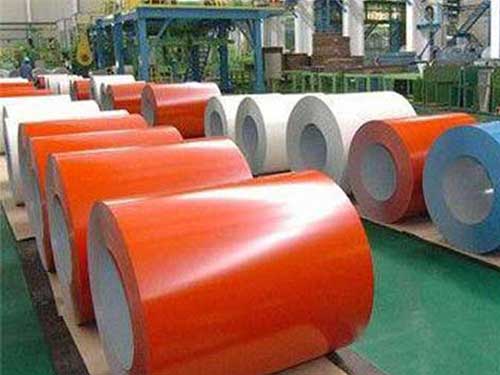
| Surface finish | Mill finish, bright finish, anodizing quality, coated base stock |
Thickness and flatness control are particularly important when the coil will later be cut into sheet for CNC punching, laser cutting, or automated bending lines. For decorative and visible applications, buyers may also request tighter inspection for oil marks, roller impressions, edge condition, and color consistency after anodizing or coating.
Standards and implementation references
A serious supply program for 5052 aluminum coil jumbo roll sheet usually follows recognized standards. The exact reference depends on destination market and end use, but the most common include:
ASTM B209 for aluminum and aluminum-alloy sheet and plate
EN 485 for European wrought aluminum sheet, strip, and plate requirements
GB/T 3880 for aluminum and aluminum alloy plates, sheets, and strips in China
JIS H4000 / JIS H4160 in Japanese market-related specifications
AMS specifications where industrial or transport projects require tighter controls
In addition to alloy and temper, buyers often define requirements for mechanical testing, dimensional tolerance, surface quality, packing method, and traceability. For export business, moisture-proof packing, eye-to-wall or eye-to-sky orientation, and fumigation-compliant pallets can be just as important as the metal itself.
Application fields where 5052 truly makes sense
5052 is often described as a marine-grade style alloy, and that is fair, but it would be too narrow to leave it there. Its real value appears in products that must survive ordinary abuse with minimal drama. Fuel tanks, truck body panels, cabinet skins, pressure vessel components, road signs, curtain wall backing, electronic chassis, insulation jacketing, and household appliance parts all benefit from its stable behavior.
In roofing and cladding, 5052 offers a practical mix of light weight and weather resistance. In transportation, it helps reduce mass while maintaining acceptable toughness. In chemical and food-related environments, its corrosion resistance is a major advantage, especially when compared with coated steel that may fail once the protective layer is damaged.
Fabricators also appreciate that 5052 generally machines better than softer pure aluminum while still being much easier to form than many high-strength grades. It is not the answer to every problem, but it often becomes the economical answer to enough problems that purchasing managers keep coming back to it.
Processing considerations from a practical viewpoint
From the shop-floor perspective, choosing 5052 is often about reducing surprises. It bends more predictably than many harder alloys. It welds without excessive complication. It performs well in anodizing and can serve as an excellent substrate for painting or coating when surface preparation is done correctly.
That said, temper selection must match the process. If the design includes tight-radius bends or deep forming, a softer temper should be considered. If the end product needs panel stiffness and surface dent resistance, a harder temper may be more appropriate. Coil users should also account for springback, lubrication, and tool design, especially in high-speed press lines.
Storage matters too. Even corrosion-resistant aluminum benefits from dry, ventilated handling conditions. Improper storage can lead to water staining, surface oxidation, or mechanical damage during rewinding and uncoiling. A good jumbo coil deserves careful packaging and controlled warehouse practice.
Final thoughts
What makes 5052 aluminum coil jumbo roll sheet special is not that it dominates every engineering category. It does not. Its strength is subtler. It succeeds because it lives at the intersection of manufacturability, corrosion resistance, moderate strength, and commercial efficiency. In a production world that values consistency as much as performance, that balance is powerful.
For buyers, 5052 is often the alloy that lowers risk. For processors, it is the coil that keeps lines moving. For end users, it becomes part of products that remain clean, stable, and serviceable long after installation. That is why 5052 continues to hold its ground in modern industry. It is not merely aluminum in a roll. It is a material designed for work, and work, in the end, is where real value is proven.
https://www.al-alloy.com/a/5052-aluminum-coil-jumbo-roll-sheet.html