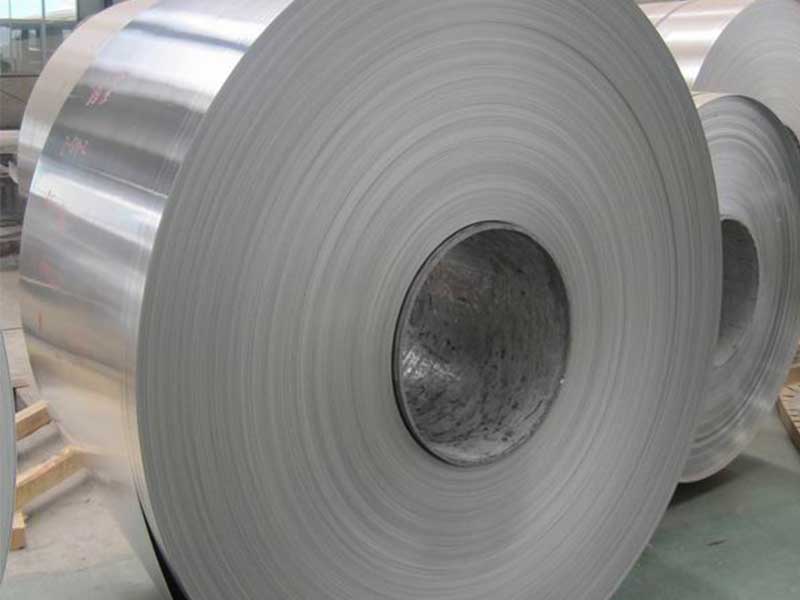

5005 Aluminium Coil Strip
In the world of rolled aluminum products, 5005 aluminium coil strip often lives in the shadow of louder, more frequently discussed alloys. It is not the strongest, not the hardest, and not the most exotic. Yet that is exactly where its value begins. 5005 is a material chosen not for dramatic specifications alone, but for balance. It serves designers, fabricators, and manufacturers who need a clean surface, reliable forming behavior, moderate strength, and dependable corrosion resistance in one practical package. From architectural panels to appliance trim, from anodized decorative components to general sheet-metal fabrication, 5005 aluminium coil strip proves that a well-balanced alloy can solve more real production problems than a highly specialized one.
A distinctive way to understand 5005 is to see it as an alloy built for appearance under working conditions. Many industrial metals perform well structurally, but fewer maintain visual consistency after bending, cutting, finishing, and exposure to the environment. 5005 belongs to the Al-Mg family, with magnesium as the principal alloying element. This gives the alloy a combination of moderate mechanical strength and very good resistance to atmospheric corrosion. More importantly for many users, it responds especially well to anodizing, often producing a finish that is more uniform and attractive than some alternative commercial alloys. That makes it particularly valuable when the surface is not merely functional, but part of the product itself.
From a metallurgical perspective, 5005 aluminium coil strip is a non-heat-treatable alloy. Its strength is developed mainly through cold working rather than solution heat treatment and aging. This has practical implications on the shop floor. Instead of relying on complex thermal cycles, manufacturers can select tempers that match the desired balance of formability and rigidity. Softer tempers suit deep bending, shaping, and profile forming, while harder tempers offer better resistance to denting and deformation in service. This simple temper-driven approach often reduces production uncertainty, especially in high-volume coil processing lines.
Typical chemical composition values are shown below. Exact limits may vary slightly depending on the governing standard and supplier specification, but the following range reflects the commonly accepted composition profile for AA 5005.
| Element | Content (%) |
|---|---|
| Aluminum, Al | Remainder |
| Magnesium, Mg | 0.50–1.10 |
| Iron, Fe | ≤ 0.70 |
| Silicon, Si | ≤ 0.30 |
| Copper, Cu | ≤ 0.20 |
| Manganese, Mn | ≤ 0.20 |
| Chromium, Cr | ≤ 0.10 |
| Zinc, Zn | ≤ 0.25 |
| Others, each | ≤ 0.05 |
| Others, total | ≤ 0.15 |
This composition explains much of the alloy's personality. The magnesium content is high enough to improve corrosion resistance and mechanical performance compared with commercially pure aluminum grades, but not so high that the material becomes difficult to process or visually unstable in finishing. The relatively controlled impurity limits also support good surface quality, which is critical for decorative and anodized uses.
Mechanical properties depend strongly on temper and product thickness. For coil strip, common tempers include O, H14, H16, H18, H24, and H34. The annealed O temper offers the highest ductility, making it suitable for severe forming operations. H14 and H24 are popular compromise tempers for general fabrication, combining moderate strength with workable bendability. H18 is harder and stronger, often selected where stiffness and surface retention matter more than formability.
Representative mechanical properties are typically in the following range:
| Temper | Tensile Strength (MPa) | Yield Strength (MPa) | Elongation (%) |
|---|---|---|---|
| O | 110–145 | 35–65 | 20–30 |
| H14 / H24 | 145–185 | 115–150 | 6–12 |
| H16 / H26 | 165–205 | 130–165 | 4–10 |
| H18 / H28 | 180–220 | 145–185 | 3–8 |
These values are useful not only for design, but also for tooling decisions. A processor choosing between 5005-O and 5005-H14 for a visible trim component is not simply selecting strength. They are choosing how the material will spring back during forming, how it will hold edge quality after slitting, and how much risk there is of surface marking in downstream handling.
Standard coil strip dimensions can vary widely according to application. Typical thickness ranges run from about 0.2 mm to 6.0 mm, with widths commonly up to 1600 mm or more depending on rolling capability. For strip applications, narrower slit widths are often supplied for automated stamping, roll forming, and trim production. Surface options may include mill finish, brushed finish, chemically cleaned surface, or pre-treatment for coating and anodizing.
In terms of implementation standards, 5005 aluminium coil strip is generally supplied in accordance with internationally recognized specifications such as ASTM B209 for aluminum and aluminum-alloy sheet and plate, EN 485 for wrought aluminum and aluminum alloys sheet, strip and plate, and related temper designations under EN 515 or ASTM temper conventions. For anodizing applications, buyers often request tighter internal controls on color consistency, surface roughness, flatness, residual oil, and edge condition, because standard compliance alone may not guarantee decorative uniformity.
What truly distinguishes 5005 in application is its relationship with surface finishing. When anodized, it can develop a clear, elegant appearance suitable for curtain walls, ceiling systems, fascia panels, interior cladding, signage, and shopfront elements. In architecture, this matters because aluminum is frequently both structure and skin. A material like 5005 allows the exterior to remain visually refined while resisting weathering in urban and coastal atmospheres. For this reason, it is often preferred for anodized sheet where matching appearance across panels is more important than maximizing strength.
The alloy is also widely used in appliance and consumer-facing products. Decorative strips, control panel backings, housings, reflectors, and nameplate substrates benefit from its clean finish and good workability. In transportation-related interiors, it may appear in trim pieces, ceiling liners, or lightweight formed components where moderate strength and corrosion resistance are sufficient. Electrical and general industrial sectors also use 5005 for enclosures, covers, and fabricated parts that require reliable forming without demanding high structural load capacity.
One of the practical advantages of 5005 aluminium coil strip is processing stability. It can be slit, stamped, bent, and roll-formed with relatively low complication when the correct temper is chosen. Weldability is generally good, especially with appropriate filler selection for non-critical fabrication. Machinability is not its primary strength, but for sheet and strip applications this is rarely a limiting issue. More relevant is its excellent compatibility with modern fabrication routes such as laser cutting, CNC punching, adhesive bonding, and continuous coating lines.
There are, however, technical boundaries worth respecting. 5005 is not a substitute for higher-strength 5xxx alloys in demanding structural marine service, nor is it ideal where maximum hardness or wear resistance is required. Its value lies in the intersection of aesthetics, corrosion resistance, and manufacturability. If the project requires a flawless anodized face, consistent forming behavior, and moderate mechanical integrity, 5005 often becomes the more intelligent choice than a stronger but less visually cooperative alloy.
From a buyer's perspective, the most important specification questions are often not just alloy and thickness, but temper, intended finish, end-use environment, and acceptable surface quality level. A coil meant for hidden backing plates can tolerate conditions that would be unacceptable for exposed architectural anodizing. Likewise, a strip destined for tight-radius bending should not be purchased in a temper optimized only for stiffness. The best results come when alloy selection is connected directly to the visual and forming demands of the final product.
In that sense, 5005 aluminium coil strip is less a generic commodity and more a material for controlled outcomes. It rewards manufacturers who understand that metal performance includes what the eye sees, what the press line feels, and what the finished product must survive over time. It may not seek attention through extreme strength, but it earns long-term trust through consistency. And in many industries, consistency is the feature that matters most.