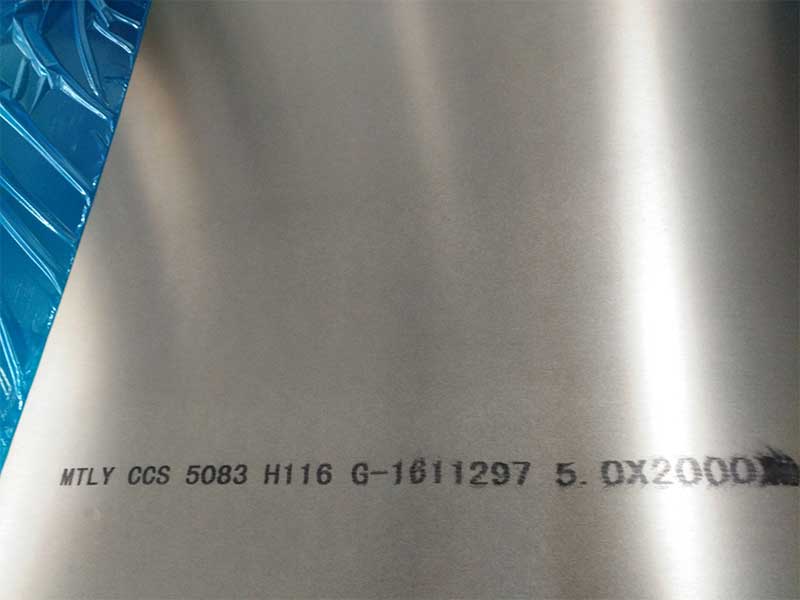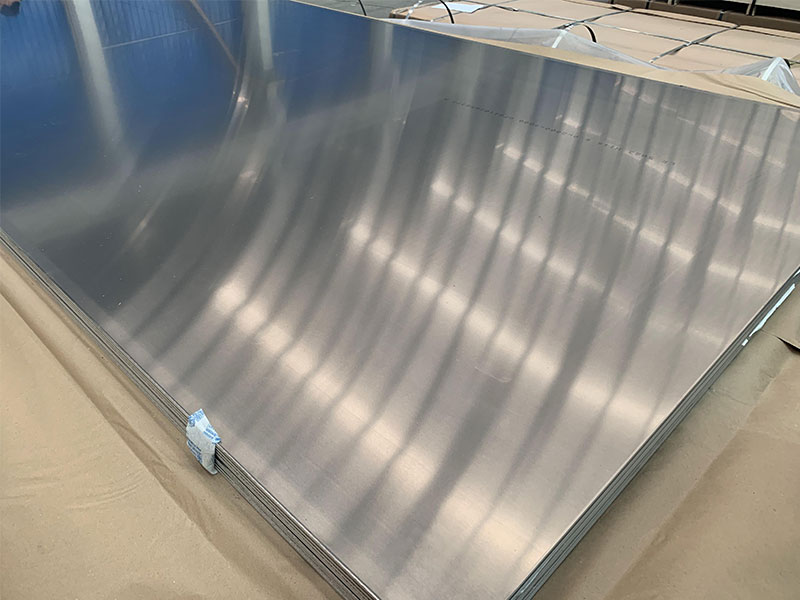

5005 5052 5083 5754 H321 H111 Aluminium Alloy Plate for Marine
5005 5052 5083 5754 H321 H111 Aluminium Alloy Plate for Marine: A Practical "Saltwater Tool" in Sheet Form
In marine engineering, the material choice is rarely about a single headline property. It is about how a plate behaves after months of salt spray, after welding heat has altered the microstructure, after cyclic wave loads have worked the joints, and after maintenance teams have cleaned, painted, and repaired it repeatedly. From this "real-sea-life" perspective, 5005, 5052, 5083, and 5754 aluminium alloy plates-especially in H321 and H111 tempers-are less like commodities and more like purpose-built tools for corrosion control, fabrication reliability, and long-term operational stability.
These alloys sit in the 5xxx series family, meaning magnesium is the primary alloying element. That single fact explains much of their marine success: magnesium strengthens aluminium through solid-solution strengthening while maintaining excellent corrosion resistance in seawater environments. The result is a plate that works with the shipbuilder's workflow, rather than fighting it.
Why these alloys are "marine-native" rather than merely corrosion-resistant
Marine environments are aggressive not only because of chloride ions, but because the structure is constantly wet-dry cycling and subject to crevice conditions. 5xxx aluminium alloys form a stable oxide film and resist general corrosion well. More importantly, they have a long track record of good performance when welded, which is often where marine structures fail first.
From a functional viewpoint, each alloy brings a slightly different "behavior profile":
5005 aluminium plate is often selected when formability, surface finish, and moderate corrosion resistance matter. It can be a smart choice for marine interior panels, decorative surfaces, and components that are not highly stressed but still face humid or salty atmospheres.
5052 aluminium plate is a classic "workhorse" for marine sheet metal. It balances strength, bendability, and corrosion resistance, making it popular for boat hull parts, tanks, brackets, and general fabrication where consistent shop results are crucial.
5083 aluminium plate is widely viewed as the high-performance option for structural marine plate, especially for hulls, decks, and superstructures. It is known for higher strength and excellent corrosion resistance in seawater, and it retains strong properties in welded assemblies relative to many alternatives.
5754 aluminium plate often sits between 5052 and 5083 in application logic, frequently chosen for vehicle and ship structures, flooring, and welded fabrications where toughness and corrosion resistance are needed alongside good forming.
H321 and H111 temper from the fabricator's viewpoint
Temper is not a footnote; it is how the alloy is "prepared" to behave in real fabrication.
H111 typically indicates a lightly strain-hardened condition, often applied to products that have been processed to improve mechanical properties slightly beyond annealed material, but without the higher residual stresses of heavier cold work. In marine fabrication, H111 is appreciated for its stable forming behavior and predictable welding response, particularly for thick plate where uniformity matters.
H321 is commonly associated with 5083 plate and is valued in marine service because it is strain-hardened and then stabilized. Stabilization helps reduce susceptibility to certain forms of degradation related to elevated-temperature exposure and long-term service, while keeping a strong, reliable strength level for structural parts. In practical terms, H321 is often chosen when designers want robust plate performance plus confidence that the material will remain stable through fabrication and service.
Typical parameters customers care about (and why they matter at sea)
Marine buyers usually evaluate aluminium plate with a "build-and-operate" mindset, not just a mill certificate mindset. Common practical parameter ranges include:
Thickness range often used in marine plate: about 3 mm to 50 mm, with hull and deck structures frequently in the mid-to-thick range depending on vessel type.
Width and length are commonly cut-to-size for nesting efficiency and reduced welding, since fewer joints generally mean fewer corrosion-prone areas.
Density across these alloys is about 2.66–2.70 g/cm³, which is a driver behind aluminium's marine adoption: weight reduction translates into speed, fuel efficiency, payload, and easier handling during construction and maintenance.
Thermal conductivity remains high compared with steels, which can be helpful for heat dissipation in certain marine structures but also means weld heat spreads quickly; this affects welding procedure settings and distortion control.
Implementation standards and marine acceptance
For buyers, implementation standards are the "language of trust" across suppliers, shipyards, and inspection teams. Marine aluminium plates are commonly supplied to standards such as:
ASTM B928 / B928M for high-magnesium aluminium-alloy sheet and plate for marine service
ASTM B209 for aluminium and aluminium-alloy sheet and plate (general specification widely referenced)
EN 485 for aluminium wrought products-sheet, strip, and plate (European mechanical property and dimensional requirements)
EN 10204 for inspection documents such as 3.1 certificates
Classification society expectations may apply depending on the project, with marine-grade verification often aligned to DNV, ABS, LR, BV, CCS, or similar rules when required by the vessel class or offshore structure specification.
These standards don't merely "tick boxes." They influence grain structure control, corrosion testing expectations, mechanical property consistency, and traceability-exactly what shipyards need to reduce build risk.
Functions and applications: thinking in terms of "jobs the plate must do"
In marine work, aluminium plate is rarely chosen for one reason. It is chosen because it can do several jobs simultaneously.
Hull and superstructure plating often favors 5083 H321 or 5083 H111 due to strength and seawater corrosion performance, especially in welded construction. The plate must resist impact, cyclic stress, and localized corrosion around weld zones.
Decks, floors, and ramps commonly use 5754 or 5052 where a combination of strength, toughness, and fabrication ease is needed, including forming and welding.
Marine tanks and fluid containment frequently use 5052 due to its strong resistance to many chemicals and excellent weldability. For certain aggressive media, material selection should be validated against the specific chemical environment, temperature, and cleaning processes.
Cabin panels, interior structures, and aesthetic components may use 5005 when surface quality and corrosion resistance in humid/salty air are key, without demanding maximum structural strength.
Chemical composition (typical limits) table
Below is a commonly referenced composition range overview. Exact limits vary slightly by standard and product form; mill test certificates should be used for final verification.
| Alloy | Mg (%) | Mn (%) | Cr (%) | Si (%) | Fe (%) | Cu (%) | Zn (%) | Ti (%) | Al |
|---|---|---|---|---|---|---|---|---|---|
| 5005 | 0.5–1.1 | ≤0.20 | ≤0.10 | ≤0.30 | ≤0.70 | ≤0.20 | ≤0.25 | ≤0.20 | Balance |
| 5052 | 2.2–2.8 | ≤0.10 | 0.15–0.35 | ≤0.25 | ≤0.40 | ≤0.10 | ≤0.10 | ≤0.15 | Balance |
| 5083 | 4.0–4.9 | 0.4–1.0 | 0.05–0.25 | ≤0.40 | ≤0.40 | ≤0.10 | ≤0.25 | ≤0.15 | Balance |
| 5754 | 2.6–3.6 | ≤0.50 | ≤0.30 | ≤0.40 | ≤0.40 | ≤0.10 | ≤0.20 | ≤0.15 | Balance |
From a marine-performance angle, the magnesium level is the "engine" of strength and corrosion behavior, while manganese and chromium are frequently used to tune structure and corrosion performance, especially in welded and stress-bearing conditions.
A distinctive way to choose: match the alloy to the "failure you want to avoid"
If your biggest risk is structural loading and long-term exposure at sea, 5083 in H321/H111 is often the first material engineers evaluate because it is built for that reality. If your risk is fabrication variability, bending, and mixed marine atmosphere exposure, 5052 and 5754 offer an attractive balance of strength and easy processing. If the risk is surface appearance plus moderate corrosion needs, 5005 can be a highly efficient choice.
In other words, these marine aluminium plates are not interchangeable. They are a toolkit. Selecting 5005, 5052, 5083, or 5754-paired with H321 or H111-lets designers and buyers "design out" common marine problems before the vessel ever touches water.
https://www.al-alloy.com/a/5005-5052-5083-5754-h321-h111-aluminium-alloy-plate-for-marine.html