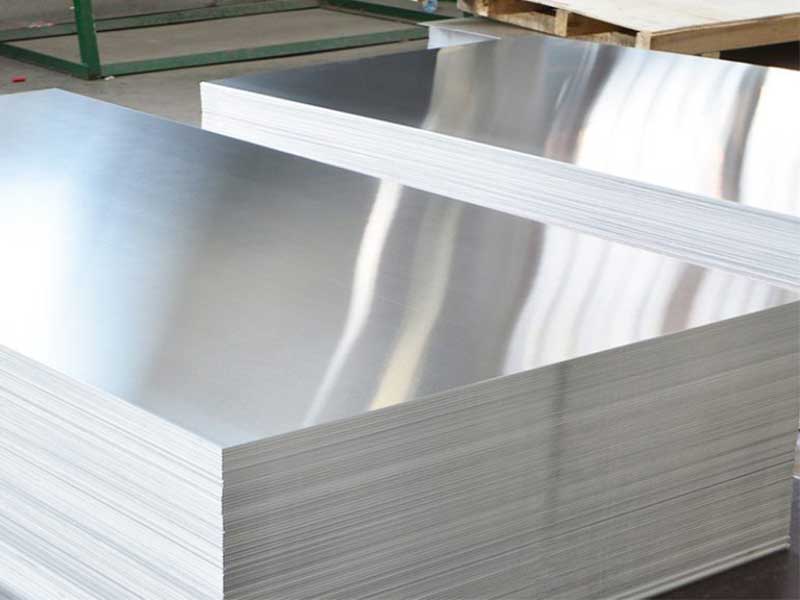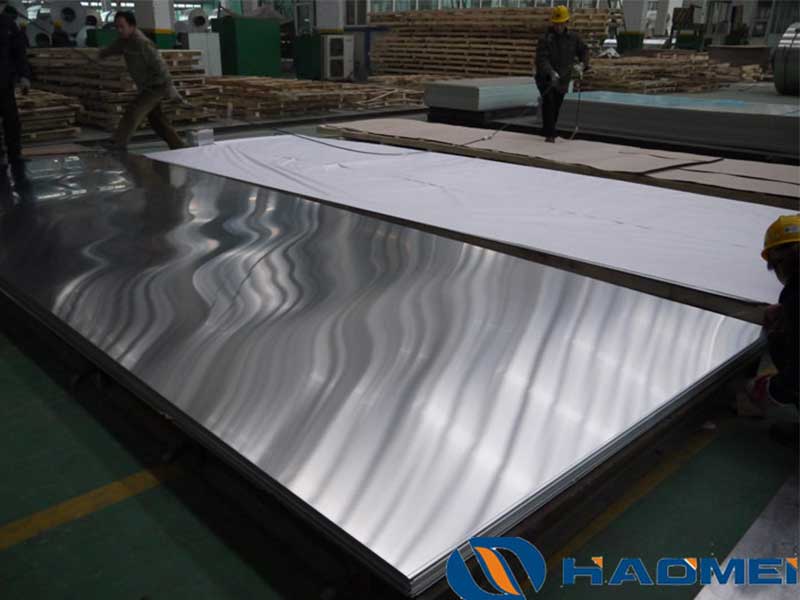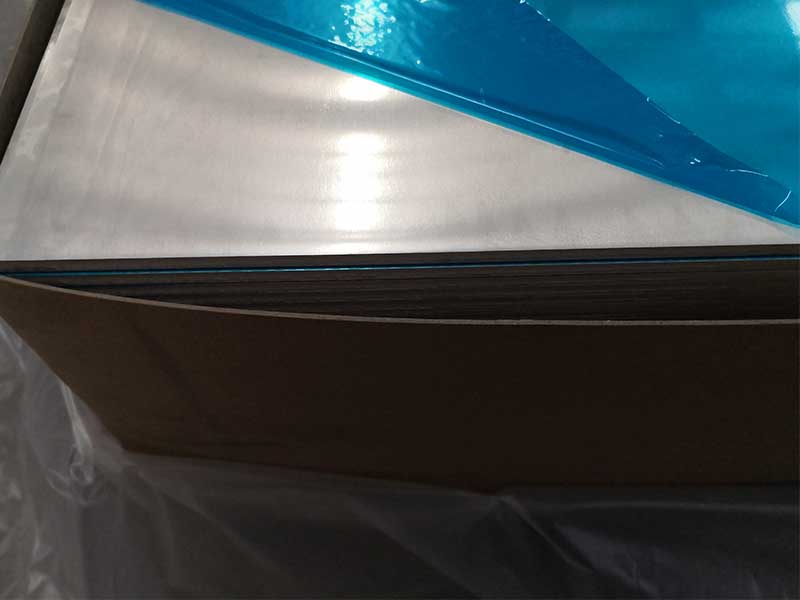

Aluminum Sheet Alloy 3003, H14
Aluminum Sheet Alloy 3003, H14 is one of the most widely specified non-heat-treatable aluminum sheet products, valued for its excellent corrosion resistance, reliable formability, and cost-effective performance. As a manganese-alloyed aluminum (3xxx series), 3003 offers higher strength than commercially pure aluminum while retaining the workability needed for bending, roll-forming, and moderate-depth drawing. The H14 temper (strain hardened, partially annealed) strikes a practical balance: it's strong enough for durable panels and enclosures, yet ductile enough for common fabrication routes.
1) What "3003, H14" Means
Alloy 3003 (3xxx series)
- Base: Aluminum with manganese (Mn) as the primary alloying element
- Core benefit: improved strength over 1xxx alloys with minimal loss of corrosion resistance and workability
- Typical positioning: the "go-to" general-purpose sheet where high strength is not the main driver
Temper H14
- H: strain-hardened (work hardened)
- 1: strain hardened only
- 4: half-hard level of strengthening (approximately mid-point between annealed and full-hard)
Customer takeaway: 3003-H14 is optimized for everyday forming and light structural duty-a dependable choice when you need clean surfaces, easy fabrication, and long service life in atmospheric exposure.
2) Features and Benefits (Practical View)
| Feature | What It Delivers | Why It Matters to Customers |
|---|---|---|
| High corrosion resistance | Performs well in humid, mild industrial, and general atmospheric environments | Lower maintenance, longer service life, better appearance retention |
| Good formability in H14 | Bending, hemming, roll forming, light-to-moderate drawing | Faster fabrication, fewer cracks/splits, consistent production |
| Moderate strength | Stronger than 1100/1050-type sheets | Better dent resistance and stiffness at similar thickness |
| Excellent weldability | Compatible with common aluminum welding methods | Easier assembly for tanks, ducting, enclosures |
| Good thermal conductivity | Efficient heat transfer | Useful for HVAC components, heat shields, housings |
| Cost-effective | Widely available, stable supply chain | Predictable lead times, good value per square meter |
3) Chemical Composition (Typical Limits)
Alloy 3003 is defined by standards such as ASTM B209 (sheet/plate). Exact limits may vary by specification and producer; confirm with mill test certificate (MTC) for compliance.
| Element | Composition (wt. %) |
|---|---|
| Silicon (Si) | ≤ 0.60 |
| Iron (Fe) | ≤ 0.70 |
| Copper (Cu) | 0.05 – 0.20 |
| Manganese (Mn) | 1.00 – 1.50 |
| Zinc (Zn) | ≤ 0.10 |
| Others (each) | ≤ 0.05 |
| Others (total) | ≤ 0.15 |
| Aluminum (Al) | Balance |
Why composition matters: Mn strengthens the aluminum matrix without sacrificing corrosion resistance, while the low Cu content helps maintain good environmental durability.
4) Mechanical Properties (Typical for Sheet in H14)
Mechanical performance varies with thickness, processing route, and applicable standard. The values below represent common expectations for 3003-H14 sheet.
| Property | Typical Value (SI) | Typical Value (US) |
|---|---|---|
| Tensile strength (UTS) | 140 – 180 MPa | 20 – 26 ksi |
| Yield strength (0.2%) | 115 – 145 MPa | 17 – 21 ksi |
| Elongation (A50, thickness-dependent) | ~4 – 10% | ~4 – 10% |
| Brinell hardness | ~40 – 50 HBW | ~40 – 50 HBW |
Performance note: Compared with annealed (O temper) sheet, H14 offers improved strength and dent resistance, but with reduced elongation. For deep drawing or aggressive forming, customers may prefer 3003-O or 3003-H12 depending on the forming severity.
5) Technical Specifications (Product and Supply Characteristics)
Common purchasing and engineering parameters are summarized below.
| Parameter | Typical Options / Notes |
|---|---|
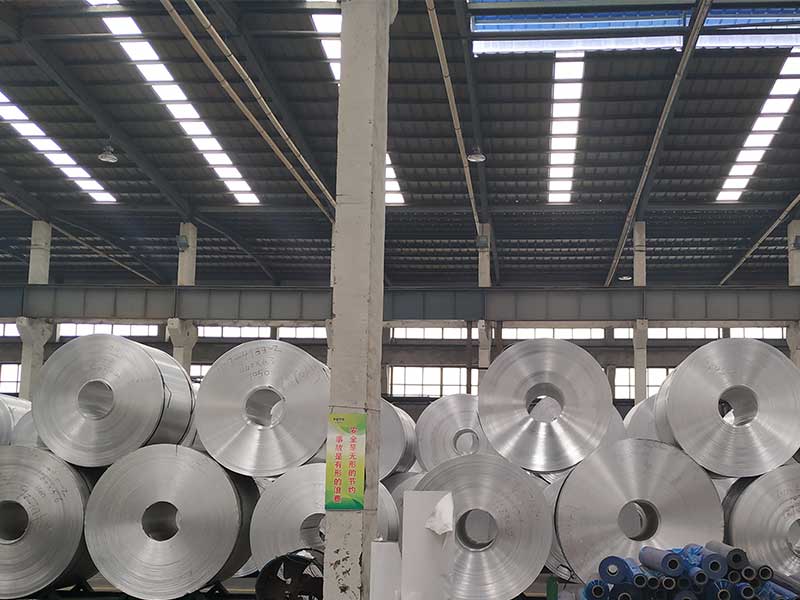
| Product form | Sheet (cut-to-length) and coil |
| Thickness range (common) | ~0.5 mm to 6.0 mm (availability depends on mill) |
| Width | Commonly up to ~1500 mm (coil and sheet vary) |
| Length | Cut-to-length per customer requirement |
| Temper | H14 (half-hard); other tempers available on request |
| Standards | Commonly ASTM B209 (confirm regional equivalents as needed) |
| Surface finish | Mill finish standard; brushed, polished, or coated options possible |
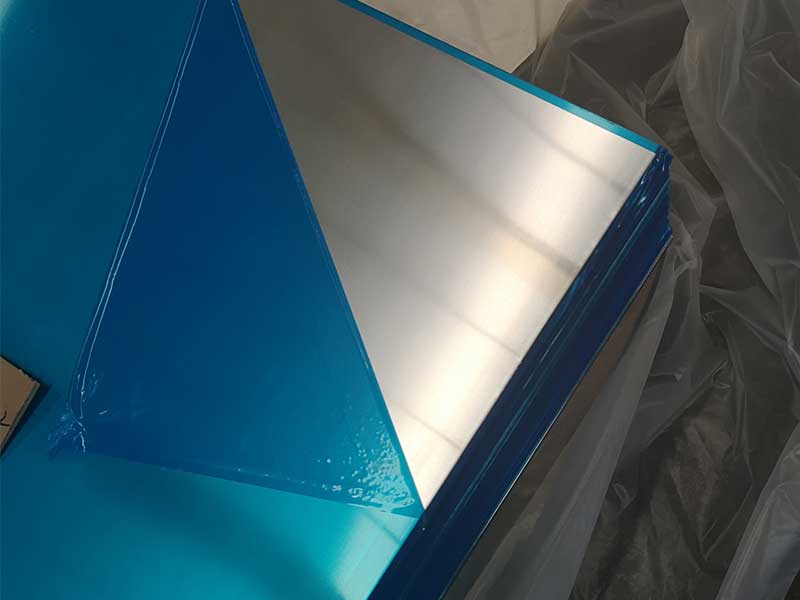
| Protective film | Optional PE/PVC film for scratch-sensitive applications |
| Fabrication compatibility | Bending, roll forming, shearing, punching; welding feasible |
6) Corrosion and Environmental Performance
3003-H14 is recognized for strong resistance to:
- General atmospheric corrosion
- Moist environments
- Many food and beverage contact conditions (verify regulatory/cleanliness requirements)
- Mild chemical exposure (specific chemicals require compatibility confirmation)
It is not intended for:
- Highly alkaline or strongly acidic environments without protective measures
- Marine splash zones where pitting risk is elevated (consider 5xxx alloys like 5052 for marine-duty sheet)
Practical advantage: For building skins, interior panels, HVAC components, and general enclosures, 3003-H14 provides a stable "set-and-forget" corrosion profile.
7) Forming, Joining, and Finishing (What to Expect)
Forming behavior
- Bending: very good; use appropriate inside radius by thickness to minimize cracking, especially across the rolling direction.
- Stamping/drawing: moderate; for deeper draws, consider annealed temper.
- Springback: moderate; plan tooling accordingly.
Welding and joining
- Weldability: generally excellent (process- and filler-dependent).
- Riveting/fastening: common; use compatible fasteners to reduce galvanic corrosion risk.
Finishing
- Anodizing: possible; 3xxx alloys may show color variation vs. 5xxx/6xxx alloys due to Mn content-important for architectural cosmetic matching.
- Painting/powder coating: works well with proper pretreatment and cleaning.
8) Common Applications (Where 3003-H14 Excels)
| Application Area | Typical Parts | Why 3003-H14 Fits |
|---|---|---|
| HVAC & ventilation | Ducting, housings, louvers, plenums | Corrosion resistance + easy forming + light weight |
| Building & construction | Flashing, trim, architectural panels (non-structural) | Consistent sheet quality and good weathering |
| Transportation (non-critical) | Interior panels, covers, shields | Dent resistance and manufacturability |
| Food/consumer equipment | Containers, panels, appliance parts | Clean finish potential and corrosion resistance |
| General fabrication | Enclosures, partitions, signage blanks | Cost-effective and widely available |
Use-case guidance: Choose 3003-H14 when the design calls for formed sheet metal with moderate strength and excellent durability-without paying for higher-strength alloys that may be harder to form.
9) Selection Tips (Quick Buyer's Checklist)
| Question | Recommendation |
|---|---|
| Need deep drawing or aggressive forming? | Consider 3003-O or a softer temper; H14 may be too stiff for severe draw ratios. |
| Need higher strength or fatigue performance? | Consider 5052-H32 or 6061 (depending on form and weld requirements). |
| Need the best marine corrosion resistance? | Consider 5xxx series (e.g., 5052, 5083) with proper temper. |
| Need best anodized cosmetic match? | Discuss finish targets; Mn can affect anodized color uniformity. |
| Need consistent flatness for panels? | Specify flatness tolerance and consider levelled sheet. |
Aluminum Sheet 3003-H14 is a high-utility material: durable in common environments, friendly to fabrication, and cost-efficient. It's ideal for customers who need a dependable sheet for HVAC, building components, enclosures, and general formed products-where the priority is reliable performance and manufacturing efficiency rather than maximum strength.
https://www.al-alloy.com/a/aluminum-sheet-alloy-3003-h14.html