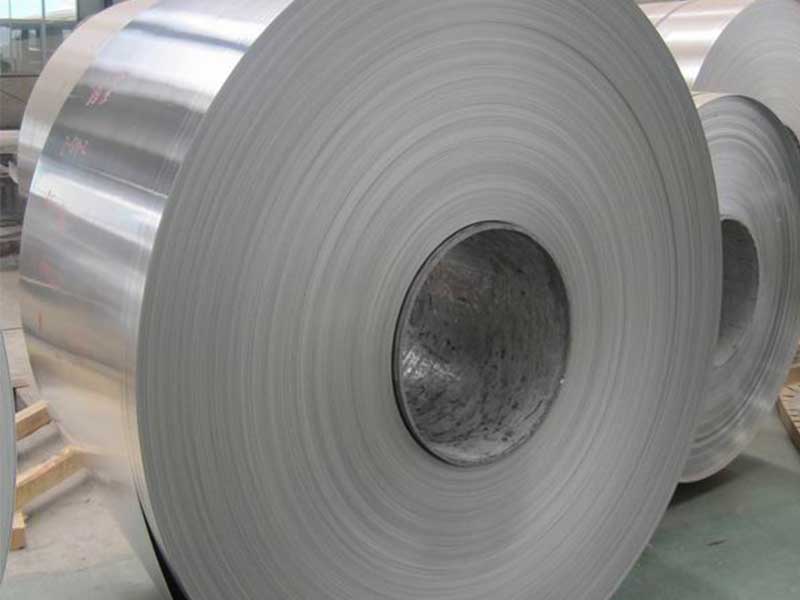

3003 1 5 zn zr aluminum fin strip for radiators
3003 1.5% Zn Zr aluminum fin strip is a purpose-designed aluminum strip for heat exchanger fins used in automotive and industrial radiators. It is built around the corrosion-resistant AA3003 (Al–Mn) core chemistry, enhanced with about 1.5% Zn for controlled sacrificial protection and Zr microalloying for improved thermal stability and fin strength retention after brazing. The result is a fin material that forms cleanly at high speed, maintains fin geometry, and supports long service life in demanding coolant and road-salt environments.
This product is commonly supplied as thin-gauge coil for louvered fin forming lines and is compatible with common controlled-atmosphere brazing (CAB) processes and radiator core manufacturing workflows.
Features at a Glance
| Feature | What It Means for Customers | Typical Benefit in Radiator Production |
|---|---|---|
| AA3003 base alloy (Al–Mn) | Proven fin alloy with good ductility and corrosion resistance | Stable forming, fewer edge cracks, consistent louver formation |
| Zn addition (~1.5%) | Helps create a more active surface potential | Enhanced corrosion protection behavior in aggressive environments |
| Zr microalloying | Promotes dispersoids and improves microstructure stability | Better post-braze strength and fin shape retention |
| High formability temper options | Designed for thin fin gauges and high-speed stamping | Reduced downtime and scrap on fin mills |
| Tight thickness/flatness control | Uniform heat transfer and consistent fin height | Improved brazing fit-up and core dimensional accuracy |
| Clean surface quality | Low residue, controlled oxide and rolling oil | Better brazing consistency and fewer leak risks |
Typical Applications
| Segment | Component | Why This Alloy Is Used |
|---|---|---|
| Automotive cooling | Radiator fin, condenser fin, oil cooler fin | Balance of formability, corrosion behavior, and braze-process robustness |
| Commercial vehicles | Heavy-duty radiator cores | Better durability under vibration and salt exposure |
| Industrial heat transfer | Air-cooled heat exchangers, HVAC coils | Thin fin efficiency with stable mechanical behavior |
| Specialty cooling | Charge air coolers, intercoolers | Geometry retention through thermal cycling |
This fin strip is based on AA3003 with Zn and Zr additions. It is usually supplied in tempers optimized for fin forming and brazing performance.
| Item | Common Supply Options | Notes for Use |
|---|---|---|
| Alloy designation | 3003 + ~1.5% Zn + Zr (customer-spec variant) | Often produced to an agreed internal specification aligned to AA3003 limits |
| Temper | O, H14, H16, H18 (typical), plus fin-forming optimized variants | Softer tempers favor louver forming; harder tempers aid fin rigidity |
| Process compatibility | CAB brazing (typical), also suited for non-braze assemblies | Final performance depends on flux, atmosphere control, and core design |
Chemical Composition (Typical / Reference Range)
The table below shows a practical chemistry window used for radiator fin strip production. Exact limits can be customized to customer standards and applicable alloy specifications.
| Element | Typical Range (wt.%) | Role in Fin Strip Performance |
|---|---|---|
| Al | Balance | Base metal, high thermal conductivity |
| Mn | 1.0–1.5 | Strengthening, improved corrosion resistance vs. pure aluminum |
| Zn | 1.3–1.7 | Electrochemical tuning for improved corrosion behavior in service |
| Zr | 0.05–0.15 | Grain structure control and high-temperature stability after brazing |
| Fe | ≤0.70 | Intermetallic control; excessive Fe can reduce formability |
| Cu | ≤0.20 | Limited to protect corrosion performance |
| Mg | ≤0.05 | Kept low to support CAB brazing stability and reduce oxidation sensitivity |
| Ti (optional) | ≤0.05 | Grain refinement support in casting/rolling routes |
| Others (each) | ≤0.05 | Controlled impurities |
| Others (total) | ≤0.15 | Overall cleanliness control |
Technical Specifications (Coil Supply)
Fin strip is typically produced as thin gauge coil with narrow thickness tolerances and high surface consistency.
| Parameter | Typical Range / Capability | Customer Value |
|---|---|---|
| Thickness | 0.05–0.20 mm (common fin gauges) | Supports high-efficiency fin designs |
| Width | 10–1250 mm | Slitting flexibility for different fin mills |
| Inner diameter (ID) | 150 / 300 / 405 / 508 mm (common) | Fit to decoilers and fin-forming lines |
| Coil weight | 0.5–5.0 t (depending on gauge/width) | Production continuity and logistics optimization |
| Edge condition | Mill edge / slit edge | Slit edge for fin mills, controlled burr to protect tools |
| Surface finish | Bright / matte (rolling-dependent) | Consistent brazing and forming response |
| Flatness | Controlled for thin strip | Better fin height uniformity and smoother feeding |
| Lubrication | Dry or pre-lubed (as agreed) | Stable stamping, reduced tool wear |
| Packaging | Export seaworthy, anti-corrosion wrap options | Reduced transit oxidation and handling damage |
Typical Mechanical Properties (Guideline Values)
Mechanical properties depend strongly on thickness, final temper, and any post-processing. The values below are practical fin-strip guidance ranges used in production discussions.
| Temper (Typical) | Tensile Strength (MPa) | Yield Strength (MPa) | Elongation (%) | Forming Notes |
|---|---|---|---|---|
| O | 95–130 | 35–60 | 18–30 | Best for complex louvering and deep fin features |
| H14 | 130–170 | 110–145 | 4–10 | Good balance of rigidity and formability |
| H16 | 150–190 | 130–165 | 3–8 | Higher fin stiffness, still formable with tuned tooling |
| H18 | 170–220 | 155–190 | 2–6 | Maximum rigidity; requires stable process control |
Thermal & Functional Performance (Typical Engineering Values)
| Property | Typical Value | Why It Matters for Radiators |
|---|---|---|
| Density | ~2.73 g/cm³ | Lightweight core construction |
| Thermal conductivity | ~160–190 W/m·K (composition/temper dependent) | Efficient heat rejection through fins |
| Electrical conductivity | ~35–45 %IACS (typical) | Correlates with purity and thermal performance trends |
| Melting range | ~640–655 °C (typical Al–Mn system) | Stable under CAB brazing temperature windows |
| Service environment | Coolant vapor, road salt, humidity | Zn helps tune corrosion behavior in mixed exposure |
Why Zn + Zr Matters in Fin Strip
A radiator fin is thin, highly formed, and repeatedly exposed to thermal cycling, moisture, and chlorides. Standard 3003 already offers a strong baseline, but adding ~1.5% Zn can shift electrochemical behavior to provide more controlled corrosion response at the fin surface. Meanwhile, Zr microalloying supports a more stable microstructure, helping the fin maintain shape and stiffness after brazing and during long-term vibration and thermal cycling.
In practice, customers typically notice improvements in one or more of the following areas:
| Performance Area | What Improves | What You See on the Line or in the Field |
|---|---|---|
| Fin geometry retention | Less tendency to soften excessively after thermal exposure | More consistent fin height and air-side pressure drop performance |
| Corrosion behavior | More predictable attack distribution | Longer fin integrity in salt-spray-prone conditions |
| Forming stability | Better resistance to localized tearing in thin gauges | Higher yield and fewer louver defects |
Quality Control Items Customers Commonly Specify
| Control Item | Typical Method | Purpose |
|---|---|---|
| Thickness and profile | Online gauges, profile scans | Uniform heat transfer and consistent fin forming |
| Surface cleanliness | Residual oil checks, visual standards | Reduce brazing defects and flux sensitivity |
| Grain structure | Metallography (as required) | Formability consistency and strength stability |
| Mechanical testing | Tensile tests by coil/lot | Confirms temper and process stability |
| Edge burr control | Burr measurement after slitting | Tool protection and reduced line stoppages |
Ordering Guidance (What to Provide for a Fast Quote)
| Needed Detail | Example |
|---|---|
| Alloy | 3003 1.5% Zn Zr fin strip |
| Temper | O / H14 / H16 / H18 |
| Thickness × width | 0.08 mm × 300 mm |
| Coil ID / OD limits | ID 300 mm, OD as per equipment |
| Surface / lubrication | Dry / pre-lubed, one side or two sides |
| Standards | Customer internal spec, or agreed chemistry/property window |
| Application | Radiator fin for CAB brazing |
3003 1.5% Zn Zr aluminum fin strip for radiators is a high-performance thin-gauge coil product engineered for heat exchanger fins. Using an AA3003 base with Zn-enhanced corrosion behavior and Zr-stabilized microstructure, it delivers reliable high-speed formability, strong fin geometry retention after brazing, and durable service in demanding automotive and industrial cooling environments. Available in multiple tempers and tight dimensional tolerances, it is an efficient choice for radiator, condenser, and oil cooler fin production where consistency, corrosion resistance, and manufacturing yield matter most.
https://www.al-alloy.com/a/3003-1-5-zn-zr-aluminum-fin-strip-for-radiators.html