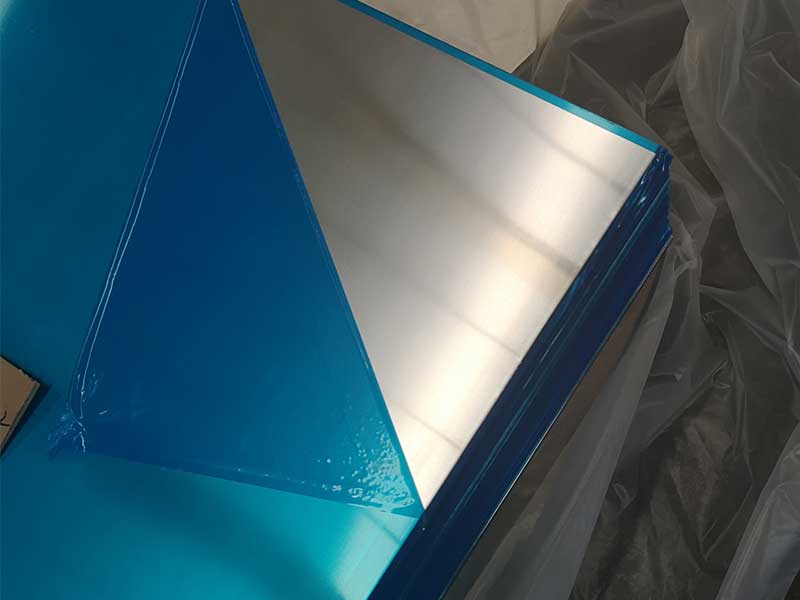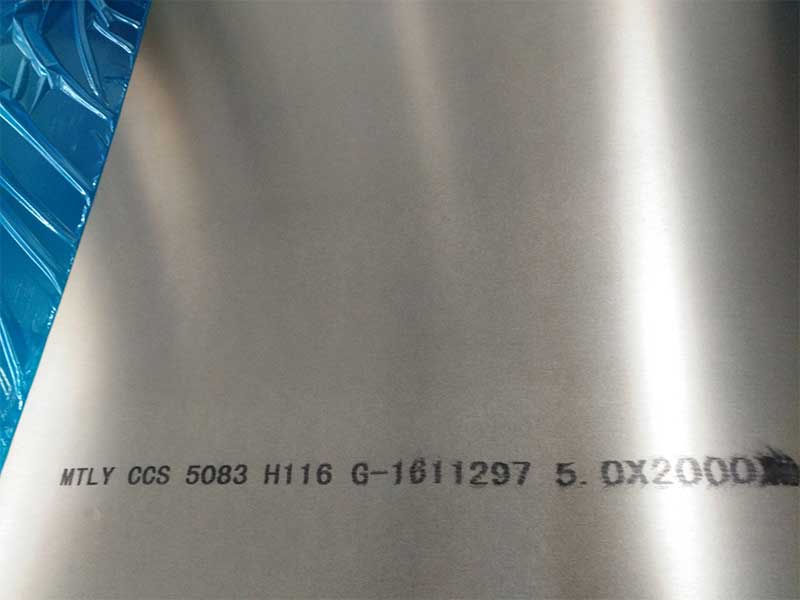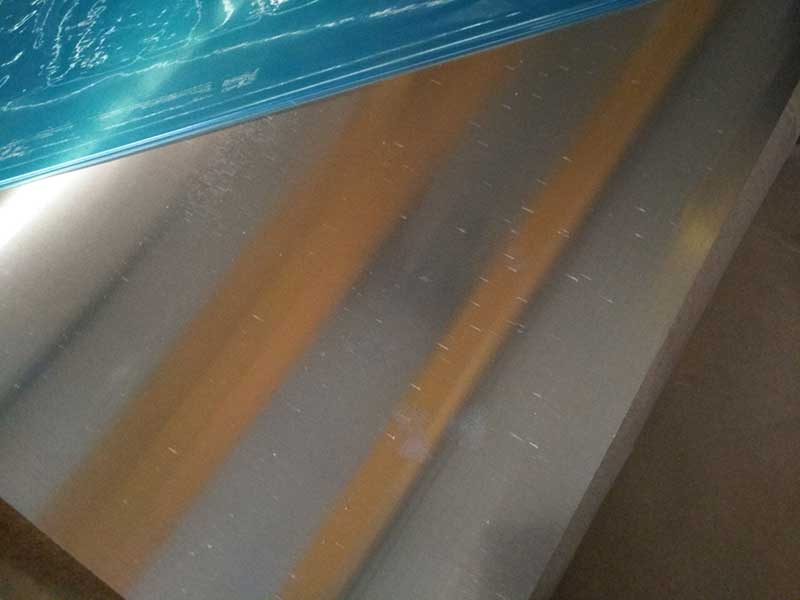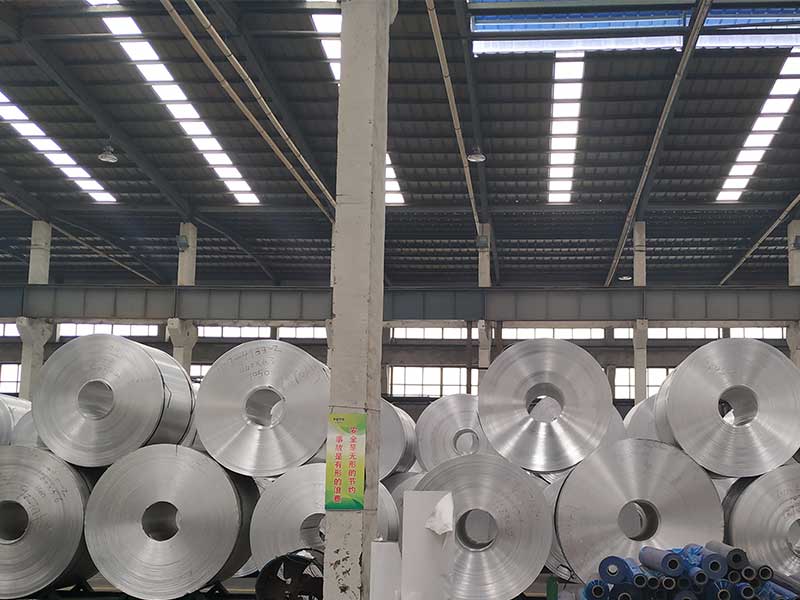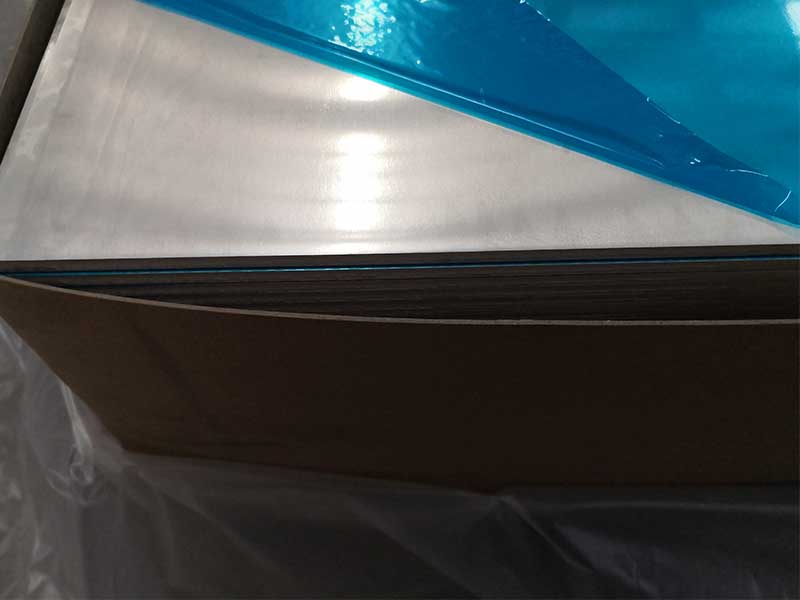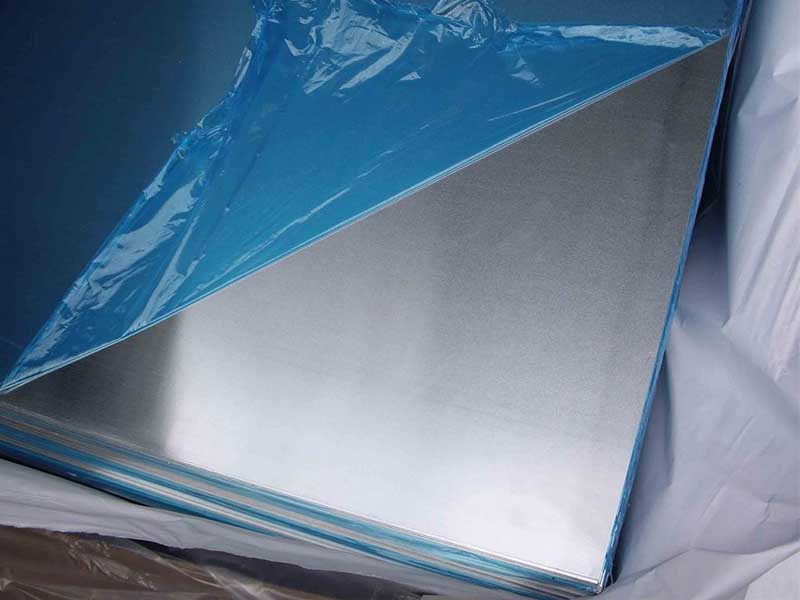

6mm thick aluminium sheet
6mm Thick Aluminium Sheet
A 6mm thick aluminium sheet sits in an interesting middle ground: thick enough to feel like "real structure," thin enough to still behave like sheet rather than plate in many workshops. If you've ever watched a fabricator lift a panel and instinctively judge it by flex, you'll understand why 6mm earns a particular kind of respect. It's the thickness that quietly bridges design intent and shop reality-stiffness without becoming unmanageable, strength without turning every cut into a slow ritual.
From my perspective as someone who thinks in alloys and tempers as much as in dimensions, "6mm" is not a full specification. It's the beginning of a conversation. The real story is how a 6mm aluminium sheet responds when you weld it, bend it, machine it, anodize it, bolt it, ship it, and-most importantly-when it lives outdoors for years. Thickness is the stage; alloy and temper are the actors.
Why 6mm feels different in real projects
At 6mm, aluminium begins to offer a satisfying stiffness-to-weight balance. You can use it for base plates, equipment panels, marine components, machine guards, enclosures, ramps, brackets, and structural skins where a thinner gauge would "oil-can" or drum. Yet 6mm is often still cut with common methods-CNC routing, waterjet, laser (depending on alloy and power), and saws-without moving fully into heavy plate logistics.
That said, 6mm is thick enough that temper choice becomes more visible. A softer temper will form beautifully but may dent during handling. A harder temper will stay crisp but may crack at tight bend radii. At this thickness, heat input during welding can also meaningfully change local properties, especially for heat-treatable alloys.
The alloy question: choosing the personality of the sheet
Different alloy families give a 6mm sheet completely different "personalities." Selecting the right one is less about chasing maximum strength and more about matching behavior to your environment and fabrication process.
The 5xxx series (such as 5052, 5083, 5754) is often the pragmatic favorite for corrosion resistance and weldability, especially in marine or outdoor conditions. These are non-heat-treatable alloys; their strength comes mainly from strain hardening, which matters because welding can soften the heat-affected zone but typically not as dramatically as in 6xxx/7xxx.
The 6xxx series (such as 6061, 6082) offers excellent all-round machinability and good strength, and it's very common in structural applications. It is heat-treatable, which brings a trade: welded areas lose strength unless post-weld heat treatment is feasible. Many real-world designs account for that by using larger weld lengths, gussets, or by avoiding placing peak loads through the weld-softened region.
If you need high strength and don't plan to weld much, 7xxx series (like 7075) can be tempting. But it's not the default for 6mm sheet: formability can be limited, corrosion behavior can be more demanding, and weldability is generally poor.
Temper: the hidden lever behind "easy" fabrication
Temper is the quiet control knob that determines whether your 6mm sheet behaves like cooperative material or stubborn stock.
For 5xxx alloys, common tempers include H111 and H32. H111 is closer to "as fabricated" and tends to be more formable. H32 is strain-hardened and stabilized, offering higher strength with reduced formability.
For 6061 and 6082, you'll often see T6 or T651. T6 is solution heat-treated and artificially aged for strength. T651 adds stress relief (typically by stretching), improving dimensional stability during machining-important when a 6mm panel must stay flat after pocketing or drilling patterns.
If bending is part of your process, temper and bend radius should be discussed together. A 6mm sheet in a harder temper usually needs a larger inside bend radius to avoid cracking, especially across the rolling direction.
Practical parameters that matter at 6mm
In workshops, 6mm changes a few practical habits:
Kerf and heat management become more noticeable. Laser cutting 6mm aluminium demands sufficient power and assist gas control; reflective alloys can challenge older machines. Waterjet and saw cutting remain reliable options when edge quality and heat effects are concerns.
Flatness and residual stress become more important if you machine pockets or large cutouts. Choosing stress-relieved tempers (such as 6061-T651) can reduce "potato chipping" after material removal.
Thread engagement is finally meaningful. With 6mm thickness, you can tap threads for light-to-moderate duty, but you still must be realistic: aluminium threads benefit from proper engagement length, controlled torque, and sometimes thread inserts if cyclic loading is expected.
Standards and common implementation expectations
Aluminium sheet and plate are commonly supplied under ASTM, EN, or ISO-related standards depending on region and customer requirements.
ASTM references often used include ASTM B209 for aluminium and aluminium-alloy sheet and plate. For European supply, EN 485 (for sheet/plate tolerances and mechanical properties) and EN 573 (chemical composition) are commonly referenced, along with EN 515 for temper designations. For marine-grade expectations, buyers often look for documented alloy compliance and traceability, and may request inspection certificates.
In real purchasing, implementation standards show up as questions like: Do you need mill test certificates? Are you specifying a minimum yield strength? Is surface finish critical for anodizing? Will the sheet be used in a regulated environment where material traceability is mandatory?
Chemical composition snapshot (typical values)
Below is a practical, commonly used composition overview for several popular alloys used in 6mm sheet. Actual limits vary by standard and product form; always confirm against the governing specification and the mill certificate for compliance.
| Alloy | Si (%) | Fe (%) | Cu (%) | Mn (%) | Mg (%) | Cr (%) | Zn (%) | Ti (%) | Al (%) |
|---|---|---|---|---|---|---|---|---|---|
| 5052 | ≤0.25 | ≤0.40 | ≤0.10 | ≤0.10 | 2.2–2.8 | 0.15–0.35 | ≤0.10 | ≤0.10 | Balance |
| 5083 | ≤0.40 | ≤0.40 | ≤0.10 | 0.4–1.0 | 4.0–4.9 | 0.05–0.25 | ≤0.25 | ≤0.15 | Balance |
| 5754 | ≤0.40 | ≤0.40 | ≤0.10 | ≤0.50 | 2.6–3.6 | ≤0.30 | ≤0.20 | ≤0.15 | Balance |
| 6061 | 0.4–0.8 | ≤0.70 | 0.15–0.40 | ≤0.15 | 0.8–1.2 | 0.04–0.35 | ≤0.25 | ≤0.15 | Balance |
| 6082 | 0.7–1.3 | ≤0.50 | ≤0.10 | 0.4–1.0 | 0.6–1.2 | ≤0.25 | ≤0.20 | ≤0.10 | Balance |
| 7075 | ≤0.40 | ≤0.50 | 1.2–2.0 | ≤0.30 | 2.1–2.9 | 0.18–0.28 | 5.1–6.1 | ≤0.20 | Balance |
Tempering and condition guidance for typical 6mm use
A quick way to think about it is to match the "condition" to the dominant manufacturing step.
If the project is weld-heavy and corrosion-exposed, 5083 in H111 or H321 is often chosen for marine and transport structures. It tolerates welding well and keeps good corrosion resistance, especially in seawater environments.
If the project is machining-heavy with moderate welding, 6061-T651 is a common selection. It machines cleanly, stays stable, and offers strong performance for brackets, plates, and structural parts. If significant welding is required, designers often account for strength reduction in the heat-affected zone.
If the project is forming-heavy, 5052-H32 is a classic for bends, panels, and enclosures-though at 6mm you must still respect bend radius and tooling tonnage.
Surface finish: what your 6mm sheet will look like after life happens
At 6mm, many sheets become visible components: architectural panels, equipment housings, marine covers. Surface finish and post-treatment matter.
Mill finish is economical but variable in appearance. Brushed finishes can hide handling marks. Anodizing works well on 5xxx and 6xxx, though color uniformity depends on alloy, grain structure, and surface preparation. Powder coating is forgiving and protective, but edge preparation and pretreatment are essential to avoid filiform corrosion in harsh environments.
The final lens: 6mm is a "decision thickness"
I like to call 6mm a decision thickness because it forces clarity. You can no longer rely on thin-sheet tricks, and you're not yet in the fully plate-centric world where everything is assumed rigid. With 6mm aluminium sheet, the smart move is to specify not only thickness, but alloy, temper, standard, and intended fabrication route. When those align, 6mm stops being just a measurement and becomes a reliable, repeatable material choice-one that delivers lightweight stiffness with the kind of calm predictability engineers and fabricators quietly crave.