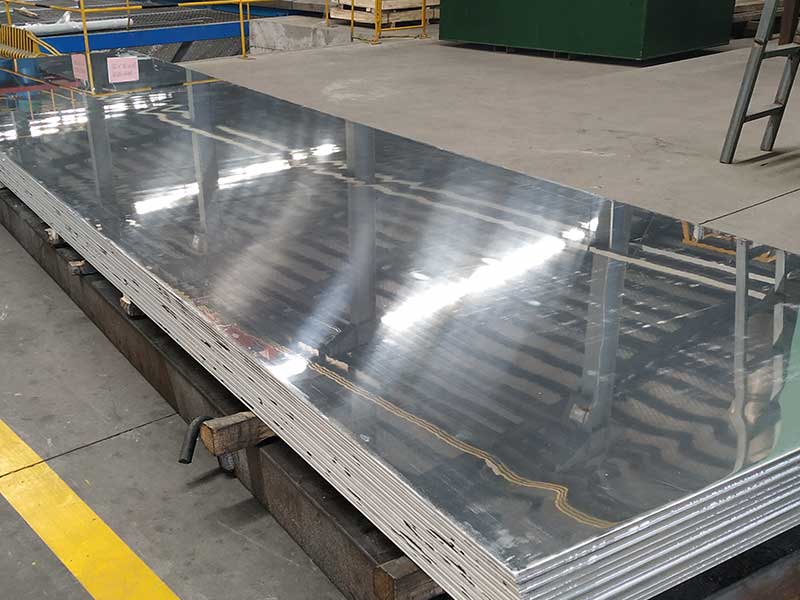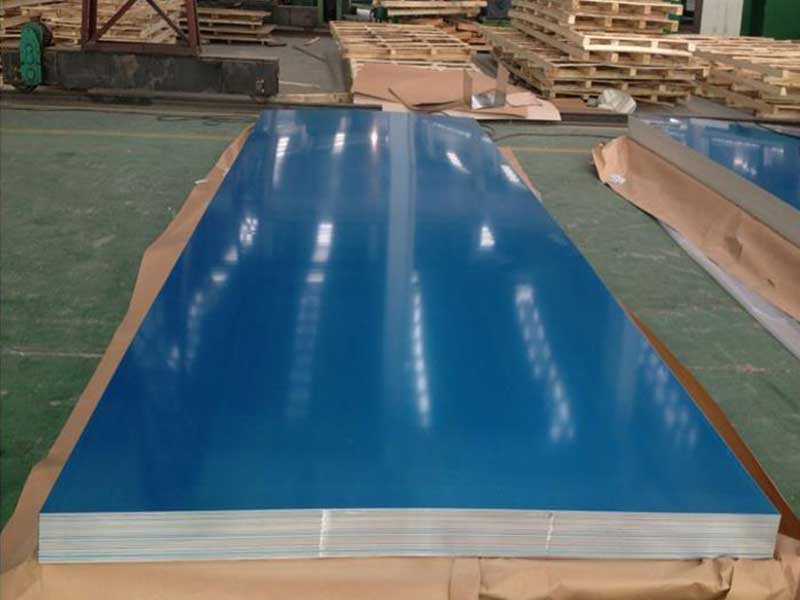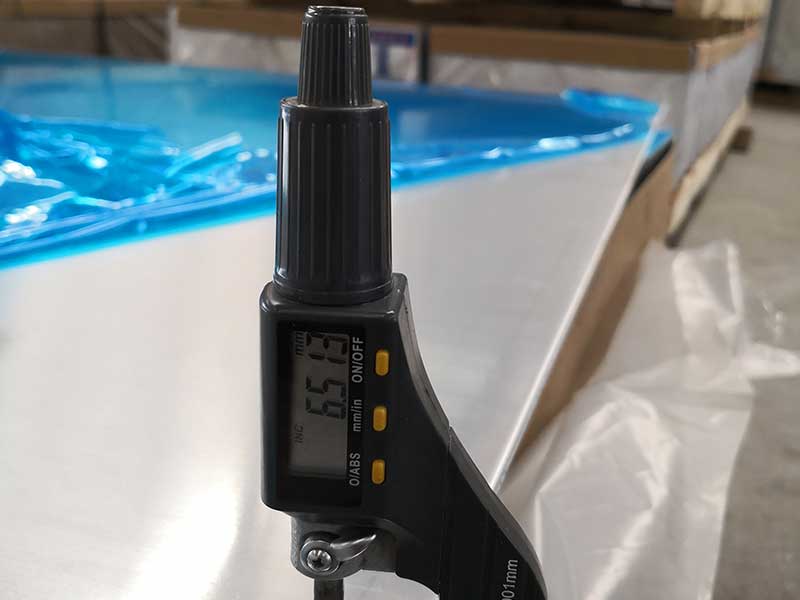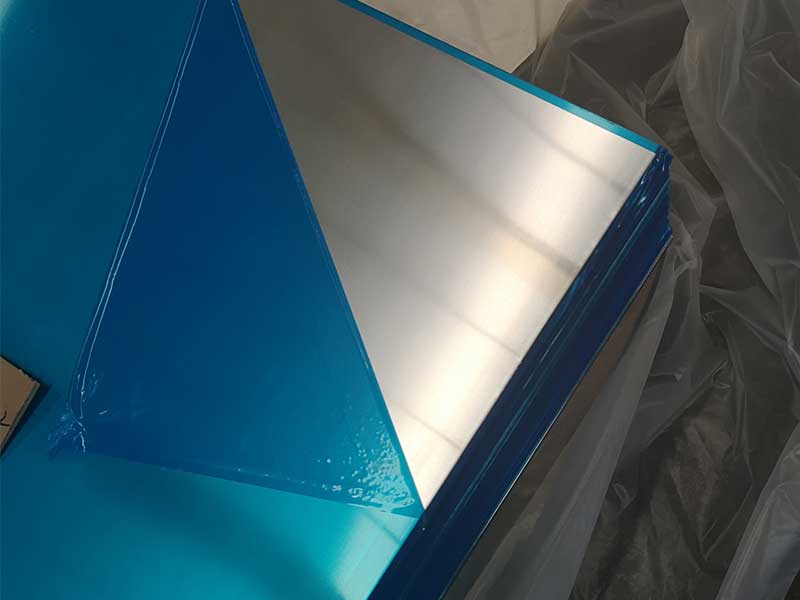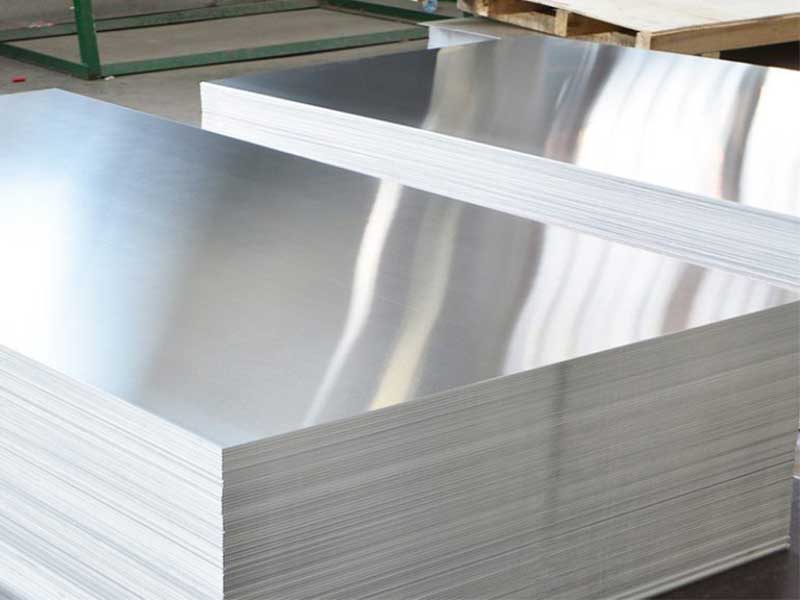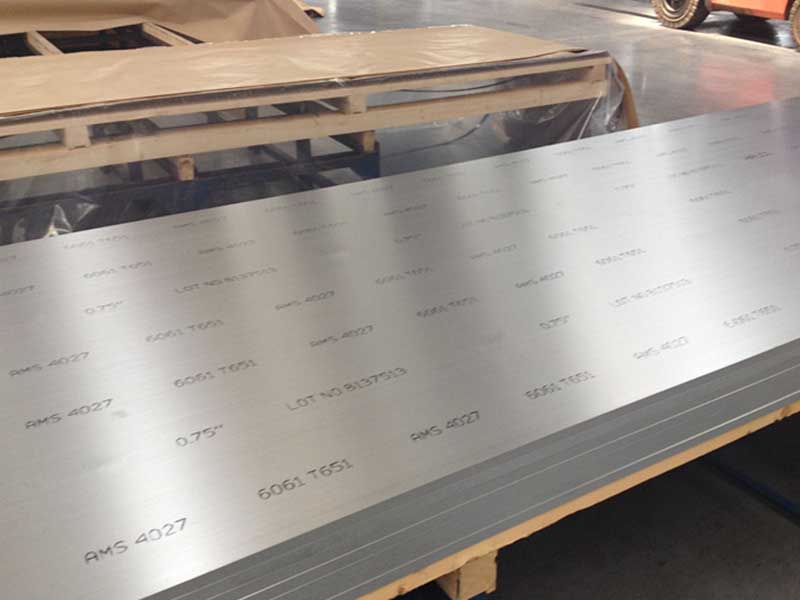

Aluminum sheet t6 t651
In many fabrication shops, "T6" gets spoken like a promise: high strength, good machinability, consistent performance. "T651," meanwhile, is the quieter sibling that makes the promise easier to keep once real processes begin-milling pockets, hogging out mass, holding flatness, and chasing tight tolerances over large surface areas. Looking at aluminum sheet through the lens of distortion control rather than only tensile strength reveals why T6 and T651 exist as two closely related tempers, and why choosing between them often determines whether a part finishes cleanly or turns into a warping lesson.
Aluminum sheet in T6 condition typically refers to heat-treatable alloys that have been solution heat treated and then artificially aged to develop precipitation strengthening. T651 keeps that same precipitation-hardened "T6 strength," but adds a controlled stress-relief step by stretching (the "-51" suffix) after solution heat treatment and before aging. That single manufacturing decision-introducing a small, uniform plastic deformation-can be the difference between a plate that stays calm under machining and one that slowly "springs" as internal residual stresses rebalance.
The temper story told through residual stress
A useful way to picture T6 is as a carefully tuned spring. The solution heat treatment dissolves strengthening phases into solid solution, quenching locks the alloying elements in place, and aging forms finely distributed precipitates that resist dislocation motion. Strength rises, and the material behaves predictably in simple loading. But quenching is also an uneven thermal event: surfaces cool faster than the interior, and that thermal gradient creates locked-in residual stresses. Thin sheet tends to shed heat quickly and evenly, while thicker sheet and plate can develop significant internal stress.
T651 aims at the part-maker who doesn't just load the sheet; they remove material and expose those stresses. Stretching after quench redistributes and reduces residual stress. In practice, T651 aluminum sheet and plate is chosen when flatness after machining matters, when features are asymmetric, or when the process includes heavy milling that would otherwise "release" stress and distort the part.
In other words, if T6 is about the strength you can measure on a test coupon, T651 is about the geometry you can keep on a real component.
What "T6" and "T651" mean in implementation terms
While exact schedules vary by alloy family and producer, the temper definitions are standardized in common specifications and temper designation systems.
T6 generally indicates:
- Solution heat treated
- Quenched
- Artificially aged to a stable, high-strength condition
T651 generally indicates:
- Solution heat treated
- Quenched
- Stress relieved by stretching (typical controlled permanent set, often on the order of 1–3% for plate products, depending on product form and standard)
- Artificially aged
For many aerospace and precision-machined uses, you'll see these tempers referenced under standards such as ASTM B209 for aluminum and aluminum-alloy sheet and plate, and in aerospace procurement under AMS specifications for specific alloys and product forms. The is that "-51" is not an extra heat treatment; it is a mechanical stress-relief step integrated into the heat-treat cycle.
Features that matter in the shop and in service
T6 and T651 share the hallmark features of precipitation-hardened aluminum alloys: high specific strength, good fatigue performance relative to non-heat-treatable grades, and strong response to machining. But the nuances become important when the part is not just a tensile bar.
Strength and stiffness in practical structures
These tempers enable thinner gauges or lighter stiffeners because the yield strength is significantly higher than annealed or strain-hardened non-heat-treatable alloys. That matters in transport, robotics, and industrial equipment where weight, inertia, and energy efficiency are real design variables. Aluminum's modulus remains about 69 GPa regardless of temper, so "stiffer" designs come from geometry and thickness choices enabled by higher allowable stress rather than a change in elastic stiffness.
Machining behavior and dimensional stability
Both machine well with appropriate tooling and chip management. The advantage of T651 shows up after you've removed a lot of stock. Pocketing, deep cavity milling, and large face-milling operations can cause T6 plate to move as residual stresses relax. T651 is engineered to reduce that movement, improving flatness retention and lowering the need for intermediate stress-relief or re-fixturing steps.
Fatigue and crack growth considerations
Precipitation-hardened alloys generally offer good fatigue performance, but the alloy choice dominates. For example, 7075-T6/T651 can deliver very high static strength but can be less forgiving in corrosion-fatigue environments than 6061-T6/T651. Temper does not erase environmental sensitivity; it sets the strength baseline that the design must protect with finishes, sealants, and proper joint detailing.
Corrosion behavior and surface treatment compatibility
6061 in T6/T651 is widely favored for its balanced corrosion resistance and weldability (with the important caveat that welding locally overages/softens the heat-affected zone). 7075 in T6/T651 typically needs more attention to corrosion protection, and many aircraft structures use related tempers like T73/T74 for improved stress corrosion cracking resistance. Still, 7075-T651 is common for machined components where strength-to-weight dominates and surfaces can be protected.
Formability and bending
T6 and T651 are not the tempers you pick for tight-radius bending. Artificial aging increases strength and decreases ductility; cracking on bends becomes more likely. If significant forming is required, parts are often formed in O or T4 and then heat treated to T6 after forming, depending on alloy and dimensional constraints.
Applications viewed through the "flatness and truth" lens
Precision base plates, tooling plates, and machine frames are natural habitats for T651. CNC routers, semiconductor tool frames, inspection fixtures, and automation plates all benefit from reduced residual stress. When a large plate must remain planar after both sides are milled, T651 tends to pay back its premium quickly in saved labor and scrap reduction.
Aerospace and defense machining often leans on 7075-T651 plate for structural fittings, ribs, brackets, and load-transfer components where high strength and good machinability are needed and where the part is largely created by removing material rather than forming. The ability to hold dimensional tolerance after aggressive machining is a practical requirement, not a luxury.
In transportation and performance equipment, 6061-T6/T651 sheet supports strong, corrosion-resistant panels, mounts, and structural members. For marine-adjacent uses, 6061's general corrosion resistance makes it a frequent selection, with anodizing or coating used to further stabilize surfaces.
Electronics and thermal management use cases show a different angle. Designers may choose 6061-T6/T651 not only for strength but for stable machining of heatsink bases, stiffener plates, and optical benches. Here, distortion becomes an alignment problem: a warped plate can misalign optics, connectors, or thermal interfaces.
Chemical properties table for common T6/T651 sheet alloys
The temper is only half the story; the alloy family defines weldability, corrosion response, and peak strength. Below are typical composition ranges (wt.%) commonly used for sheet/plate products. Always verify against the governing standard for your purchase order.
| Alloy | Si | Fe | Cu | Mn | Mg | Cr | Zn | Ti | Al |
|---|---|---|---|---|---|---|---|---|---|
| 6061 | 0.40–0.80 | ≤0.70 | 0.15–0.40 | ≤0.15 | 0.80–1.20 | 0.04–0.35 | ≤0.25 | ≤0.15 | Balance |
| 7075 | ≤0.40 | ≤0.50 | 1.2–2.0 | ≤0.30 | 2.1–2.9 | 0.18–0.28 | 5.1–6.1 | ≤0.20 | Balance |
Choosing between T6 and T651 without overthinking it
If your part is thin, lightly machined, or primarily loaded in service without heavy stock removal, T6 is often sufficient and widely available. If your part is thick, heavily machined, sensitive to flatness, or has asymmetric material removal that can "unwind" residual stresses, T651 is the temper that treats distortion as a first-order engineering variable.
From this perspective, "aluminum sheet t6 t651" is not merely a catalog phrase. It is an invitation to decide what you are really buying: just strength, or strength plus geometric honesty after you cut the material into its final truth.