
Aluminum Sheets 5052
If aluminum alloys had personalities, 5052 would be the quietly reliable one in the room-the material that rarely seeks attention, yet ends up solving more real-world problems than many flashier options. It does not advertise itself as the strongest sheet aluminum, nor the easiest to machine, nor the cheapest in every situation. What it offers instead is balance. And in engineering, fabrication, and product design, balance is often what keeps projects on time, structures durable, and maintenance budgets under control.
From a practical viewpoint, aluminum sheets 5052 occupy an unusually useful middle ground. They are strong enough for many structural and semi-structural applications, light enough to support efficient transport and installation, and resistant enough to corrosion that they perform confidently in marine air, humid industrial spaces, food-related equipment, and outdoor enclosures. It is an alloy that makes sense not because it dominates every category, but because it avoids major weaknesses.
The identity of 5052 comes from its chemistry. This alloy belongs to the 5xxx series, meaning magnesium is the principal alloying element. That matters because magnesium gives 5052 its combination of moderate-to-high strength, very good corrosion resistance, and excellent formability compared with many stronger aluminum grades. In everyday terms, this means the sheet can be bent, rolled, shaped, and fabricated into useful products without demanding extreme processing measures.
Below is a typical chemical composition table for Aluminum Alloy 5052, based on common industry references and product standards.
| Element | Content (%) |
|---|---|
| Aluminum (Al) | Balance |
| Magnesium (Mg) | 2.2–2.8 |
| Chromium (Cr) | 0.15–0.35 |
| Silicon (Si) | 0.25 max |
| Iron (Fe) | 0.40 max |
| Copper (Cu) | 0.10 max |
| Manganese (Mn) | 0.10 max |
| Zinc (Zn) | 0.10 max |
| Others, each | 0.05 max |
| Others, total | 0.15 max |
That modest magnesium content is the heart of the alloy's character. It helps 5052 resist saltwater and atmospheric corrosion far better than many general-purpose materials. This is one reason it appears so often in fuel tanks, marine panels, truck bodies, control cabinets, pressure vessels, and signage structures. In environments where moisture, road splash, mild chemicals, or coastal exposure are daily realities, 5052 tends to age with dignity.
Its mechanical performance also deserves attention. Typical values vary by temper and thickness, but common ranges are shown below.
| Temper | Tensile Strength (MPa) | Yield Strength (MPa) | Elongation (%) |
|---|---|---|---|
| O | 170–215 | 65–90 | 20–25 |
| H32 | 210–260 | 130–180 | 7–12 |
| H34 | 230–280 | 160–210 | 5–10 |
| H38 | 250–300 | 190–240 | 4–8 |
These numbers reveal another reason fabricators like 5052 sheet: it can be selected in tempers that support very different manufacturing priorities. In the O temper, the alloy is softer and more suitable for severe forming. In H32, a very common commercial condition, it offers a practical mix of formability and strength. Harder tempers such as H34 and H38 increase strength, though at the cost of reduced ductility. Choosing the right temper is less about chasing the highest number and more about matching the sheet to the forming radius, service load, and finish expectations of the final product.
This is where implementation standards become important. Aluminum sheets 5052 are commonly supplied according to standards such as ASTM B209 for aluminum and aluminum-alloy sheet and plate, EN 485 for European wrought aluminum products, and GB/T standards in the Chinese market depending on supply requirements. For chemical composition and temper designation, manufacturers often refer to standards aligned with AA/EN conventions. In marine or pressure-related service, additional project specifications may apply, especially regarding flatness, surface quality, mechanical test certification, and traceability.
In terms of physical properties, 5052 behaves in a way that supports broad industrial use.
| Property | Typical Value |
|---|---|
| Density | 2.68 g/cm³ |
| Melting Range | Approx. 607–650°C |
| Thermal Conductivity | Approx. 138 W/m·K |
| Electrical Conductivity | Approx. 34–35% IACS |
| Elastic Modulus | Approx. 70 GPa |
| Coefficient of Thermal Expansion | Approx. 23.8 × 10⁻⁶ /K |
These values may seem technical, but they have practical consequences. A relatively low density keeps weight under control in transport equipment and portable structures. Good thermal conductivity helps in panels, covers, and enclosures where heat dissipation matters. The alloy's expansion behavior also reminds designers to allow tolerance in outdoor assemblies exposed to temperature variation.
One of the most appealing aspects of 5052 sheet is its surface potential. It can be polished, brushed, painted, and anodized, though anodizing response depends on process and finish expectations. It is often chosen for products that must look clean and modern while still surviving mechanical use. This is why it appears in appliance panels, architectural trims, electronic housings, and decorative industrial components. The alloy supports both utility and appearance, which is not always easy to achieve in one material.
Weldability is another reason 5052 remains a practical favorite. It has very good weldability by conventional methods such as TIG and MIG. For tanks, cabinets, frames, and marine fabrications, this can simplify manufacturing and reduce the need for mechanical fastening. However, like many cold-worked aluminum alloys, welding affects the heat-affected zone and may reduce local strength depending on temper. Designers should therefore evaluate load paths near weld seams rather than assuming base-metal values apply everywhere.
There is, of course, no perfect alloy. 5052 is not usually the first choice for heavy machining, because it can be somewhat gummy compared with free-machining materials. It is also not a heat-treatable alloy, meaning its strength comes mainly from work hardening rather than solution heat treatment and aging. If a project requires substantially higher structural strength, alloys such as 5083, 5754, 6061, or even 7075 may enter the discussion depending on corrosion demands, weldability, and forming complexity. But that comparison often ends up highlighting 5052's value: it is the alloy people choose when real manufacturing conditions matter as much as theoretical performance.
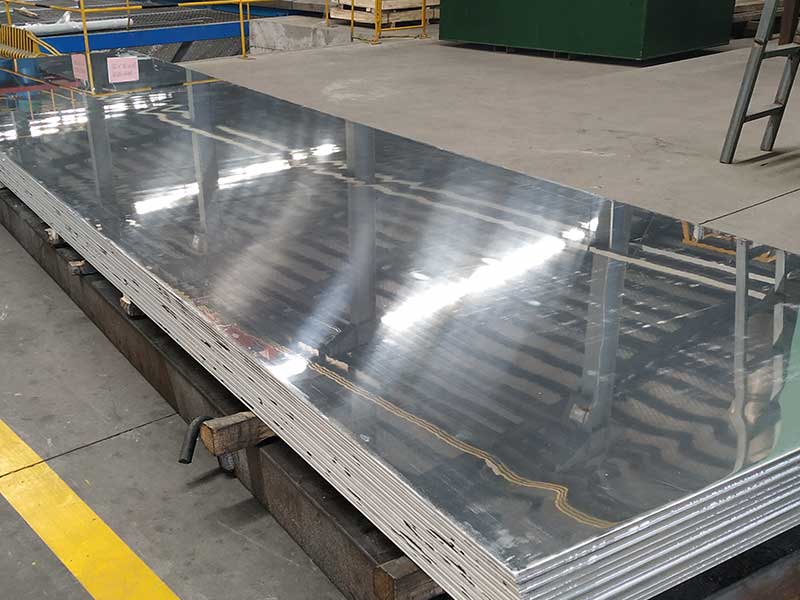
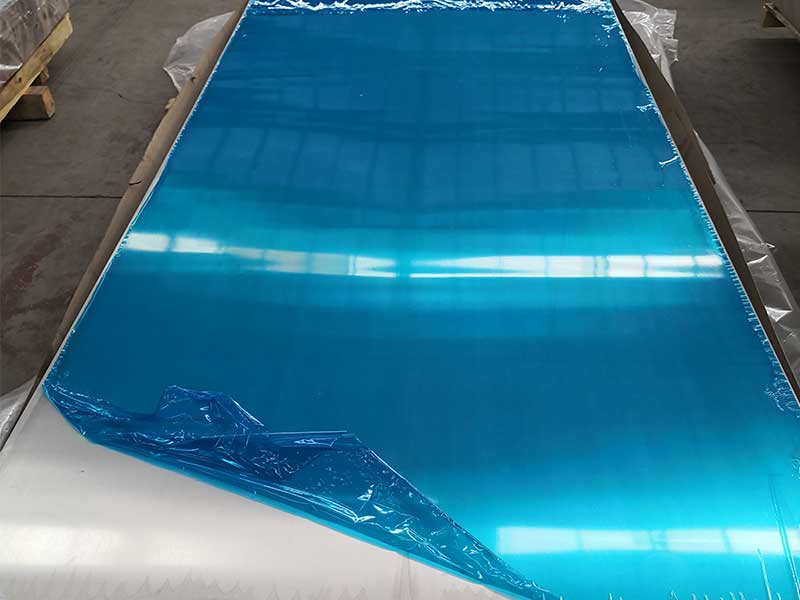
Thickness availability is broad in the market, typically from thin gauge sheets for panels and covers to thicker stock for structural skins and fabricated components. Common supply forms include mill finish, PVC-coated sheet for surface protection, embossed sheet, and custom cut-to-size formats. For customers, the right purchasing decision often depends on more than alloy designation alone. Temper, thickness tolerance, width, flatness, protective film, and surface class all influence whether the material will move smoothly into production.
From a buyer's perspective, asking the correct questions can prevent expensive mistakes. Is the sheet intended for deep bending or only light forming? Will it be welded after cutting? Does the application involve seawater, food contact, or chemical exposure? Is cosmetic appearance critical? Is ASTM B209 certification required? Should the order specify H32 rather than a harder temper to avoid cracking during fabrication? In many cases, 5052 succeeds not simply because it is selected, but because it is specified intelligently.
What makes aluminum sheets 5052 especially interesting is that they reflect a mature engineering philosophy. They are not about extremes. They are about dependable performance over time, under imperfect conditions, in products that people actually use. A sheet of 5052 may become the side wall of a trailer, the cover of an instrument housing, a boat component, a kitchen panel, or a fuel tank. In each case, its role is different, yet the reason for choosing it remains familiar: it offers enough strength, enough formability, enough corrosion resistance, and enough finish quality to make the whole product work.
That is perhaps the most distinctive way to understand 5052. It is not merely an alloy specification on a certificate. It is a material for practical confidence. In a world where many failures begin with poor material matching, 5052 stands out by fitting reality remarkably well.