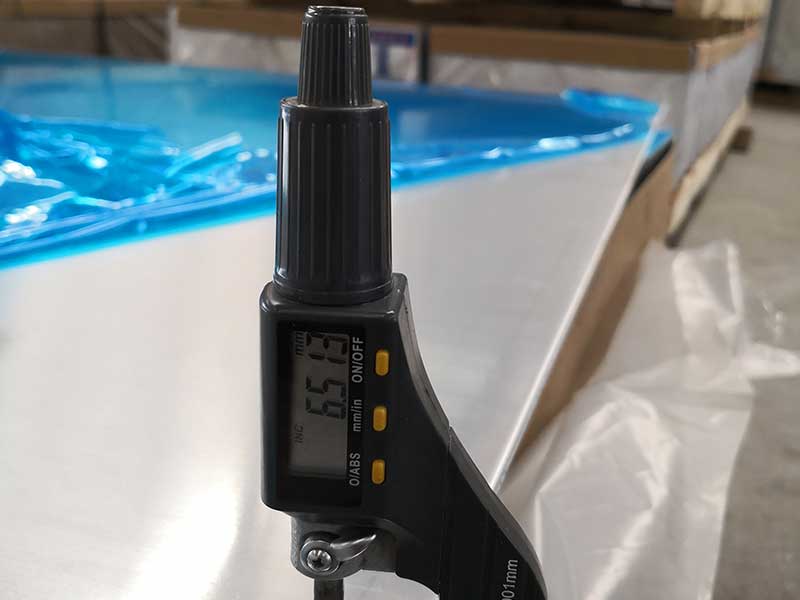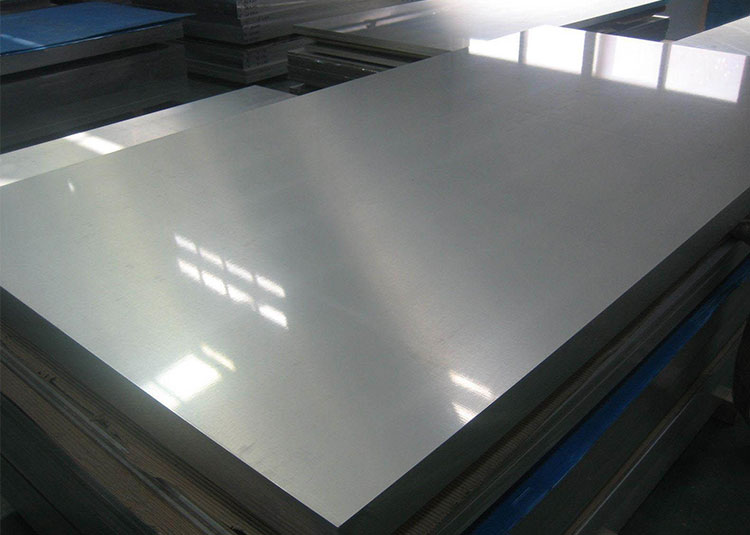

.040 aluminum sheet thickness
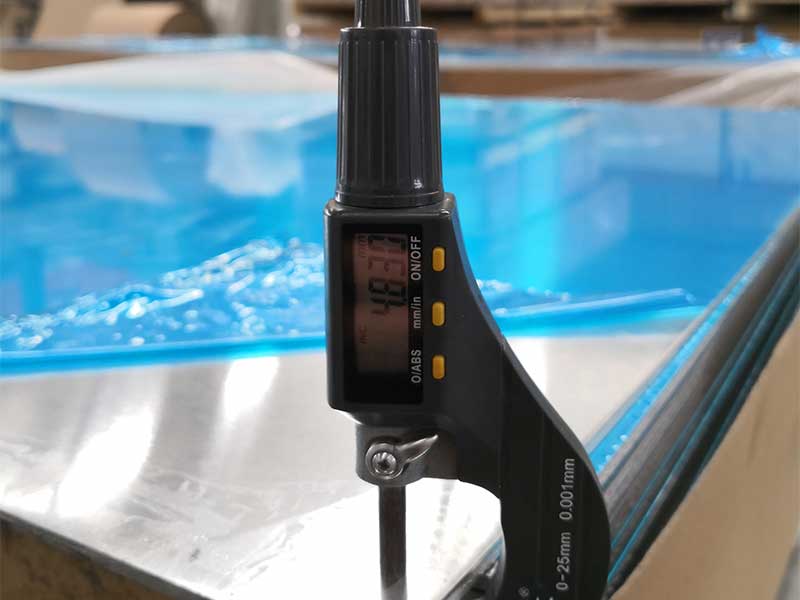
There is a reason .040 aluminum sheet appears so often in fabrication shops, trailer yards, HVAC plants, and sign studios: it sits in a remarkably useful middle ground. At 0.040 inch thick, or about 1.02 mm, aluminum sheet is thin enough to bend, shear, stamp, and rivet with relative ease, yet thick enough to resist casual denting, oil-canning, and handling damage better than lighter gauges. It is not the thickest, strongest, or cheapest option in every situation. Its value comes from balance. In practical engineering, balance often wins.
What makes .040 aluminum interesting is not just the number itself, but the kind of decisions it allows. Designers who choose this thickness are often trying to solve two conflicting problems at once: reduce weight while preserving usable stiffness. That tension defines many modern products, from enclosed trailers and utility vehicle skins to architectural trims, machine covers, roof flashings, and decorative panels. Seen from that perspective, .040 sheet is less a commodity size and more a strategic material thickness.
A quick conversion helps frame the discussion. A .040 aluminum sheet is 0.040 in thick, approximately 1.016 mm. For common aluminum alloys with density around 2.70 g/cm3, this corresponds to a weight of roughly 0.56 lb/ft2, or about 2.73 kg/m2. That low areal weight is one of the thickness's strongest selling points. A large panel can cover significant area without burdening the underlying structure, and that matters in transport, mobile equipment, and suspended assemblies.
The performance of .040 sheet depends heavily on alloy and temper. Thickness alone never tells the whole story. A .040 sheet in 3003-H14 behaves very differently from one in 5052-H32 or 6061-T6. For many real-world applications, the alloy choice is what turns a generic sheet into an effective engineering solution.
3003 is often the workhorse option when the priorities are formability, general corrosion resistance, and economy. It bends well, accepts moderate forming operations, and is widely used for decorative trim, gutters, flashing, duct components, and light-duty panels. In .040 thickness, 3003-H14 gives a useful compromise between softness and shape retention. It is not the best choice where high structural loads are present, but it performs exceptionally well in fabricated products that need to be cut, folded, and installed quickly.
5052 becomes the natural step up when greater strength and especially better marine or industrial corrosion resistance are required. In .040 thickness, 5052-H32 is commonly selected for trailer skins, tanks, cabinets, enclosures, and exterior panels exposed to moisture or salt-laden air. It generally offers better fatigue strength and durability than 3003 while still maintaining good bendability. For fabricators, this means fewer compromises when making parts that must survive vibration, impact, and outdoor exposure.
6061, especially in T6 temper, is associated with structural strength, but in .040 sheet it occupies a more specialized space. It is significantly stronger than 3003 and 5052, but its formability is more limited, particularly in the T6 temper. Tight-radius bending can lead to cracking if the design and bend direction are not carefully controlled. Even so, .040 6061-T6 can be useful for panels that require higher rigidity, machinability, or compatibility with structural 6061 frames.
The table below gives typical values for common alloys used in .040 aluminum sheet applications. Actual values vary by producer, product form, and specification, so ASTM or EN-certified mill data should always control final design.
| Alloy / Temper | Typical Mg % | Typical Mn % | Typical Si % | Typical Cu % | Tensile Strength | Yield Strength | Elongation | Corrosion Resistance | Formability |
|---|---|---|---|---|---|---|---|---|---|
| 3003-H14 | - | 1.0–1.5 | 0.6 max | 0.05–0.20 | 20–24 ksi | 17–21 ksi | 3–8% | Very good | Excellent |
| 5052-H32 | 2.2–2.8 | 0.10 max | 0.25 max | 0.10 max | 31–38 ksi | 23–28 ksi | 6–12% | Excellent | Very good |
| 6061-T6 | 0.8–1.2 | 0.15 max | 0.4–0.8 | 0.15–0.40 | 42–45 ksi | 35–40 ksi | 4–10% | Good | Fair |
One distinctive way to understand .040 aluminum is to think of it as a "surface engineering thickness." In many assemblies, the sheet is not there to carry the primary structural load. Instead, it creates the functional outer surface: it protects, encloses, reflects, drains, shields, or presents. That outer surface still needs enough substance to survive fastening, transport, weathering, and cleaning. If it is too thin, it becomes fussy in production and fragile in service. If it is too thick, weight, cost, and forming effort rise quickly. .040 often lands right where the surface becomes dependable.
This explains its popularity in trailer and RV applications. Side skins and stone guards must resist vibration, thermal cycling, road spray, and occasional impact from debris. A .040 sheet, especially in 5052 or embossed tread form, gives a reassuring toughness without adding unnecessary mass. It also works well with common joining methods such as blind riveting, adhesive bonding, and mechanical fastening. In mobile environments, every kilogram matters, so gaining durability at low weight is commercially valuable.
In architecture and construction, .040 aluminum is frequently chosen for flashing, fascia covers, column wraps, soffit trim, and decorative wall panels. Here, corrosion resistance and appearance become as important as strength. Aluminum naturally forms a protective oxide film, and coated or anodized finishes can extend service life further. Typical implementation standards may include ASTM B209 for aluminum and aluminum-alloy sheet and plate, with alloy-temper designation verified at purchase. For coil-coated architectural products, finish performance may also be evaluated under AAMA-related requirements depending on the coating system and project specification. In these uses, .040 thickness is often thick enough to maintain visual flatness better than lighter trim stock, especially over longer spans or under thermal movement.
Fabrication details matter. Bend radius, grain direction, hole edge distance, and fastening method all affect whether a .040 sheet performs elegantly or fails prematurely. For 3003-H14 and 5052-H32, inside bend radii around 1t to 2t are often achievable in many shop conditions, where t is the material thickness. For 6061-T6, larger radii are usually needed, often 3t or more, depending on bend orientation and tooling. Close bends across the rolling direction generally produce better results than severe bends parallel to it. Where appearance is critical, test bending is wise before releasing production.
The same thickness also has a subtle thermal advantage. Aluminum conducts heat efficiently, so a .040 sheet can act as a responsive heat-spreading skin in equipment housings, lighting components, and reflective barriers. It is not thick enough to become a heavy heat sink, but it transfers and dissipates heat faster than many steel or polymer alternatives of comparable weight. In HVAC and appliance panels, this can improve temperature uniformity and reduce hot spots, while still allowing easy fabrication.
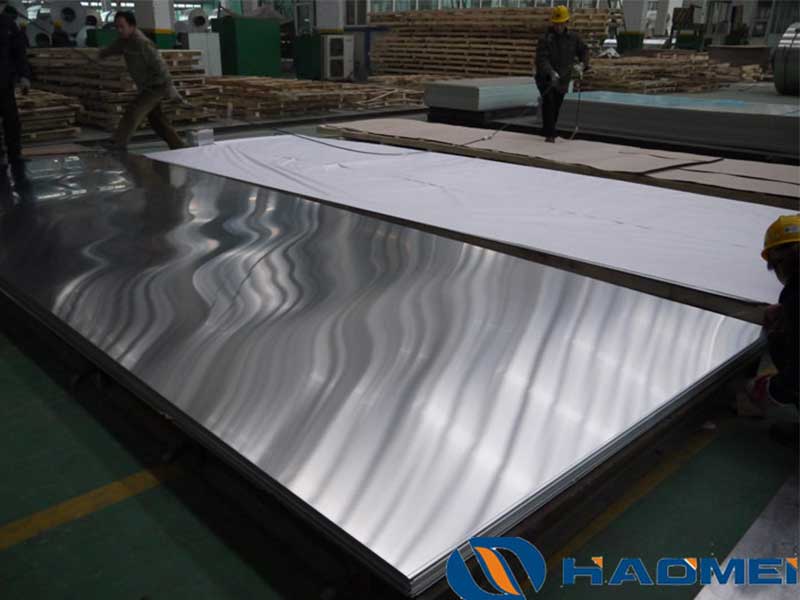
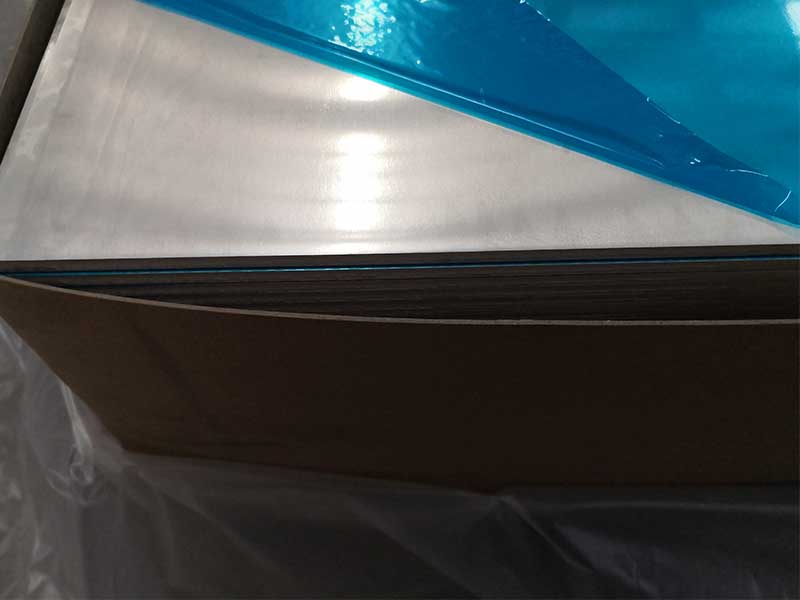
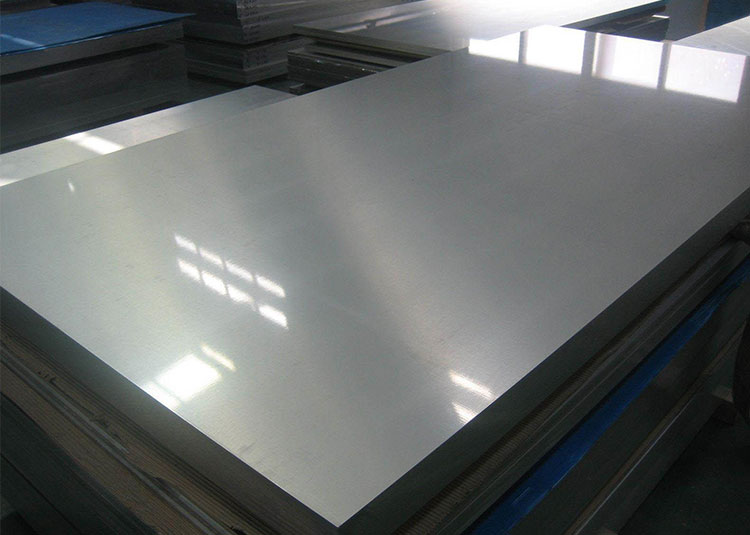
From a finishing standpoint, .040 sheet is very versatile. It can be mill finish, anodized, painted, powder coated, polished, stucco embossed, or laminated. That versatility expands its applications beyond industrial hardware into retail displays, signage, transportation interiors, and custom fabrication. For signs, for example, .040 aluminum has become a common substrate because it stays relatively flat, resists rust, and accepts printed graphics and painted finishes well. It is thick enough to feel substantial in handling, yet thin enough for routing and mounting without overly robust support structures.
There are, of course, limits. A .040 sheet should not be mistaken for a structural plate. Under concentrated loads or wide unsupported spans, deflection can become the controlling issue long before the alloy reaches its nominal strength. Wind load, impact risk, and fastening spacing must all be reviewed carefully. If a panel is expected to span large distances without backing, corrugation, embossing, or formed edges may be necessary to increase stiffness. In many applications, the geometry does more for performance than a simple increase in material strength.
That is the real story of .040 aluminum sheet thickness. It is not merely a standard size on a supplier's shelf. It is a practical threshold where aluminum begins to act like a dependable engineered skin rather than a delicate foil or an overbuilt plate. Its features are defined by versatility: low weight, workable stiffness, good corrosion resistance, broad finish compatibility, and adaptability across multiple alloys and tempers. Its applications are equally broad because the thickness solves a common modern problem so well: how to build surfaces that are light, durable, and manufacturable all at once.
When selected with the right alloy, temper, finish, and fabrication method, .040 aluminum sheet becomes one of the most efficient materials in the designer's toolbox. Not dramatic, perhaps, but quietly excellent-and in engineering, that kind of excellence tends to last.
https://www.al-alloy.com/a/040-aluminum-sheet-thickness.html