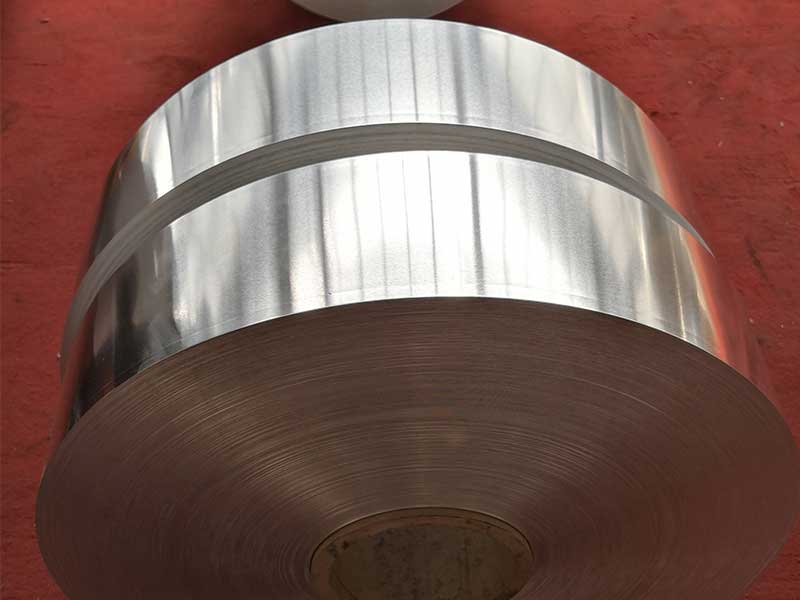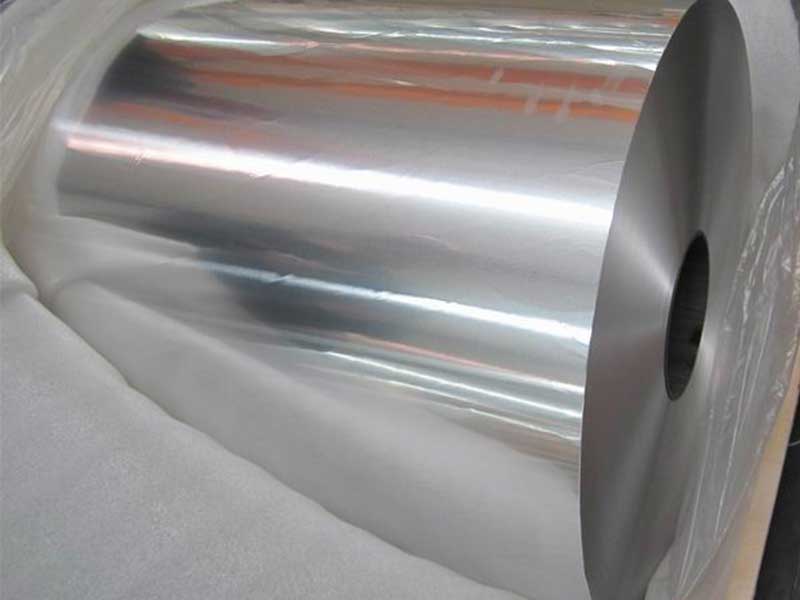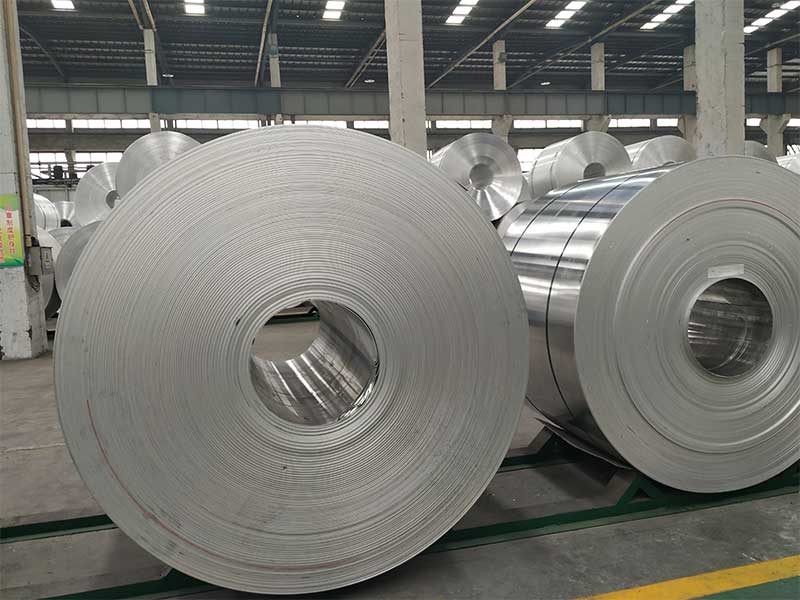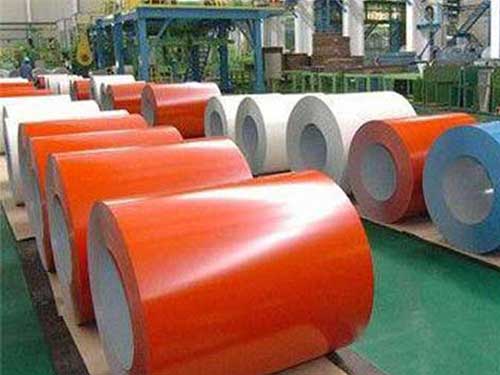

3003 1100 1050 Aluminum Coil 5mm
A 5 mm aluminum coil is not the "thin sheet" most people picture when they hear the word coil. At this thickness, the material stops behaving like a mere skin and starts acting like a structural participant: stiff enough to hold shape, thick enough to resist denting, yet still coilable for high-throughput fabrication. When the alloys in question are 3003, 1100, and 1050, the conversation becomes less about "which aluminum is best" and more about "which kind of reliability do you want to buy": formability that forgives complex bending, corrosion resistance that ignores humid air, or electrical cleanliness that behaves predictably in conductive and reflective applications.
From a distinctive viewpoint, think of these alloys as three different "personalities" that all wear the same outfit-5 mm coil-but respond differently under the hands of a fabricator, the heat of a process line, and the long patience of service environments.
The 5 mm coil reality: why thickness changes the game
Coiled supply at 5 mm allows continuous processing-slitting, leveling, stamping, roll forming, and cutting-without the handling inefficiencies of plate. But 5 mm also introduces practical constraints that influence alloy choice more than many buyers expect.
Springback becomes more pronounced as thickness rises, so the alloy's strain-hardening behavior and temper matter. Coil set and flatness control become more demanding; leveling capability depends on yield strength and work hardening. Joining choices also shift: thicker sections tolerate higher welding heat input but punish poor filler selection with hot cracking or cosmetic defects. Surface quality remains important, but at 5 mm users often care just as much about internal consistency-grain structure, inclusion control, and temper uniformity across width-because the part may be machined, formed, and welded all in the same job.
In short, selecting 3003 vs 1100 vs 1050 at 5 mm is often a decision about fabrication rhythm: how smoothly the material will move through your process without forcing you to "slow the line down to be safe."
Alloy personalities: what makes 3003, 1100, and 1050 different
These three alloys live in the non-heat-treatable family. Their strength is mainly adjusted by cold work (H tempers) and softened by annealing (O temper). That is valuable in coil products, because properties are stable and predictable without the variability of precipitation hardening.
3003 is aluminum with manganese as the defining addition. Mn doesn't make it "high strength," but it raises strength above the nearly pure grades while keeping formability and corrosion resistance very good. It also tends to improve resistance to certain types of surface galling and gives a more forgiving forming window in real-world press conditions.
1100 is commercially pure aluminum, valued for corrosion resistance, high thermal conductivity, and excellent workability. It is the "easygoing" choice when deep drawing, spinning, or decorative finishing matters more than strength.
1050 is an even purer grade (typically higher Al content than 1100), often chosen when electrical conductivity, reflectivity, or chemical cleanliness is prioritized. In practice, 1050 can be the coil you reach for when you want fewer alloying elements influencing conductivity or surface reaction in chemical service.
At 5 mm, these differences express themselves less in brochure-level properties and more in workshop outcomes: how quickly a bend line starts to show orange peel, how consistent a TIG bead looks across a long seam, how stable the coil is during leveling, and how much "extra forming allowance" you need to hit your angles.
Technical details that decide success in fabrication
Temper selection is the hidden lever. For 5 mm coil, the most common tempers include O (annealed), H14 (half-hard), and H24/H22 variants, depending on supplier practice. O temper maximizes formability and minimizes springback but sacrifices strength and can be more prone to handling dents. H14 offers a practical balance for brackets, panels, and enclosures that need stiffness. In 3003, H14 is a widely used workhorse for general fabrication.
Bendability depends on both alloy and temper. For tight radii, 1100-O and 1050-O tolerate aggressive forming; 3003-H14 still bends well but will ask for a slightly larger inside radius to avoid edge cracking, especially if the bend line is parallel to the rolling direction. Grain direction sensitivity becomes more noticeable in thicker stock; specifying transverse bends or requesting a temper/finish optimized for bending can prevent production surprises.
Welding behavior is another differentiator. All three are weldable, but nearly pure grades often produce very clean welds with excellent corrosion resistance afterward. 3003 welds nicely too, but filler selection and heat input should be controlled to maintain appearance and avoid distortion. In thicker 5 mm sections, distortion control is a real cost driver; alloys with lower strength in softer tempers may "pull" more if fixturing and sequence aren't designed carefully.
Surface and corrosion performance is where these alloys quietly shine. In atmospheric exposure, all three form protective oxide layers. In chemical environments, purity can matter; 1050 and 1100 are frequently selected for chemical equipment linings, covers, and ducting where predictable corrosion response is valued. For outdoor architectural details where strength is not extreme but dent resistance matters, 3003 often becomes the pragmatic choice.
Features in application terms: where each alloy earns its keep
In HVAC and thermal management, 3003 is a familiar name because it offers a practical blend of formability, corrosion resistance, and slightly higher strength than pure aluminum. At 5 mm, think of robust drain pans, equipment base trays, transition pieces, and protective housings where stiffness helps and the part still needs to be cut and formed efficiently.
In chemical handling and food-adjacent fabrication, 1100 and 1050 feel "quietly reliable." Their purity supports good corrosion resistance and stable surface behavior, which matters for splash zones, covers, chutes, and cladding. For tanks and ductwork that are fabricated from coil-fed blanks, 5 mm provides dent resistance and welding thickness margin.
In electrical and reflective applications, 1050's higher conductivity and purity can be useful for busbar-related components, shielding plates, and reflective panels, especially when the design values consistent conductivity over elevated mechanical strength. At 5 mm, shielding plates and structural conductive components become plausible, particularly when combined with machining.
In general fabrication and coil-fed production environments, 3003 often offers the best "throughput economics." It resists handling damage better than the pure grades at the same temper, and it gives designers a bit more strength without stepping into the cost and forming penalties of higher-alloy series.
Implementation standards and typical supply expectations
For coil products, buyers frequently reference ASTM B209 for aluminum and aluminum-alloy sheet and plate. Coil dimensional tolerances, flatness expectations, and temper definitions should be aligned with that standard or its regional equivalent. For chemical composition, EN 573 series is commonly referenced in Europe, and ISO standards may apply depending on region and customer requirements.
In procurement language, specifying more than "5 mm coil" prevents most disputes. Clarify the alloy and temper, thickness tolerance, width tolerance, inside diameter, maximum coil weight, surface finish requirements, and whether the application is bend-critical or weld-critical. If the material will be anodized or used decoratively, add surface quality classes and permissible defect criteria because 5 mm coil is often leveled and cut into visible panels.
Typical chemical composition (wt.%)
Values below are typical ranges; always confirm with mill test certificates and the governing standard for your region and product form.
| Alloy | Al (min) | Mn | Cu | Fe | Si | Zn | Mg | Ti | Notes |
|---|---|---|---|---|---|---|---|---|---|
| 1050 | 99.5 | ≤0.05 | ≤0.05 | ≤0.40 | ≤0.25 | ≤0.05 | ≤0.05 | ≤0.03 | High purity, high conductivity |
| 1100 | 99.0 | ≤0.05 | 0.05–0.20 | ≤0.95 | ≤0.45 | ≤0.10 | - | ≤0.05 | Commercially pure, very workable |
| 3003 | Remainder | 1.0–1.5 | ≤0.05–0.20 | ≤0.70 | ≤0.60 | ≤0.10 | - | - | Mn-strengthened, general purpose |
If your line is bend-heavy and you need the material to behave like a cooperative fabric, 1100-O or 1050-O at 5 mm can feel effortless, especially for large-radius forming, spinning, or deep draws. If your product is a fabricated housing or panel where stiffness, dent resistance, and production speed matter, 3003 in a moderately hard temper often reduces rework and handling damage. If your design is electrically sensitive or purity-driven, 1050 provides the cleanest baseline, and its performance tends to be consistent across service conditions where conductivity or surface reaction matters more than strength.
Ultimately, "3003 1100 1050 Aluminum Coil 5mm" is less a product label than a menu of manufacturing outcomes. The right choice is the one that keeps your process flowing at full speed while delivering the service behavior your customer will never notice-because nothing fails, warps, or corrodes enough to become a problem.
https://www.al-alloy.com/a/3003-1100-1050-aluminum-coil-5mm.html