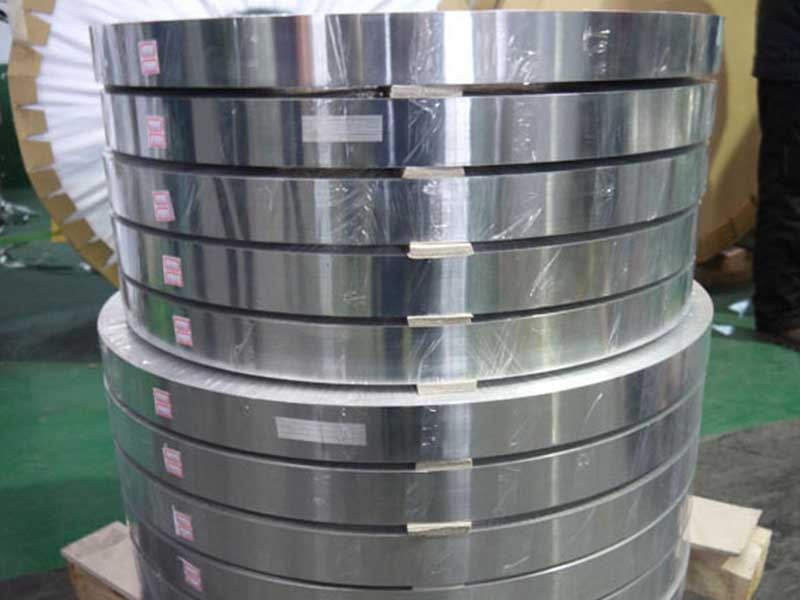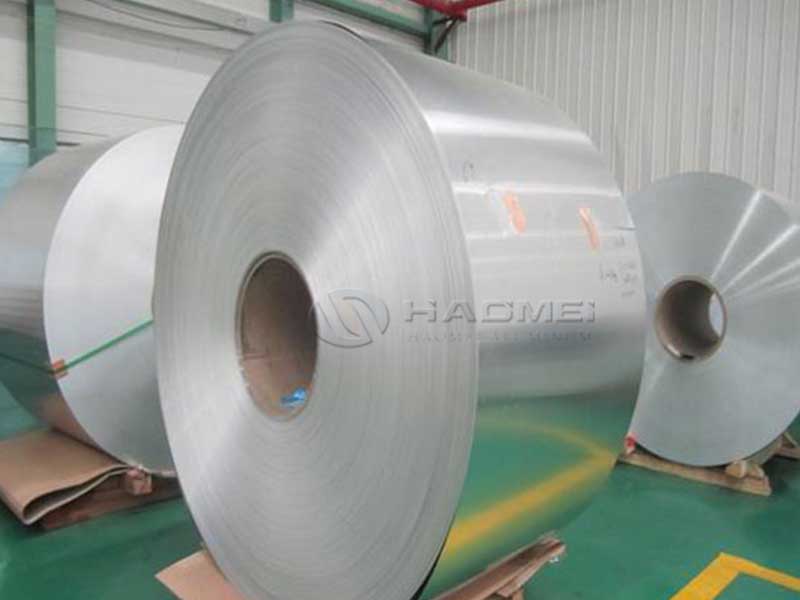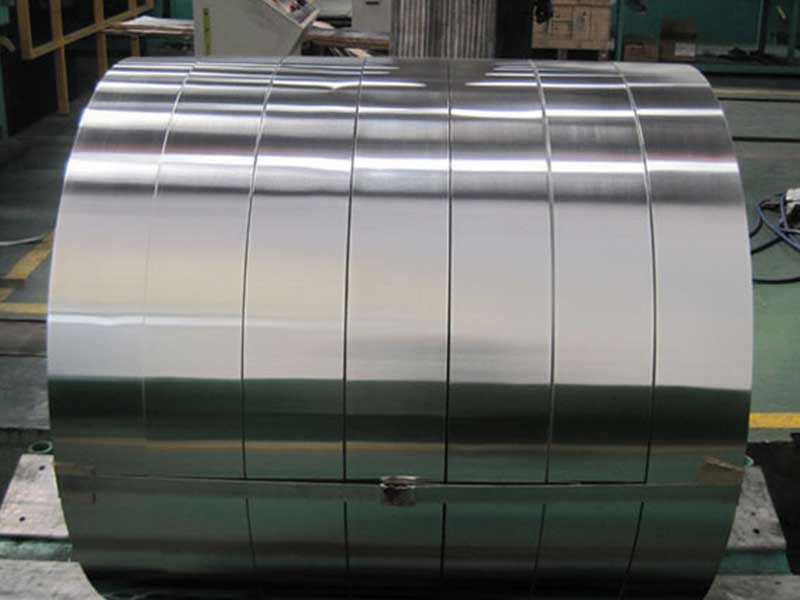

8011 h24 pure aluminum foil
8011 H24 Pure Aluminum Foil
People often ask for "pure aluminum foil" when what they really want is a promise: safe contact with food, stable barrier performance, dependable converting, and a finish that behaves the same on Monday morning as it does on the night shift. From that practical point of view, 8011 H24 foil is less a "chemistry label" and more a working material that has earned its place in packaging lines, pharmaceutical blister plants, household foil rolls, and insulation facings. It is not technically "pure aluminum" in the strict metallurgical sense, yet it delivers many of the user-facing advantages people associate with purity: cleanliness, corrosion resistance, good formability, and consistent sealing behavior.
Why 8011 feels "pure" in real applications
True "pure aluminum" typically refers to 1xxx alloys such as 1050 or 1060, where aluminum content is very high and alloying is minimal. Alloy 8011 belongs to the 8xxx series and is primarily an Al–Fe–Si system. The iron and silicon are not added to make the foil "less pure," but to make it more useful: they increase strength at thin gauges, improve process stability during rolling, and help maintain pinhole resistance and handling robustness.
In converting plants, "pure" often means "predictable." 8011 H24 offers predictable tension behavior on rewinders, consistent dead-fold in household foil, stable forming in blister cavities, and reliable adhesion to lacquers and primers. These are not abstract metallurgical benefits; they are the difference between high yield and scrap.
The H24 temper, explained through the lens of manufacturing
Temper is where many miss start. H24 means the foil has been strain-hardened and partially annealed. In practice, this lands the material in a sweet spot between very soft tempers and harder, springier conditions.
Soft foil tempers can form beautifully, but they are more prone to scratching, tearing at the edges, or stretching unevenly in high-speed lamination. Harder tempers improve handling, yet they may resist forming or create "spring-back" that complicates tight folding and embossing.
H24 is commonly chosen when the product must run fast and still behave politely: it should crease without cracking, accept printing and coating without excessive waviness, and maintain enough strength to survive slitting, rewinding, and downstream packaging operations.
Typical foil gauges for 8011 H24 include ranges used in food containers and lidding, household foil, semi-rigid packaging, and some laminate structures. Exact thickness selection depends on barrier requirement, stiffness target, and whether the foil is used as a stand-alone web or as part of a composite.
How standards shape the "trustworthiness" of 8011 H24
A distinctive feature of packaging foil is that your customer rarely sees the alloy name; they see failures. That is why implementation standards matter as much as chemistry.
Commonly referenced standards and practices include:
- ASTM B479/B479M for aluminum and aluminum-alloy foil (general requirements and dimensional tolerances in many markets)
- EN 546 series for aluminum foil (European dimensional and mechanical requirements)
- EN 573 for chemical composition of aluminum alloys (Europe)
- GB/T standards in China, often used in regional supply chains for foil and temper definitions
- Food contact compliance frameworks such as FDA 21 CFR (US) or EU Framework Regulation (EC) No 1935/2004 and Good Manufacturing Practice (EC) No 2023/2006, plus relevant national measures for coatings and inks
In real procurement, buyers should align not only on alloy and temper, but also on surface condition, oil residue limits, cleanliness, pinhole level, and wetting behavior. Two coils both labeled "8011 H24" can perform differently if one is optimized for blister forming and another for container stock.
Practical performance: what users actually care about
Barrier performance is the headline reason aluminum foil exists. But barrier is not merely thickness; it is also defect control. Pinhole tendency depends on rolling practice, inclusion control, gauge, and handling damage. 8011's composition and industrial maturity make it a reliable choice for stable pinhole performance at production scale.
Formability is the next quiet requirement. Whether you are embossing household foil or forming shallow cavities for lidding, H24 gives a balance of strength and ductility that reduces web breaks and edge tears.
Heat-seal and coating compatibility often decide whether a packaging line is calm or chaotic. 8011 foil is widely used with common primers, lacquers, and heat-seal layers because its surface can be prepared consistently and it resists excessive grain growth issues associated with some ultra-soft conditions.
Thermal conductivity is a bonus that consumers feel without naming it. Foil that heats evenly in cooking applications or supports insulation facings works because aluminum moves heat efficiently.
Chemical composition and mechanical property reference
Actual composition limits and properties should be confirmed against the governing standard and supplier mill certificate. The tables below reflect common industry ranges used for commercial 8011 foil.
Typical chemical composition of AA 8011 (wt%)
| Element | Typical range (wt%) |
|---|---|
| Al | Balance |
| Si | 0.50–0.90 |
| Fe | 0.60–1.00 |
| Cu | ≤ 0.10 |
| Mn | ≤ 0.20 |
| Mg | ≤ 0.05 |
| Zn | ≤ 0.10 |
| Ti | ≤ 0.08 |
| Others (each) | ≤ 0.05 |
| Others (total) | ≤ 0.15 |
These Fe and Si levels are what distinguish 8011 from "pure aluminum" grades, while still keeping the alloy clean and corrosion-resistant for packaging use.
Typical mechanical properties for 8011 foil, H24 (indicative)
Values vary with thickness, rolling schedule, and test standard; confirm per ASTM/EN/GB requirements.
| Property | Typical range |
|---|---|
| Tensile strength (Rm) | 120–170 MPa |
| Yield strength (Rp0.2) | 90–140 MPa |
| Elongation (A50, where applicable) | 2–8% |
In thin foil gauges, elongation measurement can be sensitive to specimen preparation and gauge length, so buyers often evaluate performance through forming trials and line behavior, not only tensile data.
Tempering and processing conditions that matter on the shop floor
Foil behavior is not only about alloy and temper; it is also about how the coil is finished.
Rolling lubrication and residual oil influence wettability, coating adhesion, and odor. Packaging customers frequently specify low-odor, low-residue rolling oil, with controlled surface cleanliness. If the foil will be printed or laminated, dyne level and surface uniformity become practical acceptance criteria.
Annealing practice affects grain structure and "earring" tendencies in forming applications. H24 implies controlled partial annealing after work hardening; the goal is to avoid a foil that is either too stiff to fold cleanly or too soft to run at speed.
Slitting quality often decides whether a "good alloy" becomes a "bad coil." Burr control, edge wave, camber, and telescoping tolerance all affect downstream runnability. For many buyers, specifying edge quality and flatness is as important as specifying composition.
A more honest way to specify "8011 H24 pure aluminum foil"
If the request is driven by marketing language or consumer familiarity, calling 8011 "pure aluminum foil" is understandable in a casual sense, but professionals benefit from precision. A better purchasing description is something like:
"AA 8011 aluminum foil, H24 temper, packaging-grade, with controlled pinholes, specified surface cleanliness for food contact, and compatible with printing/lamination or heat-seal coating as required."
That sentence is longer than the word "pure," yet it is closer to the truth of how packaging succeeds: not through a label, but through controlled variables.