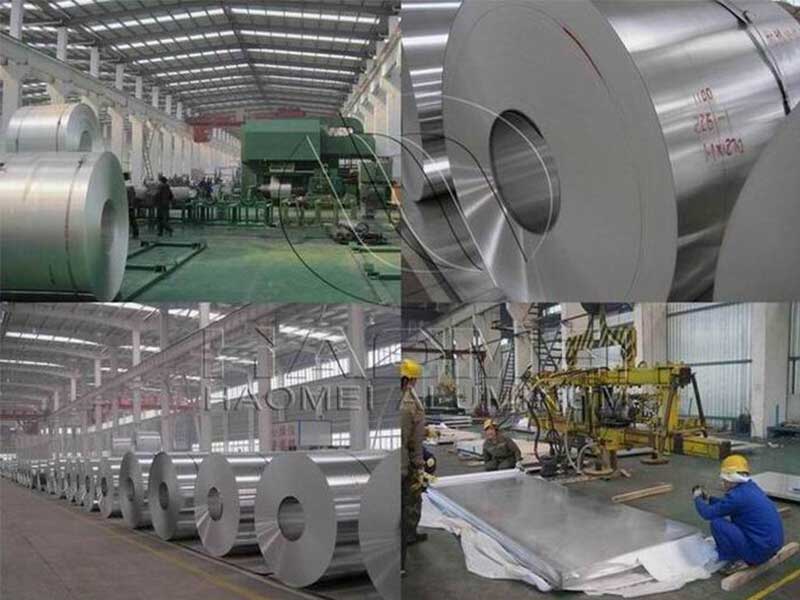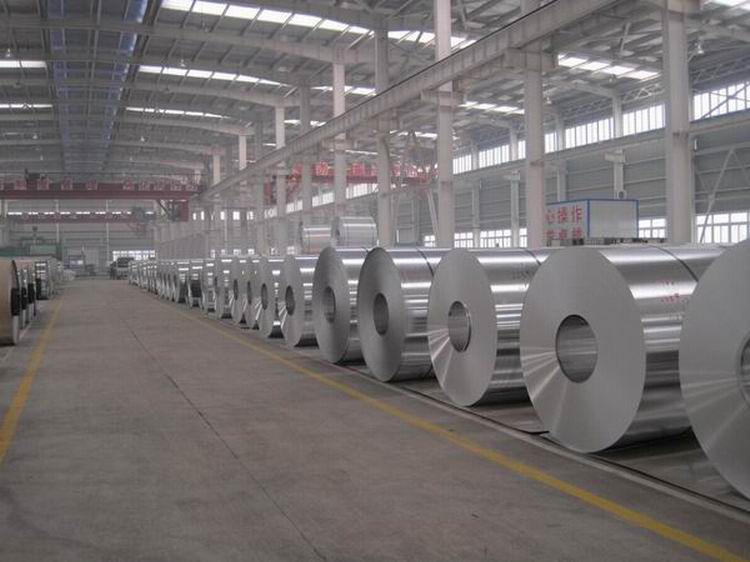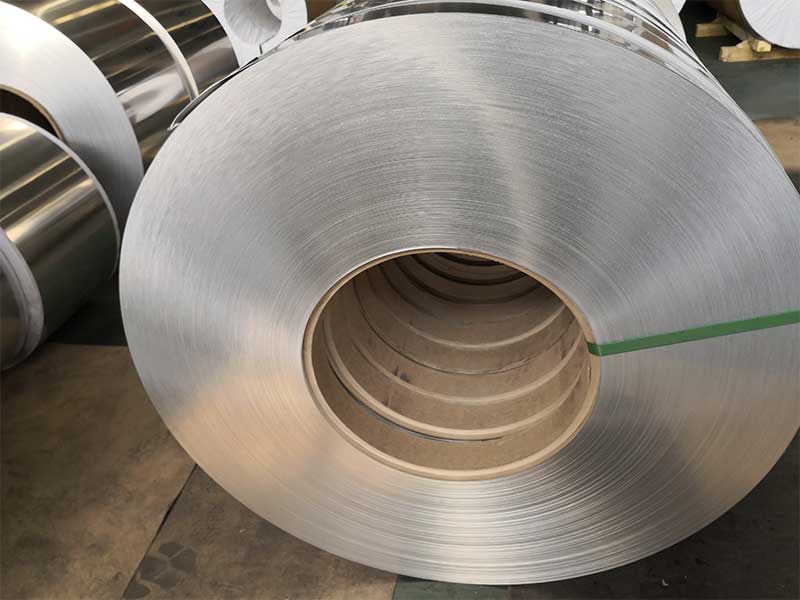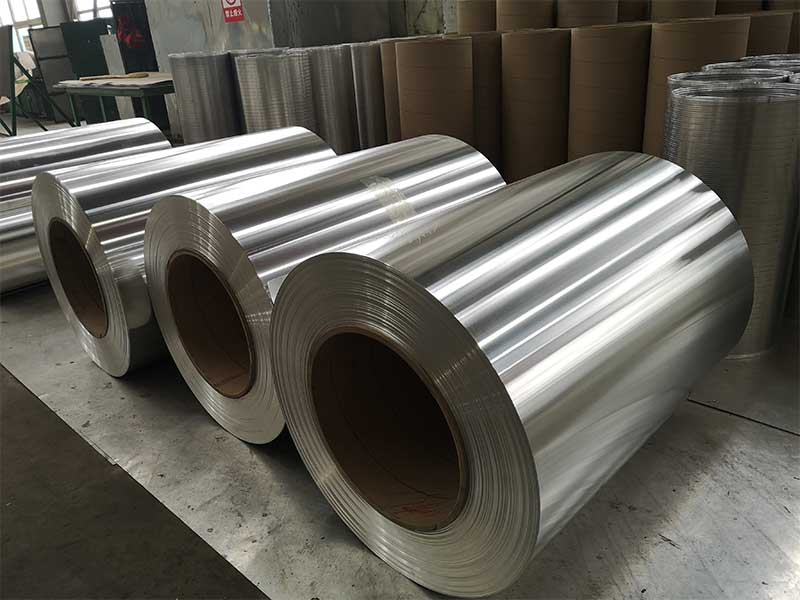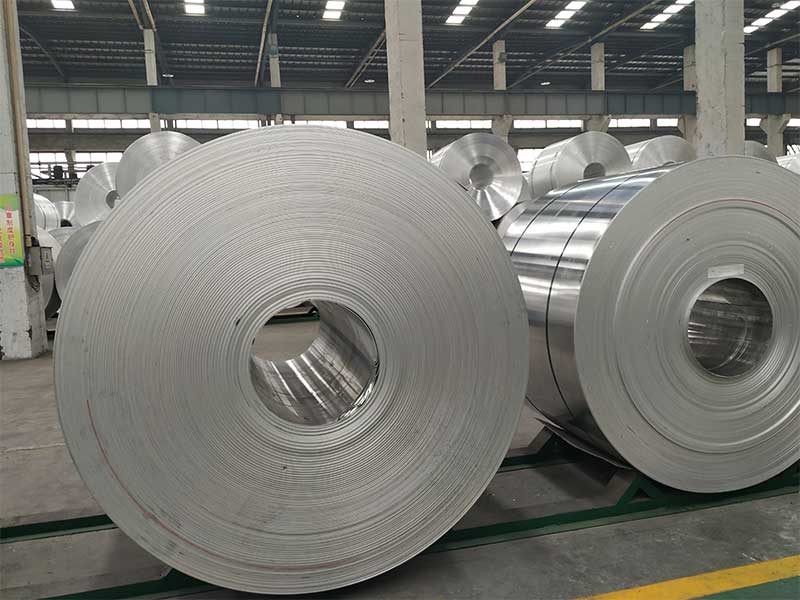

1.1mm 1.2mm 1.3mm aluminum coil
In aluminum processing, a difference of 0.1 mm is not a rounding error-it is a design decision. The thickness band of 1.1mm, 1.2mm, and 1.3mm aluminum coil lives in a practical "middle ground" where sheet begins to behave like structure: stiff enough to hold form, thin enough to be efficiently coiled, cut, and shaped at industrial speed. From a distinctive viewpoint, these gauges are not simply materials; they are tunable mechanical settings for factories that need predictable bending, reliable surface quality, and stable flatness after forming.
This thickness range is chosen when engineers want to reduce part count and reinforcements without paying the weight and forming penalties of thicker plate. It also appears when surface and corrosion performance must be married to production efficiency-especially in continuous roll-forming, stamping, insulation jacketing, trailer panels, and architectural cladding systems.
Why 1.1–1.3 mm behaves differently than "thin sheet"
At around 1 mm and above, aluminum coil begins to show a decisive shift in forming and handling behavior. Coil memory becomes more pronounced, and flatness control matters more because the sheet has enough stiffness to "carry" residual stresses into downstream processes. At the same time, it is still thin enough that a good press brake, roll former, or progressive die can shape it without heavy tonnage.
In practice, 1.1mm, 1.2mm, and 1.3mm are often selected to achieve one of three outcomes:
- A specific stiffness target for panel spans, where "oil-canning" must be minimized without switching to thicker stock
- A reliable bend radius and springback envelope for high-throughput fabrication
- A balance between dent resistance and weight for transportation equipment or enclosure products
The thickness increment is also a quiet lever for corrosion and coating systems. Slightly thicker substrates tolerate more aggressive forming of painted or anodized surfaces, and they can improve perceived quality by reducing waviness and local buckling under handling.
Alloy choice: the real "feature set" behind the thickness
Thickness is only the visible parameter. The true personality of a 1.2mm coil is defined by alloy series and temper, because yield strength, elongation, work-hardening, and corrosion response determine whether that coil becomes a crisp folded edge or a cracked corner.
Common alloys for this gauge range include 1xxx, 3xxx, 5xxx, and 6xxx families:
- 1050/1060/1100 are favored for high conductivity, reflectivity, and easy forming. They are used where strength is secondary and surface matters.
- 3003 and 3105 are the workhorses for general sheet applications, especially where moderate strength and excellent formability are required. 3105 is widely used for painted building products and shutters because it takes coating well and forms predictably.
- 5052 and 5754 bring stronger mechanical performance and marine-grade corrosion resistance. They are selected for transportation panels, enclosures, and environments with salt exposure.
- 6061 or 6063 in coil form are less common for deep forming in soft tempers but can appear when higher strength after heat treatment is needed; processing control is more demanding.
In this thickness band, a manufacturer's "feature" is often not the alloy alone but the stability of properties across the coil length: consistent tensile strength, tight gauge tolerance, controlled crown and camber, and repeatable surface finish. These determine yield in automated lines.
Temper: the hidden dial that controls bending and springback
Temper selection is where 1.1–1.3 mm coil becomes a precision tool.
H14/H24 (strain-hardened) tempers raise strength and improve dent resistance, but increase springback and reduce bendability at tight radii. O temper (annealed) is exceptionally formable and forgiving for complex shapes, but it is softer and more prone to handling dents. H32/H34 in 5xxx series offers a practical balance for structural sheet work, while H19 and other harder conditions are chosen where rigidity and surface durability dominate and bending is mild.
A distinctive way to view temper in this thickness range is as a "production insurance policy." If your parts are simple and the line speed is high, a harder temper may reduce flutter, improve flatness in roll-forming, and resist surface damage. If your geometry is complex and includes hems, beads, or tight flanges, a softer temper prevents cracking and reduces scrap. The same 1.2mm thickness can behave like two different materials based on temper.
Processing and implementation standards that matter
Because 1.1mm–1.3mm coil often feeds automated equipment, implementation standards are not paperwork-they are compatibility rules for global supply chains.
Typical reference standards include ASTM B209 (aluminum and aluminum-alloy sheet and plate), EN 485 (European standard for sheet/strip), and JIS H4000/H4001 in Japan. For painted or coated coil used in building products, coating standards such as AAMA guidelines or coil coating specifications become relevant, while anodizing may follow ISO 7599 or equivalent.
technical checkpoints buyers should align with the supplier include:
- Gauge tolerance and thickness mapping across the width, especially for wide coils used in cladding
- Flatness, residual stress control, and coil set management for roll-forming and stamping
- Surface finish definition such as mill finish, brushed, or pre-painted, including defect limits
- Edge condition and slitting quality to prevent burr-related cracks in forming
Core applications: where these gauges quietly dominate
Architectural and building envelope systems are among the most natural homes for 1.1mm–1.3mm coil. The thickness offers a reassuring stiffness for fascia, soffit, trim, and cladding panels, particularly when paired with 3105 H24 or 3003 H14 for painted coil. It also supports crisp detailing without heavy reinforcement, which architects appreciate because it keeps profiles thin and clean.
Transportation and trailer body panels often choose 5052 H32 in this thickness region when a step up in corrosion resistance and fatigue performance is needed. The result is a skin that can take vibration and weather while keeping weight under control. For interior paneling, partitions, and protective covers, 3003 or 1100 can provide cost-effective formability and an attractive surface.
HVAC and thermal insulation jacketing is another major application. Here the coil is expected to wrap ducts, pipes, and equipment with clean bends and minimal springback surprises. 1.1–1.3mm is thick enough to resist denting in plant environments while still being easy to fabricate onsite or in shops.
Electrical and general industrial enclosures benefit from this gauge range because it supports threaded inserts, hinges, and mounting features better than thinner sheet, especially when vibration resistance and "feel" are part of the product's perceived quality. When conductivity is important-busbar covers, reflective panels, or specialized heat-related components-1xxx series coil can be selected.
Chemical composition table (typical limits)
Actual limits depend on the governing standard and mill practice. The table below reflects commonly referenced nominal ranges for widely used alloys in this thickness band.
| Alloy | Si (%) | Fe (%) | Cu (%) | Mn (%) | Mg (%) | Cr (%) | Zn (%) | Ti (%) | Al |
|---|---|---|---|---|---|---|---|---|---|
| 1100 | ≤0.95 (Si+Fe) | - | 0.05–0.20 | ≤0.05 | - | - | ≤0.10 | - | ≥99.00 |
| 3003 | ≤0.60 | ≤0.70 | 0.05–0.20 | 1.0–1.5 | - | - | ≤0.10 | - | Rem. |
| 3105 | ≤0.60 | ≤0.70 | ≤0.30 | 0.3–0.8 | 0.2–0.8 | - | ≤0.40 | ≤0.10 | Rem. |
| 5052 | ≤0.25 | ≤0.40 | ≤0.10 | ≤0.10 | 2.2–2.8 | 0.15–0.35 | ≤0.10 | - | Rem. |
| 5754 | ≤0.40 | ≤0.40 | ≤0.10 | ≤0.50 | 2.6–3.6 | ≤0.30 | ≤0.20 | ≤0.15 | Rem. |
| 6061 | 0.4–0.8 | ≤0.70 | 0.15–0.40 | ≤0.15 | 0.8–1.2 | 0.04–0.35 | ≤0.25 | ≤0.15 | Rem. |
A practical way to specify 1.1/1.2/1.3 mm coil for real-world success
When buyers struggle with "mysterious" cracking, uneven bends, or waviness, the root cause is often a mismatch between thickness, temper, and forming method. For tight bend radii and complex profiles, choosing 3003 or 3105 in O or H24 can stabilize outcomes. For stronger panels and corrosion-heavy environments, 5052 H32 at 1.2–1.3mm frequently provides a high-confidence solution. For appearance-driven cladding, pre-painted 3105 H24 in 1.1–1.2mm can deliver crisp lines with efficient weight.
Ultimately, 1.1mm, 1.2mm, and 1.3mm aluminum coil is less about "thin versus thick" and more about engineering a repeatable behavior. At these gauges, the material becomes a dependable platform: stiff enough to look finished, compliant enough to be formed quickly, and versatile enough to span building skins, industrial equipment, transport panels, and everyday fabricated products-without shouting about it. It simply performs, coil after coil, when the alloy and temper are selected with the application's real stresses in mind.
https://www.al-alloy.com/a/11mm-12mm-13mm-aluminum-coil.html