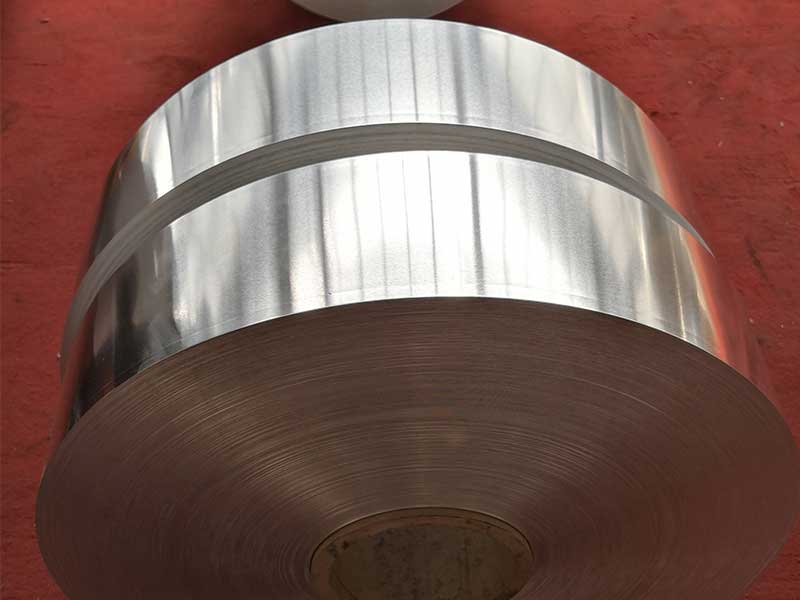

Aluminum Coil 1050 1100 3003 5052
Choosing an aluminum coil is often treated like picking a thickness and a price point. In practice, it's closer to choosing a "behavior profile" that will follow your product through forming, joining, finishing, service life, and even recyclability. Seen from that angle, 1050, 1100, 3003, and 5052 are not merely alloy numbers; they are four distinct personalities that respond differently to the same manufacturing stresses. their features and applications becomes easier when you view them through the lens of what the coil must do in your process: conduct heat, accept a deep draw, resist salt spray, hold a cosmetic finish, or survive vibration without cracking.
1050 and 1100: purity-driven coils for conductivity and clean forming
Aluminum 1050 and 1100 sit in the 1xxx family, where the defining feature is high aluminum purity. Their "superpower" is predictable softness and excellent conductivity, paired with outstanding corrosion resistance in neutral environments. When a design requires a coil that will form easily and behave consistently at the press brake, 1xxx alloys often feel like the most cooperative option.
In production terms, 1050 is frequently selected for applications that need very high electrical or thermal conductivity along with a clean surface for finishing. Think of transformer windings and heat-related components, reflective panels, lamp holders, insulation jacketing, and general-purpose stamping where strength isn't the limiting factor. Its low alloy content helps it remain stable in anodizing and bright finishing operations, although the final appearance depends heavily on surface preparation and rolling quality.
1100 is similar but with slightly different impurity allowances that can affect forming feel and surface behavior. Many fabricators like 1100 for deep drawing, spinning, and general sheet-metal work where the coil must "flow" without tearing. Typical uses include cookware bottoms (when not requiring high strength), nameplates, chemical equipment trim, and architectural flashings. In practice, both 1050 and 1100 are often chosen when the priority is surface, conductivity, and formability rather than load-bearing capacity.
A distinctive way to frame 1050/1100 is to see them as "finishing-first" coils. If your value is created by how the surface looks or conducts rather than how it carries structural stress, 1xxx alloys simplify your downstream variables.
3003: the coil that tolerates real-world fabrication
If 1xxx coils are the finishing-first choice, 3003 is frequently the "fabrication-first" alloy. As an Al-Mn alloy (3xxx family), 3003 brings a meaningful step up in strength over 1050/1100 while remaining highly formable. Manganese improves resistance to deformation without making the material brittle, which is why 3003 is so common in HVAC, heat exchangers, building cladding, and general forming.
3003's signature feature is balance. It bends and rolls well, can be stamped into complex shapes, and provides better dent resistance than 1xxx alloys for panels and casings. It also tends to perform reliably in brazing sheet systems (when used as core or with appropriate clad layers) for heat exchanger fins and tubes, though actual brazing performance depends on product design and filler/clad selection rather than the "3003" label alone.
In the field, 3003 shows strong general corrosion resistance, especially for atmospheric exposure, and it is widely painted or coated. For guttering, roofing elements, and decorative panels, 3003 often earns its place because it is forgiving: it allows manufacturers to form parts at speed without demanding extreme process controls.
5052: when corrosion, fatigue, and durability become the design center
5052 belongs to the 5xxx family (Al-Mg alloys). Magnesium is the to its excellent corrosion resistance, particularly in marine and salt-laden environments, and its higher strength compared with 1xxx and 3xxx alloys. When a coil must perform not only on the press line but also under cyclic loads, vibration, or outdoor exposure, 5052 is a practical step up.
5052 is widely used in marine components, fuel and hydraulic lines (where appropriate), appliance panels, truck and trailer body parts, enclosures, and pressure-related sheet applications that do not require heat-treatable strength. It is also valued for good fatigue performance and strong resistance to seawater corrosion. In architectural uses, 5052 can be an excellent choice for coastal installations, signage frames, and outdoor housings.
A technical nuance: 5052 is not heat-treatable for strength in the way 6xxx or 7xxx alloys are. Its strength is mainly controlled by cold work (temper). That makes temper selection central to its performance, especially if you need a predictable balance between formability and final stiffness.
Temper as the "hidden specification" in coil purchasing
All four alloys are commonly supplied in tempers that dramatically change their behavior during forming and in service. For coil buyers, the temper is often more influential than the alloy number.
Common temper options include O (annealed) for maximum formability; H12/H14 for lightly strain-hardened conditions that improve stiffness while retaining workability; and H16/H18 for higher strength with reduced ductility. For 5052, tempers like H32 and H34 are widely used in sheet and coil because they provide a strong, stable combination of strength and corrosion resistance without pushing formability to the edge.
Implementation-wise, producers typically follow recognized standards for chemical composition and mechanical properties. In international trade, EN 573 (composition) and EN 485 (mechanical properties for sheet/strip) are common references, while ASTM B209 is widely used in North America for aluminum and aluminum-alloy sheet and plate (often applied to coil by product agreement). For temper designations and definitions, EN and ASTM systems align conceptually but use their own conventions. The practical takeaway is that compliance should be verified not just by alloy, but by the full callout: alloy, temper, thickness, width tolerance, surface finish, and applicable standard.
Distinctive application logic: matching coil "character" to product purpose
When the product's main job is to transfer heat or conduct electricity, 1050 and 1100 are hard to beat. Busbars, heat spreaders, and reflective or decorative components benefit from purity-driven performance and easy forming. If the part must be deeply drawn, spun, or shaped with minimal springback and maximum consistency, 1100-O is often a comfortable process choice.
When the product is a formed enclosure, a duct, a fin, or a panel that must resist denting and survive daily handling, 3003 tends to be the rational "default." It behaves well in roll forming and bending operations and provides a sturdier feel without the cost or forming limits of higher-strength alloys.
When the environment is the real opponent-salt air, humidity cycles, road spray, and mechanical vibration-5052 becomes the coil that keeps its promise long after installation. It is frequently chosen not because it is the strongest aluminum, but because its durability profile is dependable in corrosive exposure, especially when coatings or paints are part of the system.
Chemical composition reference (typical limits)
Below is a practical, specification-oriented view of typical composition limits. Exact limits depend on the governing standard and product agreement.
| Alloy | Al (min) | Si (max) | Fe (max) | Cu (max) | Mn (max) | Mg (max) | Zn (max) | Cr (max) | Ti (max) |
|---|---|---|---|---|---|---|---|---|---|
| 1050 | 99.50 | 0.25 | 0.40 | 0.05 | 0.05 | 0.05 | 0.07 | - | 0.05 |
| 1100 | 99.00 | 0.95 (Si+Fe) | 0.95 (Si+Fe) | 0.20 | 0.05 | - | 0.10 | - | 0.05 |
| 3003 | Rem. | 0.60 | 0.70 | 0.05–0.20 | 1.0–1.5 | - | 0.10 | - | - |
| 5052 | Rem. | 0.25 | 0.40 | 0.10 | 0.10 | 2.2–2.8 | 0.10 | 0.15–0.35 | 0.10 |
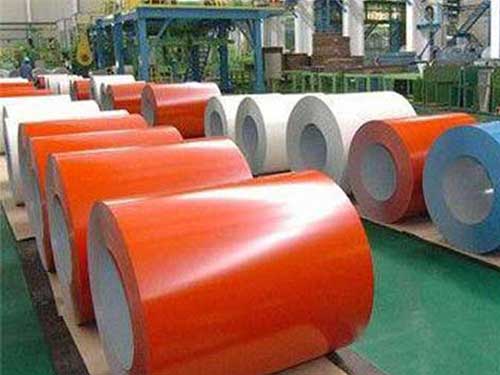
Aluminum coil success is rarely determined by alloy alone. Surface class, pinhole limits for finstock, flatness requirements for roll forming, edge condition for slitting, and coating compatibility for prepainted coil often decide whether a production run is smooth or frustrating. If you specify 1050, 1100, 3003, or 5052 with the right temper, appropriate standard, and a realistic tolerance package, the alloy's natural strengths show up exactly where you need them: in stable forming, reliable finishing, and predictable service performance.
From this viewpoint, these four alloys form a compact toolkit. 1050 and 1100 deliver purity-led conductivity and finish. 3003 delivers fabrication resilience and everyday strength. 5052 delivers environmental durability and long-term confidence. The smartest selection is the one that matches the coil's "character" to the story your product must live out in the real world.
https://www.al-alloy.com/a/aluminum-coil-1050-1100-3003-5052.html