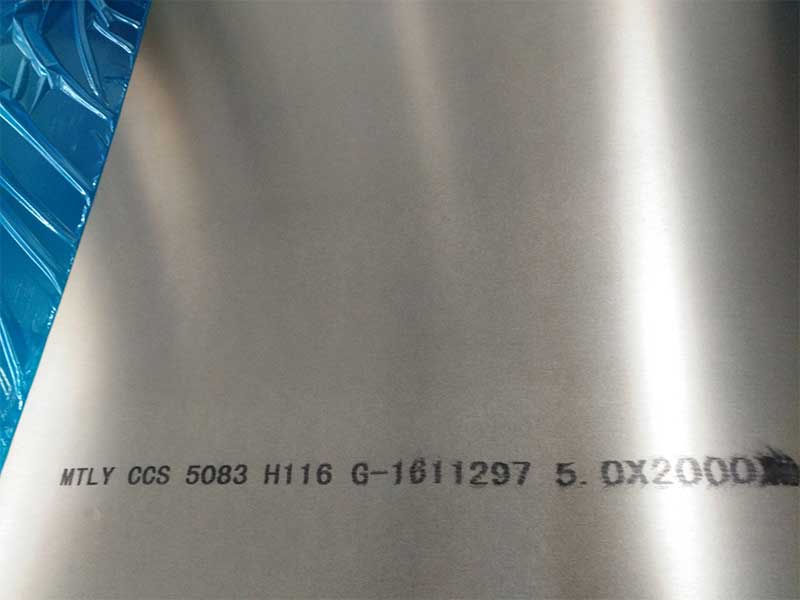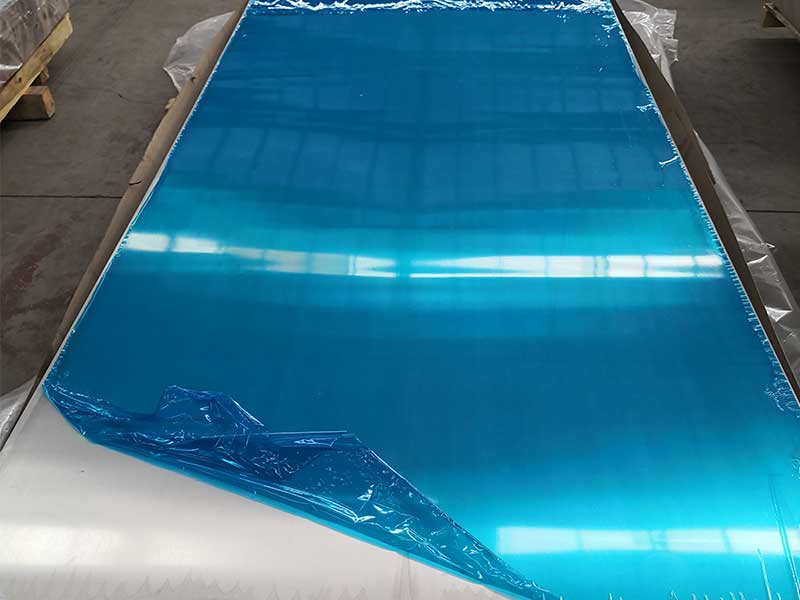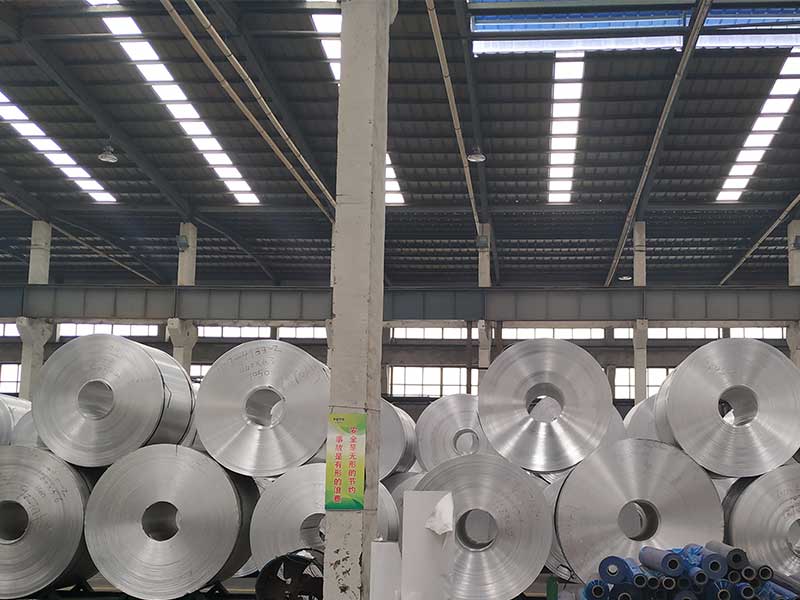

Al 5083 h111
If aluminum alloys had passports, Al 5083 would be stamped at every port where salt, spray, and hard service live. It is the alloy you meet not in a showroom but on a working deck: ship hulls, coastal platforms, gangways, LNG vaporizer panels, vehicle floors, pressure panels in chilled environments-places where corrosion and fatigue don't negotiate. Add the temper H111, and the personality becomes clearer: not aggressively strengthened by heavy cold work, not softened by anneal, but steadied-like a craftsman who prefers reliable habits over heroic feats.
A temperament built for seawater realities
Al 5083 belongs to the Al-Mg family (5xxx series), with magnesium as the main strengthening element. That single design decision is why it keeps showing up in marine and cryogenic projects. Magnesium improves strength through solid-solution strengthening and helps the alloy retain good toughness at low temperatures. Unlike heat-treatable alloys, 5083 doesn't rely on precipitation hardening; it does its work with composition, processing, and a sensible temper.
In seawater-adjacent service, corrosion is not just "rust prevention." It is galvanic couples, crevice conditions under gaskets, chloride exposure, intermittent drying, and mechanical abrasion that removes protective films. 5083 is valued because it forms a stable oxide layer and generally resists marine atmospheric corrosion better than many alternatives, while keeping strength high enough to avoid oversizing everything. It is not invincible, though. If it is exposed to elevated temperatures for long periods, especially around the sensitization range typical for Mg-containing alloys, it can become prone to intergranular corrosion due to β-phase precipitation. This is why good design and service-temperature awareness matter as much as alloy selection.
What H111 means when you're actually building something
H111 is often misunderstood because it sounds like a "mild" temper-and it is, intentionally. H111 indicates the product has been strain-hardened slightly, usually by limited cold work after annealing or by a controlled amount of deformation inherent to the manufacturing process. It is less cold-worked than H116 or H321, which are commonly specified for marine plate with particular corrosion performance requirements.
From a fabricator's point of view, H111 is the temper you choose when you want good formability and reliable weld behavior without chasing the highest possible yield strength. It is forgiving during bending and rolling, and it tends to reduce the risk of cracking during forming compared with harder tempers. You trade some strength for easier fabrication and a more "predictable" response under the press brake.
In procurement language, H111 can also be a sign that the product is intended for general fabrication rather than a specialized marine plate regime. That doesn't make it inferior; it makes it honest about its role.
Typical mechanical expectations (and the fine print)
Mechanical properties depend on thickness, product form (plate, sheet, extruded), and the governing standard. In practice, 5083 H111 sits in a range that is strong enough for structural panels and stiffened plate work, while still bend-friendly.
Common reference values for 5083 in H111 temper are typically around:
- Tensile strength in the neighborhood of 275–350 MPa
- Yield strength often around 110–200 MPa
- Elongation frequently around 10–20% depending on thickness and orientation
These are not "one-number" promises; they are ranges controlled by standards and mill certification. If your design is margin-tight, you do not design off a brochure-you design off the exact standard and the mill test certificate for the thickness you're buying.
Chemical composition: the alloy's signature
5083 is defined primarily by magnesium, with manganese as an important secondary element for strength and structure control. Chromium is often present to help with grain structure and corrosion behavior. Limits vary slightly by standard, but the chemistry window below reflects widely used definitions (such as AA/ASTM and EN ranges) and what mills commonly certify.
Typical chemical composition limits for Al 5083 (wt.%)
| Element | Typical limit/range (wt.%) |
|---|---|
| Mg | 4.0–4.9 |
| Mn | 0.4–1.0 |
| Cr | 0.05–0.25 |
| Si | ≤ 0.40 |
| Fe | ≤ 0.40 |
| Cu | ≤ 0.10 |
| Zn | ≤ 0.25 |
| Ti | ≤ 0.15 |
| Al | Balance |
If you are selecting 5083 for marine service, pay attention to copper. Keeping Cu low is one reason 5083 maintains good corrosion resistance in chloride environments compared with some other alloys.
Standards and implementation: where the paperwork protects the project
In real projects, "5083 H111" is only half the sentence. The other half is the product standard and inspection regime. Commonly encountered references include ASTM B928 for high-magnesium marine plate (often with H116 or H321 tempers), ASTM B209 for sheet and plate, and EN standards such as EN 485 for sheet/plate properties and EN 573 for composition.
If the application is marine hull structure, many buyers also align with classification society requirements. Even when the society does not dictate 5083 H111 specifically, it will influence documentation expectations: traceability, heat numbers, mechanical testing frequency, and sometimes corrosion-related conditions.
A practical implementation detail: if the design environment is seawater immersion or long-term coastal exposure, you should confirm whether H111 is acceptable for the corrosion performance expectation, or whether a temper like H116/H321 is preferred for plate. H111 can be appropriate in many fabricated components, but it should be a conscious choice, not an accidental one.
Welding: where 5083 earns its reputation
5083 is one of the most weldable high-strength aluminum alloys in common use. MIG (GMAW) and TIG (GTAW) are typical. In production, pulsed MIG is popular for controlling heat input and improving bead profile.
Filler metal selection often comes down to matching strength, corrosion resistance, and crack sensitivity. ER5356 is widely used with 5083 to maintain good mechanical properties and corrosion performance. ER5183 is also common when higher strength in the weld metal is desired. The wrong filler can quietly undermine the reason you chose 5083 in the first place, especially in marine service.
Heat input discipline matters. Excessive heat and poor interpass control can increase distortion, reduce mechanical properties in the heat-affected zone, and contribute to sensitization risk in service. Cleanliness is not a suggestion with aluminum welding; oxide removal and hydrocarbon contamination control are essential to avoid porosity and lack of fusion.
Forming and machining: the "shop-floor" feel of H111
H111 tends to behave politely under forming operations. It can be rolled, bent, and shaped with less springback than harder tempers, which helps when you are building curved panels or tight-fit assemblies. That said, bend radius requirements still depend on thickness and grain direction. If you bend across the rolling direction, you usually get better resistance to cracking than bending parallel to it.
Machining 5083 is workable but not as clean-cutting as some heat-treatable alloys. It can produce built-up edge on tools if parameters are wrong. Sharp tooling, appropriate rake, and good chip evacuation are practical necessities.
Corrosion thinking: beyond "marine resistant"
5083's corrosion resistance is one of its biggest selling points, but it performs best when design and fabrication respect aluminum's rules. Avoid crevices where stagnant saltwater can concentrate. Choose compatible fasteners or isolate dissimilar metals to reduce galvanic attack. Use coatings or sealants where abrasion will repeatedly strip the oxide film. And be careful with sustained elevated temperature service; if your component lives near engines, exhaust systems, or warm tanks, evaluate sensitization risk and consider alternative alloys or tempers.
H111 is not about chasing the top line on a strength chart. It is about confidence: confidence that the plate will form without drama, that weld procedures will be robust, that repairs in the field won't turn into metallurgy surprises, and that the structure will survive the daily insults of chloride, vibration, and impact.
Al 5083 H111 is, in a sense, an alloy-temper combination that prefers repeatable outcomes. It doesn't demand heroic process control to deliver value, yet it still carries the DNA of a serious marine alloy. When a project is judged not by how the datasheet looks, but by how quietly the structure endures, 5083 H111 is often the choice that feels less like optimism and more like engineering maturity.