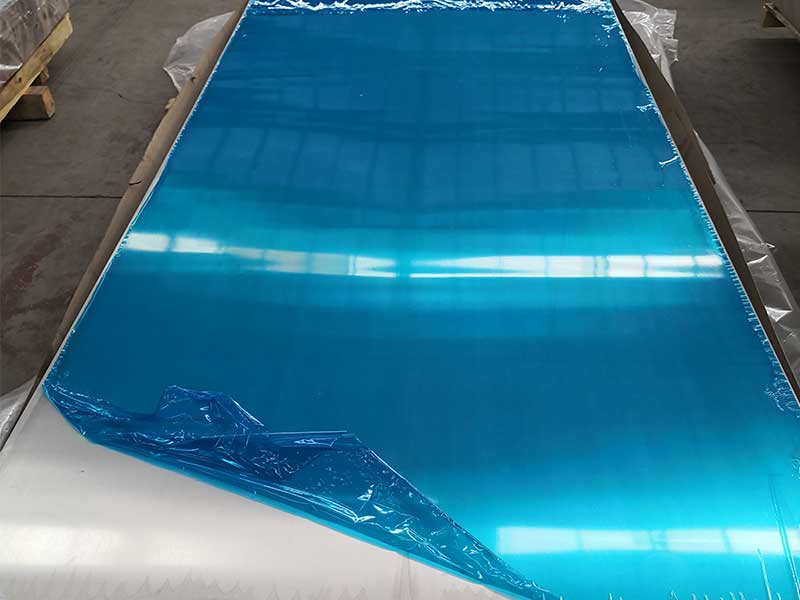

Aluminum sheet Mill 5086 H32 H34 H112 H116
Aluminum sheet Mill 5086 H32 H34 H112 H116
Walking through a modern rolling mill, you quickly realize that aluminum sheet is less a "product" than a set of decisions frozen into metal. Alloy selection is one decision. Temper is another. Thickness, flatness, surface, and inspection standards are still more. With Aluminum 5086 sheet, those decisions tend to orbit one central expectation: the sheet must endure real service-salt spray, vibration, forming, welding, and time-without drama. The tempers H32, H34, H112, and H116 are not just suffixes; they are different personalities of the same alloy, tuned for different kinds of risk.
What makes 5086 distinct in the 5xxx family
5086 is a non-heat-treatable, magnesium-bearing aluminum alloy. It earns its reputation where corrosion and durability matter more than extreme strength: marine hulls and superstructures, docks, gangways, pressure housings, cryogenic components, transportation panels, and welded fabrications that must remain stable and predictable.
In a mill context, 5086 is often chosen because it welds well and retains good strength in welded zones compared with some higher-strength alloys. It also resists seawater corrosion better than many general-purpose grades. Yet, it still forms and machines like a practical metal, not a laboratory curiosity.
Customers frequently ask, "What's the difference between H32 and H34?" or "Do I really need H116 for marine?" From a mill's viewpoint, temper is a contract: it sets expectations for strength, ductility, corrosion performance, and the amount of springback or forming margin the sheet will offer.
Because 5086 is strain-hardened rather than precipitation-hardened, the "H" tempers reflect controlled cold work and stabilization. Each temper balances strength against formability and corrosion behavior.
the tempers: H32, H34, H112, H116
H32 is the steady all-rounder. It is strain-hardened and stabilized to a quarter-hard level. Many fabricators like it because it forms more willingly than harder tempers while still offering a meaningful strength lift over annealed material. If your job involves moderate forming, rolling, bending, and subsequent welding, H32 often feels forgiving.
H34 steps up the cold work. It is strain-hardened and stabilized to roughly half-hard. In practice, H34 is selected when you want higher strength and dent resistance, and your forming is simpler or you can accommodate larger bend radii. If a design is thickness-sensitive and you want to avoid increasing gauge, H34 is a common alternative-provided forming operations are not too severe.
H112 is a different mindset. It indicates "as-fabricated" or "hot worked" material with a minimum amount of strain hardening. In marine and industrial supply chains, H112 can appear when plate or sheet is produced with certain process routes where mechanical properties are guaranteed at a minimum level but not pushed to the same strain-hardened range as H32/H34. It is valued for stability and practicality rather than peak strength.
H116 is the sea-going specialist. It is a strain-hardened temper with added requirements related to resistance to exfoliation corrosion and stress corrosion cracking for marine service. If your sheet will live in saltwater environments, remain wet for long periods, or face crevice conditions, H116 is often specified not because it is the strongest, but because it reduces corrosion-related surprises. The mill will typically validate H116 with additional testing and documentation aligned with marine standards.
Chemical composition: what you're really buying
5086's performance starts with chemistry, and the mill controls chemistry tightly because corrosion resistance and weld behavior are chemistry-sensitive. Typical composition limits are set by implementation standards such as ASTM B928/B928M (marine plate and sheet) and ASTM B209 (general sheet and plate), with EN standards used in some regions.
Typical chemical composition limits for Aluminum 5086 (wt.%)
| Element | Content (wt.%) |
|---|---|
| Magnesium (Mg) | 3.5–4.5 |
| Manganese (Mn) | 0.2–0.7 |
| Chromium (Cr) | 0.05–0.25 |
| Silicon (Si) | ≤ 0.40 |
| Iron (Fe) | ≤ 0.50 |
| Copper (Cu) | ≤ 0.10 |
| Zinc (Zn) | ≤ 0.25 |
| Titanium (Ti) | ≤ 0.15 |
| Others (each) | ≤ 0.05 |
| Others (total) | ≤ 0.15 |
| Aluminum (Al) | Remainder |
Magnesium is the main strength driver. Manganese and chromium help with grain structure and corrosion performance. Copper is deliberately kept low because copper can reduce corrosion resistance in many environments.
Mechanical behavior: strength, forming, and the "springback tax"
In the shop, 5086's mechanical properties are felt as a negotiation between strength and bendability. Higher strain hardening increases yield and tensile strengths but also increases springback and can tighten bend radius requirements. If you're brake-forming tight corners, H32 is often selected because it reduces cracking risk and keeps bending more controllable. If you're mainly cutting and welding with minimal forming, H34 may help you meet stiffness or dent-resistance goals without thicker material.
Because property values depend on thickness, product form, and the governing standard, mills typically provide certified test reports for the specific heat and lot. When you compare quotes, look beyond "5086 H32" on a label and confirm which standard the mill is certifying to, and what thickness range those properties apply to.
Standards that matter in procurement and inspection
From a reliability standpoint, the most important decision isn't only the temper-it's the standard invoked on the purchase order. For marine service, ASTM B928/B928M is widely used because it includes corrosion-related requirements and tempers such as H116. For more general sheet and plate supply, ASTM B209 is common. If you need tight tolerances, surface class, or specific testing, spell it out in the order: thickness tolerance, flatness expectations, surface finish, protective film, and whether ultrasonic inspection or additional corrosion testing is required.
In a mill's quality system, temper control is tied to process controls like reduction schedules, stabilization practices, and final inspection. For H116 in particular, compliance is not just a label; it reflects additional discipline in how the material is produced and verified.
Welding and service performance: where 5086 earns its keep
5086 is frequently chosen for welded structures because it maintains good mechanical integrity after welding and offers excellent corrosion resistance in many marine and industrial environments. If your design includes long weld runs, intermittent welds with crevices, or multi-pass welds, you benefit from 5086's combination of chemistry and temper options.
That said, the sheet's temper can influence fabrication strategy. Harder tempers can be more sensitive to forming-induced stress near weld seams if the design stacks forming and welding in the same area. A mill-minded way to think about it is to choose the temper that places the least burden on your most difficult operation. If forming is hard, don't buy strength you'll "pay back" through cracking risk. If forming is easy and stiffness is critical, H34 may be the simplest cost-performance win. If corrosion is the chief enemy, H116 is often the calm choice.
Choosing between H32, H34, H112, and H116 without regret
A practical selection approach is to imagine where your project can least tolerate variability. If your risk is dimensional stability and repeatable forming, H32 often reduces drama. If your risk is deflection, oil-canning, or dents, H34 can reduce gauge or increase stiffness at the same thickness. If your risk is procurement simplicity for hot-worked product with minimum properties, H112 can be appropriate depending on the specification path. If your risk is long-term corrosion in seawater exposure, H116 is frequently the most defensible option when a marine standard is in play.
In the end, "aluminum sheet Mill 5086 H32 H34 H112 H116" is not just a catalog phrase. It's a map of how rolling mills translate service conditions into controlled microstructure. When you choose the temper deliberately-and pair it with the right standard and inspection expectations-you're not just buying sheet. You're buying predictability.
https://www.al-alloy.com/a/aluminum-sheet-mill-5086-h32-h34-h112-h116.html