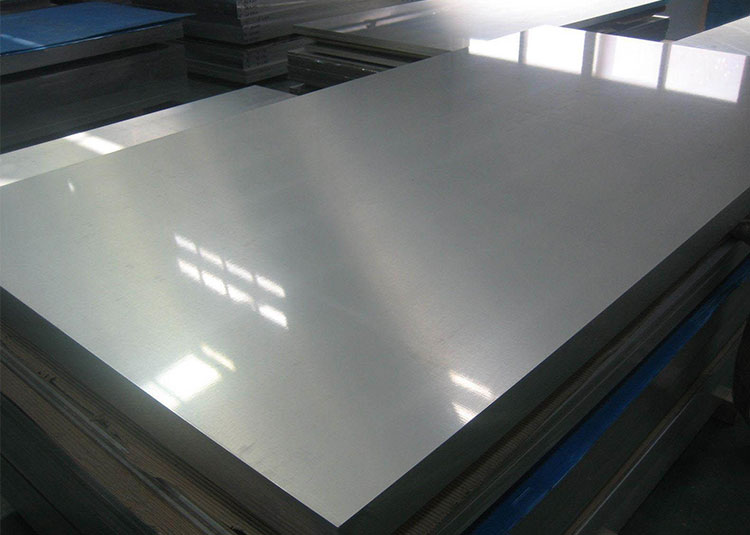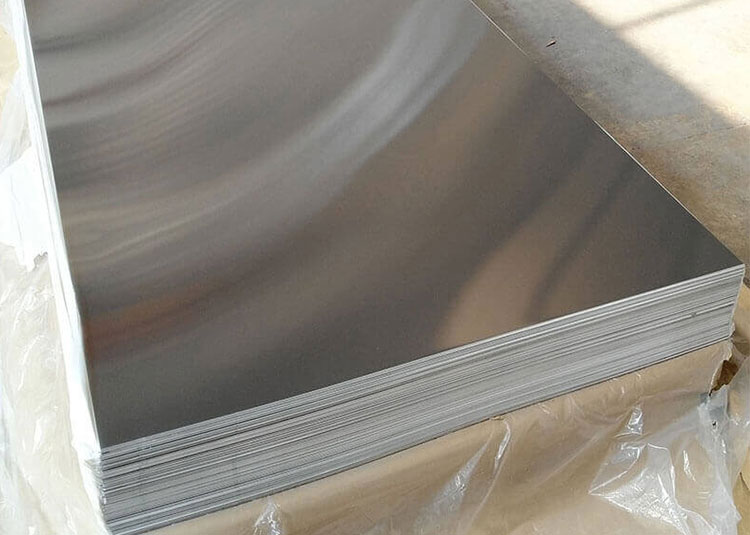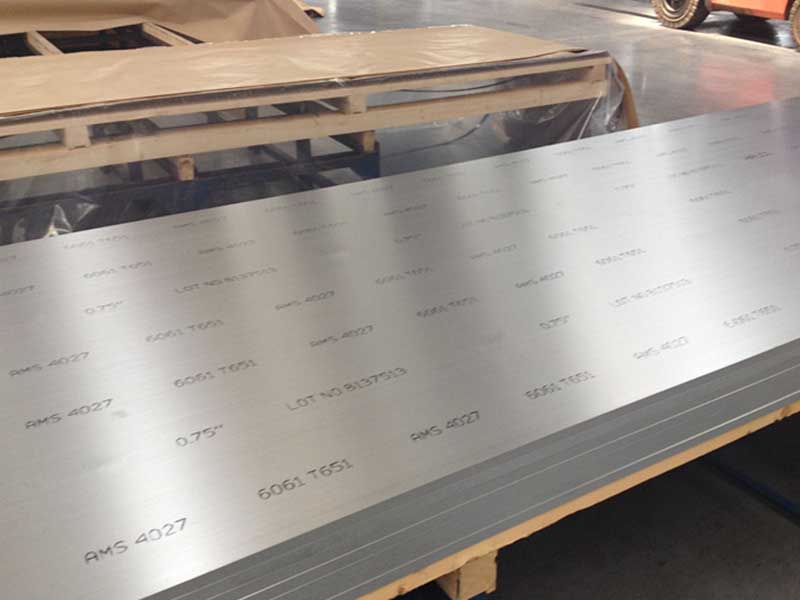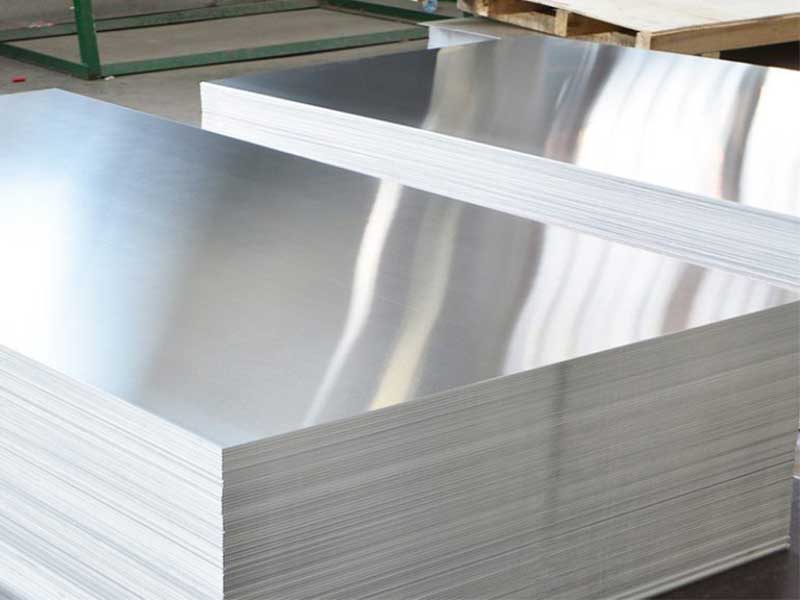

12mm 6061 7075 alloy aluminum sheet plate for aircraft
In aircraft manufacturing, 12mm aluminum sheet plate made from 6061 and 7075 alloys sits in an interesting niche. It is thick enough to behave more like a structural element than a skin, yet still light enough to justify aluminum over steel or titanium in many load-bearing and semi-critical zones. Looking at this product through the lens of “thickness as strategy” reveals why airframe designers often choose 12mm 6061 and 7075 not just as materials, but as tools for tailoring stiffness, crash behavior, fatigue life, and manufacturability.
Instead of asking “which alloy is stronger,” a more revealing question is: how does a 12mm sheet of 6061 or 7075 behave in a real aircraft structure, after heat treatment, machining, and service exposure?
Two Alloys, One Thickness, Different Philosophies
Both 6061 and 7075 belong to the heat-treatable aluminum families, yet they are engineered around different priorities.
6061 is an Al-Mg-Si alloy designed around balanced performance: decent strength, very good corrosion resistance, excellent weldability, and predictable machinability. It is often the “engineering default” when the structure is moderately loaded and exposed to mixed environments.
7075, an Al-Zn-Mg-Cu alloy, is pushed toward high strength and specific stiffness. It sacrifices some weldability and general corrosion resistance in exchange for mechanical performance that approaches low-alloy steels at a fraction of the density.
At 12mm thickness, these underlying philosophies become pronounced. The thicker the plate, the more relevant through-thickness strength, residual stresses, and fatigue crack growth behavior become.
Typical Chemical Composition and What It Implies
A simplified comparison helps illustrate why each alloy behaves the way it does:
| Alloy | Si (%) | Fe (%) | Cu (%) | Mn (%) | Mg (%) | Cr (%) | Zn (%) | Ti (%) | Others (%) | Al (%) |
|---|---|---|---|---|---|---|---|---|---|---|
| 6061 | 0.4–0.8 | ≤0.7 | 0.15–0.4 | ≤0.15 | 0.8–1.2 | 0.04–0.35 | ≤0.25 | ≤0.15 | ≤0.15 | Balance |
| 7075 | 0.4 max | 0.5 max | 1.2–2.0 | 0.3 max | 2.1–2.9 | 0.18–0.28 | 5.1–6.1 | 0.2 max | ≤0.15 | Balance |
The high Zn-Mg-Cu levels in 7075 build a dense population of strengthening precipitates after aging, driving very high yield and tensile strengths. Chromium helps stabilize grain structure and improve stress-corrosion resistance in specific tempers.
6061’s more moderate Mg-Si system forms Mg2Si precipitates, providing adequate strength but keeping ductility, weldability, and formability in a very usable range. Chromium additions refine grain structure and improve toughness.
Mechanical Behavior at 12mm: Not Just a Thicker Sheet
In thin gauges, surface conditions and forming behavior dominate. At 12mm, different rules creep in:
- Residual stresses from quenching and rolling can influence distortion during machining
- Through-thickness properties matter for bolted joints, thick ribs, and highly loaded clevises
- Buckling behavior shifts: the plate acts less like a flexible skin and more like a stiff panel or beam flange
Typical properties for these alloys in common aerospace tempers give context:
| Alloy & Temper | Thickness Range | Yield Strength (MPa) | Tensile Strength (MPa) | Elongation (%) | Brinell Hardness |
|---|---|---|---|---|---|
| 6061-T651 | up to ~100 mm | ~240 | ~290 | ~8–12 | ~95 |
| 7075-T651 | up to ~150 mm | ~430–480 | ~510–570 | ~7–11 | ~150–160 |
For a 12mm plate, these values are representative. Notice how 7075 nearly doubles the yield strength of 6061 while increasing hardness substantially. That difference translates into thinner, lighter designs when stiffness and strength dominate the design envelope, especially in bending.
The Quiet Role of Temper: T651 and Beyond
A 12mm plate used for critical components is rarely in a simple “T6” condition if precision is a concern. T651 is common for both 6061 and 7075 in aerospace applications:
- Solution heat treated
- Quenched
- Stress-relieved by stretching
- Artificially aged
The stretch-relief step is crucial at 12mm. Without it, machining a large cavity or pocket from a thick plate can release locked‑in stresses and produce unacceptable warpage. T651 makes the 12mm plate a stable starting block for hog-out machining of complex aircraft parts.
For corrosion-critical zones, especially with 7075, additional protection strategies come into play:
- Alclad 7075, with a thin high-purity aluminum cladding layer
- Anodizing, including hard anodic coatings for wear-critical surfaces
- Conversion coatings and primers under paint systems
These layers are not decorative; they buffer the high-strength core from corrosive and stress-corrosion environments that can otherwise reduce service life.
Where 12mm 6061 Comes Into Its Own
A 12mm 6061 plate is often chosen where structural demands meet operational practicality. Typical aircraft applications include:
- Machined brackets, frames, and mounting plates for avionics, landing gear doors, and ground-handling interfaces, where good stiffness, weldability, and ease of repair matter more than peak strength.
- Rib webs, stiffener bases, and secondary structural frames in general aviation and UAV platforms, where cost and corrosion resistance are key.
- Interior structural subfloors, seat tracks, and support frames, where fire loading is limited and repairs or modifications are frequent.
- Hydraulic system manifolds and blocks, machined from 12mm or thicker 6061, benefiting from excellent machinability and compatibility with standard treatments.
From a design standpoint, 12mm 6061 is often intentionally “over-thick” compared to stress requirements. The extra thickness is used strategically to:
- Resist local denting and impact damage during maintenance
- Allow re-drilling, bushing installation, or oversizing of holes during repair
- Provide generous safety margins against corrosion pitting without losing structural integrity
12mm 7075: Turning Thickness into Strength Density
When weight targets are tight and loads are high, 12mm 7075 tends to be the designer’s instrument of choice. In an aircraft, some common uses include:
- Machined spars, spar caps, and wing attach fittings in light aircraft and high-performance gliders, where high compressive and tensile strength are critical.
- Landing gear components such as torque links, trunnion brackets, and retraction mechanism arms in smaller aircraft, where steel would add too much weight.
- High-load actuator mounts, hinge fittings, and flap track support blocks on larger aircraft and business jets.
- Structural joints around engine mounts or pylon connections in smaller or specialized aircraft, where 7075’s strength allows compact, stiff designs.
In these environments, a 12mm 7075 plate is rarely left as a simple flat sheet. It is milled into three-dimensional structures, with pockets and ribs that capitalize on its strength while shaving every unnecessary gram.
The Distinctive View: Using 12mm Thickness as a Design Lever
What makes 12mm particularly interesting is how it sits at the junction of sheet-metal design and billet design. Designers can use that thickness as a lever in several ways:
- As a local stiffener: running a 12mm strip of 7075 along a wing root or around a door frame transforms local stiffness and shifts vibrational modes, often solving flutter or door flex issues without redesigning the entire structure.
- As a fatigue buffer: in 6061, a thicker section around fastener rows increases the allowable fatigue life even if nominal stress levels are moderate, giving the structure better tolerance to minor damage and load spectrum variations.
- As a manufacturability platform: 12mm gives machining engineers room to create integrated features—bosses, pockets, channels—out of a single piece rather than assembling multiple thinner components, reducing fastener count and improving load paths.
The thickness also interacts with temper selection. For instance:
- A 12mm 7075-T651 plate provides high strength and good dimensional stability but may still need careful fixturing and symmetric machining patterns to manage residual distortions.
- A 12mm 6061-T651 plate is forgiving enough to support deep pockets and thin walls after machining without significant warpage, ideal for complex non-critical housings and brackets.
Implementation Standards and Quality Considerations
For aircraft use, 12mm 6061 and 7075 plates are not generic industrial stock. They are typically procured to aerospace standards such as:
- AMS 4027, AMS 4026, or equivalent for 6061 plate in T6/T651 condition
- AMS 4045, AMS 4044, or equivalent for 7075 plate in T6/T651 condition
quality parameters that matter at 12mm include:
- Thickness tolerance and flatness to ensure predictable fit-up and minimal shimming
- Grain direction and rolling orientation, which strongly influence fatigue performance and fracture toughness
- Ultrasonic inspection for internal defects, particularly in 7075 where high loading is expected
- Surface quality for proper bonding, painting, or sealing in bonded or riveted structures
In aerospace, material traceability is as critical as mechanical properties. Heat numbers, mill certificates, and test results are tracked from melting to finished part. A misidentified 12mm plate—confusing 6061 with 7075, or wrong temper—could mean the difference between a safe part and one that fails in service.
Thinking of 12mm 6061 and 7075 plates only as commodities misses their real role in aircraft construction. They are more like structural DNA, shaping how an airframe carries load, resists fatigue, handles corrosion, and adapts to service repairs.
- 12mm 6061 brings adaptability, corrosion resistance, and manufacturability. It thrives in multi-role structures that engineers will cut, weld, rework, and repair over the aircraft’s life.
- 12mm 7075 brings strength density and stiffness. It is the alloy of choice when every kilogram shaved from the aircraft matters and loads are non-negotiable.
Viewed from this perspective, choosing “12mm 6061 7075 alloy aluminum sheet plate for aircraft” is not a simple materials decision. It is a strategy for how the aircraft will live, age, and be maintained across decades of operation—where a few millimeters of aluminum quietly decide both performance and longevity.
https://www.al-alloy.com/a/12mm-6061-7075-alloy-aluminum-sheet-plate-for-aircraft.html