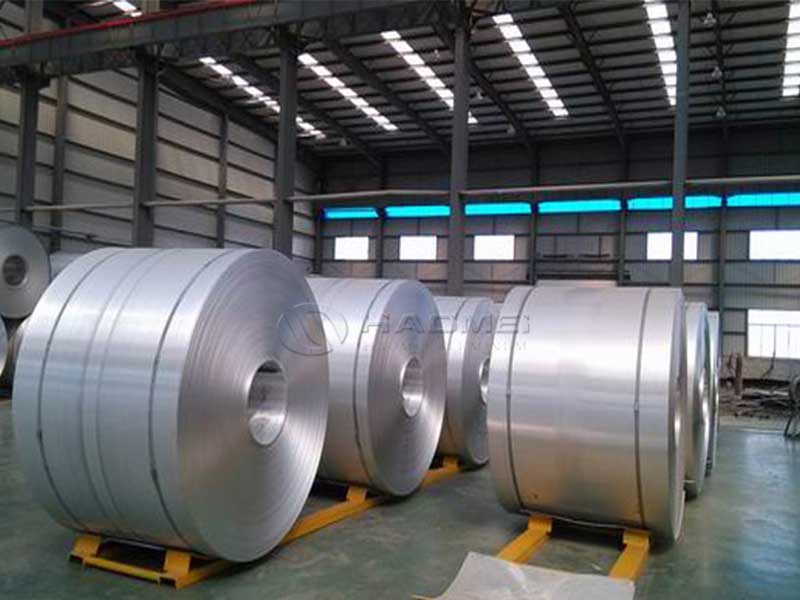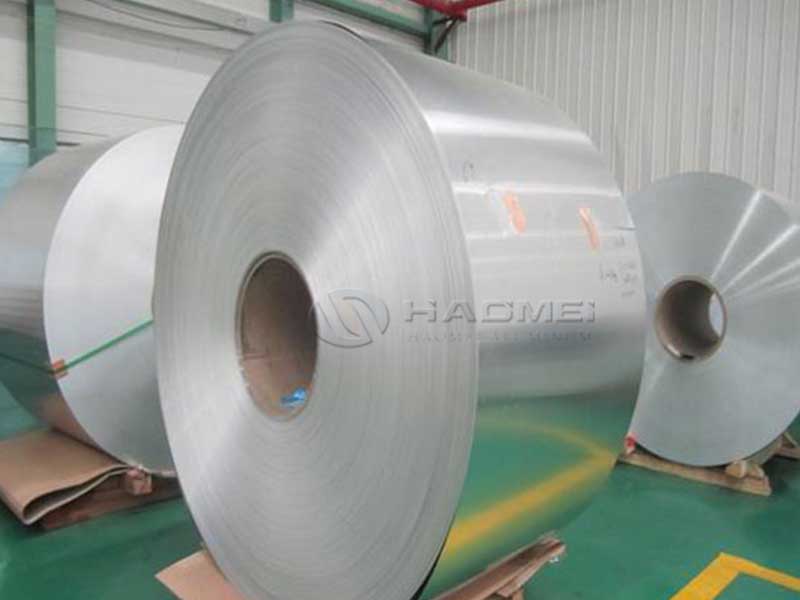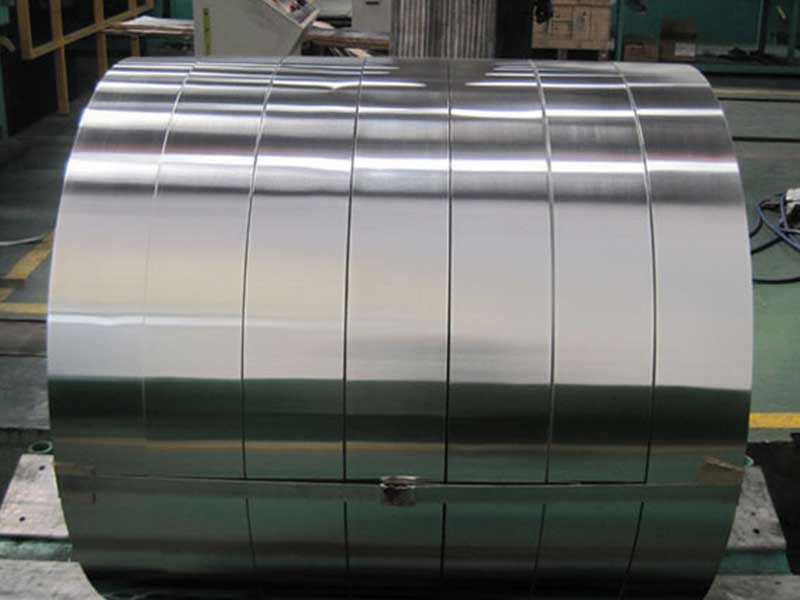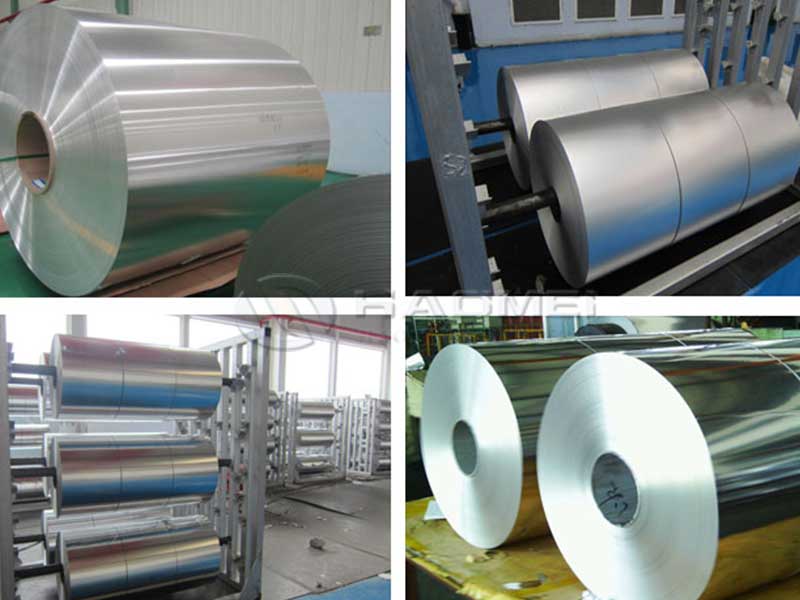

Aluminum foil 1050 1060 3003 H14 H16 H24
Aluminum Foil 1050 1060 3003 H14 H16 H24: Choosing the Right Foil for Real‑World Performance
When people talk about “aluminum foil,” they often imagine the thin, shiny roll in the kitchen drawer. In industry, however, the phrase covers a family of very different materials, each engineered for a particular balance of softness, strength, corrosion resistance, and formability.
Among the most widely used are the 1xxx and 3xxx series foil alloys: 1050, 1060, and 3003. When those alloy numbers are combined with temper designations like H14, H16, and H24, you no longer have a generic foil—you have a precisely tuned material for a specific job.
Looking at these alloys and tempers together provides a useful lens: instead of asking “What foil is cheapest?” it becomes “What combination of chemistry and temper gives the exact behavior my process needs?”
From Purity to Purpose: 1050 vs. 1060 vs. 3003
Aluminum foil 1050 and 1060 are often grouped together as “commercially pure” aluminum foils. Their main ingredient is aluminum—very close to pure metal, with just enough minor elements to meet standard specifications.
Typical chemical composition ranges are as follows (values in mass percent, balance Al):
| Alloy | Si | Fe | Cu | Mn | Mg | Zn | Ti | Others (each) | Al (min) |
|---|---|---|---|---|---|---|---|---|---|
| 1050 | ≤ 0.25 | ≤ 0.40 | ≤ 0.05 | ≤ 0.05 | ≤ 0.05 | ≤ 0.05 | ≤ 0.03 | ≤ 0.03 | 99.50 |
| 1060 | ≤ 0.25 | ≤ 0.35 | ≤ 0.05 | ≤ 0.03 | ≤ 0.03 | ≤ 0.05 | ≤ 0.03 | ≤ 0.03 | 99.60 |
| 3003 | ≤ 0.60 | ≤ 0.70 | ≤ 0.20 | 1.0–1.5 | — | ≤ 0.10 | — | ≤ 0.05 | Remainder |
Alloy 1050
This grade is one of the purest commercial aluminum alloys in industrial use. With a minimum aluminum content of 99.5%, it offers excellent electrical and thermal conductivity, very good corrosion resistance, and outstanding formability. The “price” for this purity is relatively low strength; pure aluminum simply does not harden the way alloyed grades do.
Alloy 1060
Chemically, 1060 is even a little purer than 1050, with at least 99.6% aluminum. From a practical standpoint, it behaves very similarly: extremely formable, soft in the fully annealed state, and kind to forming tools and dies. Because of its high conductivity, 1060 foil is often favored in electrical and thermal applications—battery tabs, transformer windings, finstock for heat exchangers, and shielding.
Alloy 3003
Here the mindset changes. 3003 introduces manganese as the main alloying element, transforming the pure aluminum into a workhorse foil with significantly higher strength while keeping good corrosion resistance. It is still non-heat-treatable, but it responds strongly to cold work. Compared with 1050 and 1060, 3003 is less “butter-soft” and more “structural,” making it a common choice for food containers, automotive heat exchangers, and decorative cladding where both formability and strength are required.
Seen through the lens of design, 1050 and 1060 are ideal when purity, conductivity, or maximum ductility is the priority, while 3003 steps in when the product must withstand higher mechanical stress, deeper draw forming, or rougher handling without tearing.
The Hidden Dial: Temper H14, H16, H24
If alloy composition is the foundation, temper is the tuning knob. The same alloy can behave very differently depending on how it has been processed after casting and hot rolling.
For non‑heat‑treatable foil alloys like 1050, 1060, and 3003, the typical strengthening mechanism is cold work—rolling the material thinner at room temperature to introduce dislocations in the crystal structure. Tempers like H14, H16, and H24 describe how “worked” the material is, and whether it has been partially annealed afterward.
These temper codes can be read as a shorthand for the internal history of the foil:
H14
This stands for strain-hardened to about half-hard. The material has been cold-rolled to achieve roughly 50% of the maximum hardening possible for that alloy and thickness. It offers a balanced combination of strength and formability. For foil, H14 is a popular “middle ground” when the sheet or coil must resist dents yet still form readily in simple press or stamping operations.
H16
Here the strain hardening goes a step further. H16 is “three-quarter hard,” with higher strength and lower elongation than H14. Foil in H16 temper is less forgiving during severe bending or deep drawing, but it holds its shape better and can withstand higher line tensions and winding pressures. It suits applications like fins in air conditioning coils or rigid packaging where stiffness matters more than extreme formability.
H24
This temper indicates that the material was first strain-hardened and then partially annealed. The partial anneal reduces some of the internal stresses, softening the material compared with H18 (full-hard), while still keeping it stronger than a fully annealed O temper. For foil, H24 is often chosen when deep drawing or more complex forming is involved: it has enough yield strength to maintain dimensional stability, yet enough ductility to stretch without cracking.
From a designer’s perspective, alloy and temper are two axes of a grid. Once you understand both, you can place each foil grade exactly where you need it:
- 1050-H24: softer, very formable with moderate work hardening
- 1060-H14: high conductivity with a balance of strength for electrical or thermal components
- 3003-H16: strengthened foil with good resistance to deformation in service
Mechanical Properties Snapshot
Values vary by thickness and standard, but typical room‑temperature properties for thin sheet/foil range are illustrative:
| Alloy–Temper | Tensile Strength (MPa) | Yield Strength (MPa) | Elongation (%) |
|---|---|---|---|
| 1050-H14 | ~ 75–95 | ~ 35–60 | ~ 5–15 |
| 1050-H24 | ~ 85–105 | ~ 45–70 | ~ 4–12 |
| 1060-H14 | ~ 80–100 | ~ 40–65 | ~ 5–15 |
| 1060-H16 | ~ 95–115 | ~ 55–80 | ~ 3–10 |
| 3003-H14 | ~ 110–150 | ~ 60–120 | ~ 4–12 |
| 3003-H24 | ~ 115–160 | ~ 70–130 | ~ 3–10 |
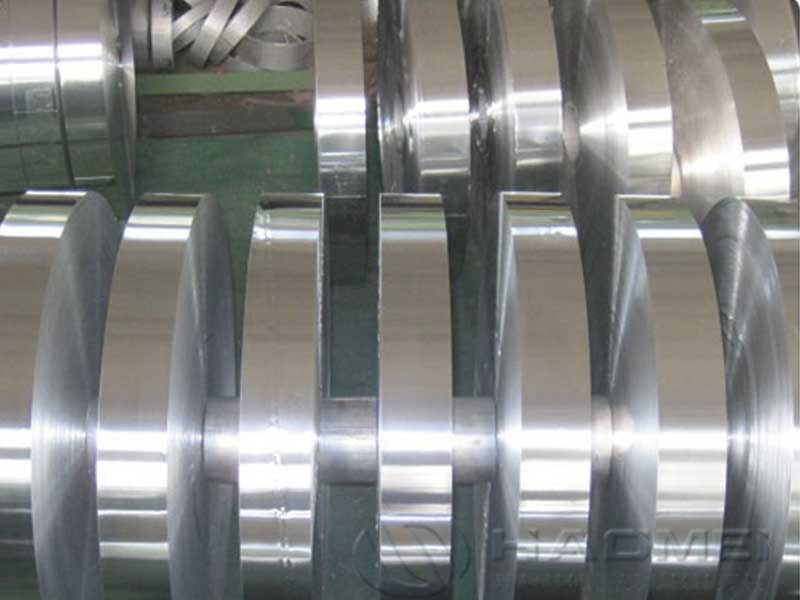
In foil applications, these differences translate into how much tension the foil can take on the slitting line, how tight it can be wound without wrinkling, and how deep it can be formed before it tears.
Matching Alloy and Temper to Real‑World Uses
Looking at these foils from a production engineer’s perspective, the priority is not just chemistry, but process compatibility.
Where conductivity rules
If an application involves conduction—either heat or electricity—1050 and 1060 naturally move to the front. For transformer windings, battery foil, busbars, and certain HVAC finstock, 1060-H14 or H16 provide high conductivity combined with enough stiffness to run stably on high‑speed equipment. In thin gauges, these tempers resist stretching under line tension, which keeps layer alignment precise in tightly wound coils.
Where formability is king
When the foil must be stamped, pressed, or drawn into three-dimensional shapes, the material must cooperate. Foil containers, lids, and trays for food packaging often rely on 3003-H24 or 1050-H24. The partial annealing in H24 gives extra ductility, while 3003’s manganese strengthening prevents pinholes and tears at corners and bends.
Where corrosion resistance and aesthetics matter
For exposed or decorative uses—insulation jacketing, reflective panels, or cladding—1050 and 1060 are popular due to their bright surface and excellent resistance to atmospheric corrosion. In slightly more demanding environments, 3003 foil or thin sheet in H14 or H24 offers better mechanical robustness without sacrificing corrosion performance.
Implementation Standards and Quality Considerations
Industrial use of aluminum foil 1050, 1060, and 3003 typically references standards such as:
- ASTM B209 for aluminum and aluminum-alloy sheet and plate
- EN 485 / EN 573 for European alloy and mechanical property specifications
- JIS H4000 / H4100 for Japanese sheet and strip standards
Within those frameworks, implementation parameters often specified by customers include:
- Thickness tolerance: tightly controlled for uniform forming and consistent barrier performance
- Width tolerance and edge quality: important for high‑speed foil converting or lamination
- Surface quality: oil level, cleanliness, roughness, and pinhole count must match the end-use (for example, food contact vs. capacitor foil)
- Temper accuracy: keeping mechanical properties within a narrow band so forming tools and lines do not need constant adjustment
In food packaging, additional requirements govern alloy selection, lubricants, and cleanliness to ensure regulatory compliance for direct food contact. Here, 3003-H24 and 1050-H24 are often tailored with food‑grade rolling oils and tight control of residual elements like Pb and Cd.
Viewing Foil as an Engineered Component
What looks like a simple ribbon of bright metal is in reality a thoroughly engineered product. The choice between aluminum foil 1050, 1060, and 3003—and between H14, H16, and H24 tempers—is less about catalog numbers and more about the behavior required during forming, filling, sealing, and service life.
When selecting foil, the most effective question is not “Which alloy is standard?” but “How should this foil behave on my line and in my product?” If it must stretch gracefully, 3003-H24 or 1050-H24 might be the answer. If it must carry current efficiently and stay flat at speed, 1060-H16 may be more suitable.
By treating these foils as tailored materials rather than commodities, designers and buyers can avoid over‑engineering, prevent processing problems, and ultimately achieve more reliable, cost‑effective products. In that sense, aluminum foil is less a thin sheet of metal and more a finely tuned interface between metallurgy, manufacturing, and performance.
https://www.al-alloy.com/a/aluminum-foil-1050-1060-3003-h14-h16-h24.html