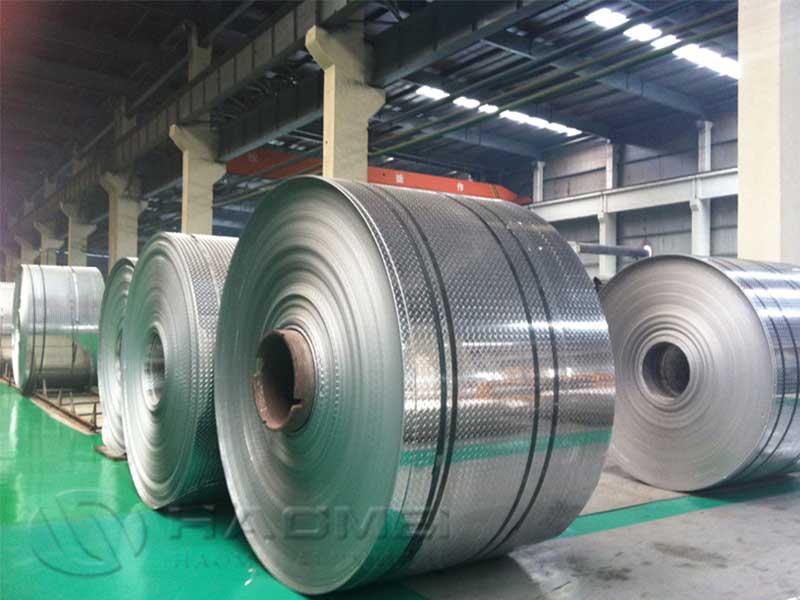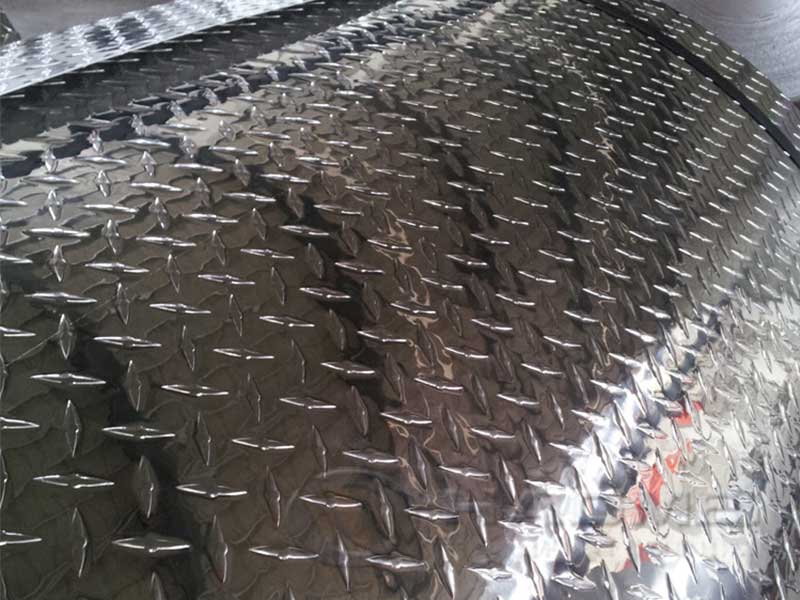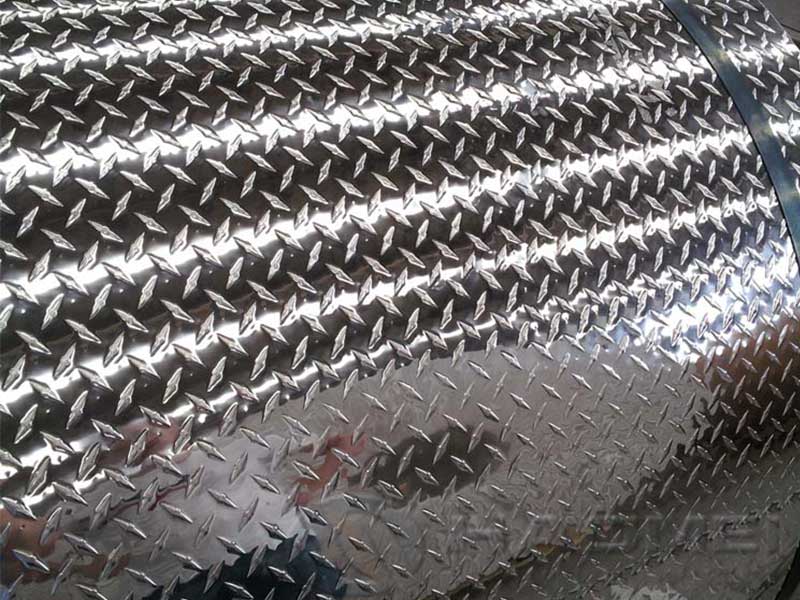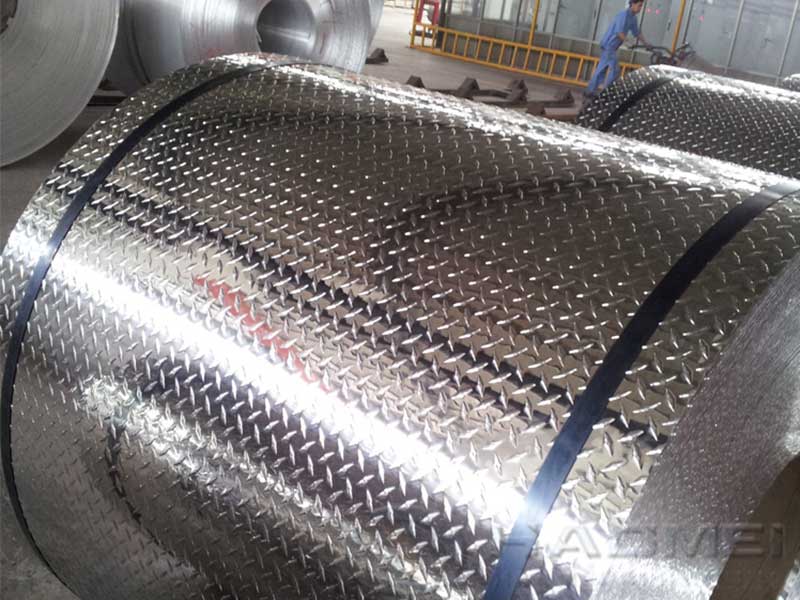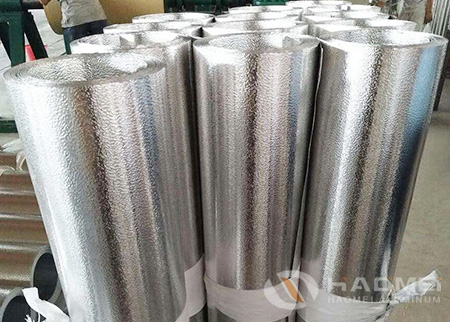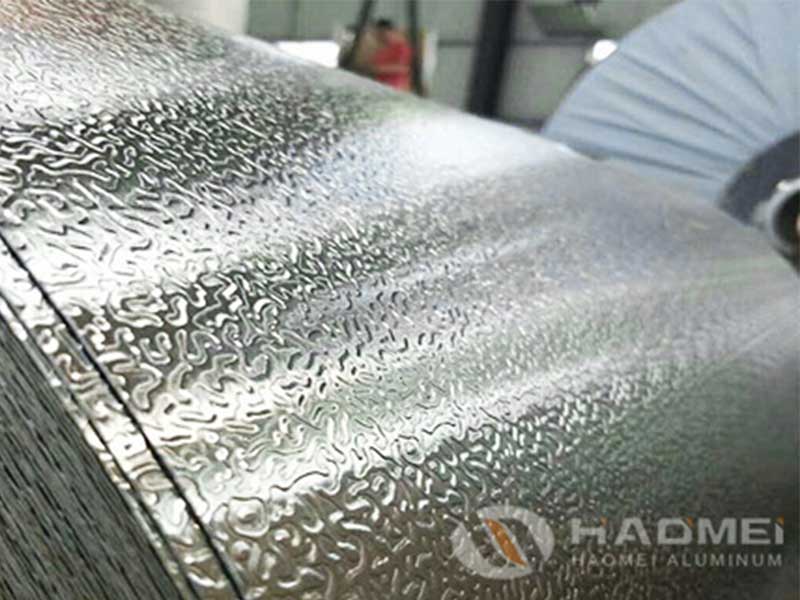

Embossed aluminum sheet 1050 1060 3003 5052 3015 5754
Embossed aluminum sheet is often described by what you can see and feel: raised diamonds, orange peel, stucco, five-bar tread, or custom textures that catch light and resist slipping. But its real value is less about decoration and more about engineering a surface. Embossing changes how a sheet behaves in the field: it stiffens thin gauges, hides handling marks, controls glare, improves grip, and creates micro-channels that influence water run-off and adhesion. When you pair that surface engineering with the right alloy family-1050, 1060, 3003, 5052, 3015, or 5754-you get a material that can be tuned for thermal efficiency, corrosion resistance, formability, or fatigue performance without adding weight.
A distinctive way to choose embossed aluminum is to think of the sheet as two materials at once: the alloy that carries load and resists corrosion, and the pattern that manages contact, wear, optics, and rigidity. The alloy sets the "chemistry and temper boundaries." The embossing sets the "surface physics." The best application outcomes happen when those two layers of decision are made together.
What embossing really does, beyond appearance
Embossing is a cold-forming process where a roll or press imprints a pattern, plastically deforming the surface. That deformation work-hardens the peaks and valleys slightly, and-more importantly-raises the section modulus of the sheet. In practice, an embossed 0.8 mm sheet can feel closer to a flat 1.0 mm sheet in stiffness depending on pattern depth and pitch. This is why embossed aluminum is favored in panels that must stay flat, resist oil-canning, and remain presentable even after transport.
Embossing also changes surface contact mechanics. The raised pattern reduces real contact area, which can reduce sticking and scuffing in packaging and transport. For flooring or step covers, the pattern creates friction and directional grip. For insulation jacketing, it breaks up specular reflection and hides dents. For appliance panels, it conceals fingerprints and minor scratches better than smooth mill finish.
Pattern selection is therefore a technical choice. Diamond tread emphasizes traction and point-load resistance. Stucco and orange peel emphasize dent-hiding and visual uniformity. Fine embossing can be selected to help coatings wet out evenly or to reduce gloss. Deep embossing increases stiffness but may limit deep drawing or tight-radius bending because the peaks can flatten or crack if strain localizes.
Alloy choice as a "service environment decision"
The alloys in this title fall into three practical groups: commercially pure aluminum for maximum conductivity and excellent formability, manganese alloys for balanced formability and strength, and magnesium alloys for marine-grade corrosion resistance and higher strength.
1050 and 1060 are near-pure aluminum grades. Their signature is conductivity-electrical and thermal-plus excellent corrosion resistance in many atmospheres and outstanding formability. Embossed 1050/1060 is common where the sheet must be shaped easily or used as a heat-spreading skin, such as HVAC cladding, reflective insulation facings, lighting components, and general architectural trims. Their tradeoff is strength: they rely on emboss stiffness and geometry more than alloy strength.
3003 and 3015 sit in the Al-Mn family. In day-to-day manufacturing, 3003 is the "default workhorse" for embossed cladding and general sheet metal because it offers higher strength than 1xxx series while keeping good formability and corrosion resistance. It is widely used for refrigeration liners, trailer panels, interior trims, heat exchanger fins (depending on brazing system), and general-purpose embossed jacketing. 3015 is less universally standardized in every region than 3003, but it is commonly treated as a manganese-based alloy variant used for similar purposes where a slightly different strength/forming balance is desired by specific mills or customers. In procurement, 3015 should be verified carefully against the supplier's registered composition and applicable standard to ensure it matches your forming and corrosion expectations.
5052 and 5754 are Al-Mg alloys chosen when corrosion, fatigue resistance, and strength under real service conditions matter more-especially near salt, humidity, road chemicals, or frequent cleaning. 5052 is a classic for marine and transport interiors, fuel/oil-related enclosures, and general fabrication. 5754 is often favored in automotive and structural skin applications, offering strong corrosion resistance and very good formability with robust mechanical properties, particularly for panels that see vibration and cyclic loads. In embossed form, these alloys shine in truck steps, shipboard panels, ramps, walkways, and exterior equipment housings.
Typical tempers and what they imply for embossed sheet
Embossed sheet is usually produced from H-temper material because embossing is a cold-work process and most applications value a stable, work-hardened sheet. Common tempers include O (annealed) for maximum forming after embossing, H14/H24 for moderate strength and formability, and H32/H34 in magnesium alloys for better strength with good corrosion resistance.
For 1050 and 1060, H14 is common for general sheet; O temper is selected when tight forming, hemming, or complex bending is required after embossing. For 3003, H14/H24 is widely used for insulation jacketing and appliance panels. For 5052 and 5754, H32 is frequently selected because it provides a reliable balance of strength, bend performance, and stress-corrosion resistance for sheet products.
Temper selection should be tied to how the pattern will be oriented to bending lines. A deep diamond pattern bent across the diamonds can concentrate strain at peak transitions. When bend radius is small, using a softer temper or increasing radius reduces peak cracking and preserves pattern aesthetics.
Chemical composition (typical ranges, wt.%)
Below is a practical reference table. Exact limits depend on the standard and region (ASTM, EN, JIS) and supplier declarations; always confirm for compliance-critical projects.
| Alloy | Si | Fe | Cu | Mn | Mg | Zn | Ti | Al |
|---|---|---|---|---|---|---|---|---|
| 1050 | ≤0.25 | ≤0.40 | ≤0.05 | ≤0.05 | ≤0.05 | ≤0.05 | ≤0.03 | ≥99.5 |
| 1060 | ≤0.25 | ≤0.35 | ≤0.05 | ≤0.03 | ≤0.03 | ≤0.05 | ≤0.03 | ≥99.6 |
| 3003 | ≤0.60 | ≤0.70 | 0.05–0.20 | 1.0–1.5 | ≤0.10 | ≤0.10 | ≤0.15 | Bal. |
| 5052 | ≤0.25 | ≤0.40 | ≤0.10 | ≤0.10 | 2.2–2.8 | ≤0.10 | ≤0.15 | Bal. |
| 5754 | ≤0.40 | ≤0.40 | ≤0.10 | ≤0.50 | 2.6–3.6 | ≤0.20 | ≤0.15 | Bal. |
| 3015 | supplier-defined Mn-family alloy; verify mill certificate and governing standard for exact limits |
That last line is intentional: when an alloy label is not universally harmonized, the most "technical" choice you can make is to demand traceability. For embossed sheet, small differences in Fe/Si or Mn can change surface quality, anodizing response, and crack sensitivity at embossed peaks.
Standards and implementation details that prevent field failures
Embossed aluminum is often purchased as "aesthetic sheet," but failures typically come from mechanical handling, coating mismatch, or corrosion at cut edges. Implementation discipline matters.
For insulation jacketing and cladding, commonly referenced standards include ASTM B209 for aluminum sheet and coil, and EN 485 for European sheet products. Surface quality expectations should be clarified: permissible pinholes, roll marks, and pattern tolerance. If the sheet will be anodized, specify anodizing quality and alloy suitability, because 5xxx series can show different anodized color tone than 1xxx/3xxx.
For flooring and anti-slip panels, specify pattern depth, pitch, and minimum thickness at the valley after embossing. Some buyers only specify "2.0 mm sheet," but embossing redistributes thickness locally; ensuring minimum effective thickness avoids weak spots under point loads.
For painted embossed sheet, pretreatment is everything. 5052/5754 require robust conversion coating or pretreatment chemistry compatible with magnesium-containing alloys. Poor pretreatment shows up as edge creep and filiform corrosion beneath paint, especially in humid or coastal service.
Cut edge protection is another overlooked detail. Embossing creates crevices that can hold salts or cleaning chemicals. If the environment is aggressive, sealing edges or designing drainage and cleaning access can matter more than upgrading from 3003 to 5754.
Applications viewed through the "surface physics + alloy chemistry" lens
In HVAC and thermal management housings, 1050/1060 embossed sheet offers high thermal conductivity and easy forming, while the pattern reduces glare and hides handling wear. In appliance skins and decorative panels, 3003 embossed sheet provides a sturdier feel without the cost and forming limitations of higher-strength alloys; the emboss pattern becomes a built-in "damage camouflage."
In transportation steps, ramps, and marine-adjacent structures, 5052 and 5754 embossed sheet leverage magnesium-driven strength and corrosion resistance, while diamond or bar patterns provide traction and reduce slip risk. In refrigerated truck interiors or food-adjacent enclosures, embossed 5754 can deliver both cleanability and durability, provided the pattern and cleaning regime are compatible.
The most successful embossed aluminum designs treat the pattern as a functional micro-structure and the alloy as the environmental contract. When you match them deliberately-rather than choosing alloy first and texture later-you get panels that stay flatter, look newer longer, resist corrosion at the edges, and perform predictably under real-world contact and cleaning.
https://www.al-alloy.com/a/embossed-aluminum-sheet-1050-1060-3003-5052-3015-5754.html