
3003 3004 3005 3105 h18 h26 h14 aluminium coil
When buyers talk about 3003, 3004, 3005, and 3105 aluminium coil in H18, H26, or H14, the conversation often sounds like a catalog: alloy numbers, temper codes, thickness ranges, and a quick mention of "good formability." But if you stand on the factory floor or at a coil-fed roll-forming line, these products feel less like commodities and more like different "personalities" of the same family. They respond differently to a press brake, accept paint in their own way, and react to heat and time during storage and fabrication. A practical way to choose among them is to think in terms of how the coil will behave during processing and how it will live in service.
The shared DNA: Al-Mn workhorse coils
All four alloys are non-heat-treatable 3xxx series aluminum, strengthened mainly by manganese and the cold work introduced by rolling. This matters: you are not "hardening" them later by heat treatment like 6xxx alloys. What you buy is largely what you get. The temper H14, H26, or H18 is not just a label; it is a shorthand for how much cold reduction and partial annealing has been applied, which directly affects strength, springback, and forming margin.
They also share a quiet advantage: these coils are forgiving in real production. They cut cleanly, resist general corrosion well in atmospheric exposure, and their mechanical properties are stable enough for continuous coil processing such as roll forming, slitting, leveling, and coating.
Alloy personalities: 3003 vs 3004 vs 3005 vs 3105
3003 is often the "baseline" alloy-balanced, cooperative, widely available. It has good formability, good corrosion resistance, and predictable performance. If your application needs deep drawing, general sheet metal fabrication, or a reliable coil for shutters and simple profiles, 3003 in H14 often feels like the safest handshake.
3004 is the more muscular sibling. It typically carries slightly higher strength potential than 3003 because of chemistry and work-hardening behavior. It is commonly chosen when dent resistance or a higher strength-to-weight ratio matters, such as in can stock or tougher formed parts. In coil form, 3004 can offer a sturdier feel under the same gauge, but it may demand a touch more respect in tight-radius forming.
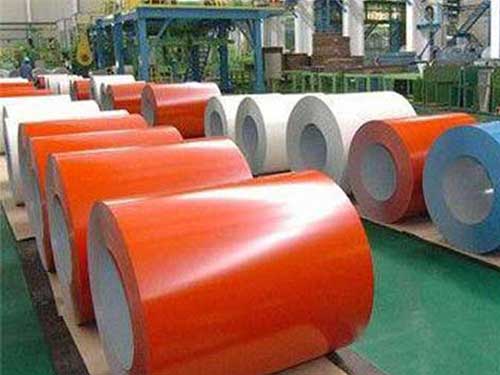
3005 is frequently selected for building products: siding, roofing accessories, and architectural trim. It tends to be used where a blend of formability and strength is needed, and where surface consistency and coating performance matter. In painted coil and color-coated systems, 3005 often shows up as a practical choice for long production runs.
3105 is the pragmatic architect's alloy-common in painted applications, curtain wall components, ceiling systems, and general building sheets. It is known for good corrosion resistance and decent formability while supporting coil coating well. Many buyers choose 3105 when they want stable sourcing, consistent coil coating behavior, and adequate mechanical performance for roll-formed profiles.
In practice, the difference between 3005 and 3105 is often decided by mill availability, coating line experience, required properties, and the forming severity. If your forming is moderate and you care about coating and exterior exposure, 3105 is often in the conversation early.
Temper as a "processing contract": H14, H26, H18
Temper selection is where a lot of coil projects succeed or struggle.
H14 is strain-hardened to a "half-hard" condition. In coil-fed forming, H14 behaves like a flexible agreement: it brings a useful step up in strength while preserving formability. It is a common temper for general fabrication, roll forming with moderate bend radii, and applications needing a reasonable balance between stiffness and forming tolerance.
H18 is "full-hard" strain-hardened. It is the temperament you choose when you want maximum strength and stiffness from these alloys without changing gauge. That higher strength can mean better dent resistance and flatter-looking panels in service, but it also brings higher springback and tighter limitations on bend radius. If your design includes sharp hems, tight returns, aggressive stamping, or severe profiling, H18 can quickly become the reason a line needs retooling.
H26 is a partially annealed temper after substantial cold work, often used when you want strength closer to hard tempers but with improved formability and reduced risk of cracking compared with full-hard. Think of H26 as a compromise that makes production smoother when H18 causes forming defects, yet H14 feels too soft for the end-use stiffness requirement.
A practical mindset is to pick temper based on the "most sensitive operation" in your route: if the coil is going through tight roll forming, hemming, or deep draw features, temper becomes a forming decision first and a strength decision second.
Implementation standards and typical supply conditions
Most commercial supply of 3003/3004/3005/3105 aluminum coil aligns with widely recognized standards such as ASTM B209 for aluminum and aluminum-alloy sheet and plate (commonly used as a reference for coil as well), and EN 485 for European markets. Coil coating lines often reference additional specifications for pretreatment, paint system performance, and bend testing requirements.
Common supply conditions that should be clearly agreed in a purchase specification include coil ID/OD, coil weight, camber limits, flatness (I-unit or similar), edge condition, surface finish, protective film requirements, and acceptable splice rules. For painted or pretreated coil, it is also wise to specify coating thickness, gloss, color tolerance, cure requirements, and bend/adhesion standards such as T-bend performance and cross-hatch adhesion.
Chemical composition: practical reference table
Below is a commonly referenced chemical composition range (typical limits) for these alloys. Actual mill certificates govern delivered material, and limits may vary slightly by standard.
| Alloy | Si (max) | Fe (max) | Cu (max) | Mn | Mg | Zn (max) | Cr (max) | Others (each/total) | Al |
|---|---|---|---|---|---|---|---|---|---|
| 3003 | 0.60 | 0.70 | 0.05–0.20 | 1.0–1.5 | - | 0.10 | - | 0.05 / 0.15 | Rem. |
| 3004 | 0.30 | 0.70 | 0.25 | 1.0–1.5 | 0.8–1.3 | 0.25 | - | 0.05 / 0.15 | Rem. |
| 3005 | 0.60 | 0.70 | 0.30 | 1.0–1.5 | 0.2–0.6 | 0.25 | 0.10 | 0.05 / 0.15 | Rem. |
| 3105 | 0.60 | 0.70 | 0.30 | 0.3–0.8 | 0.2–0.8 | 0.40 | 0.20 | 0.05 / 0.15 | Rem. |
Notes from a coil-user's perspective: higher Mg (as in 3004) tends to raise strength and can influence forming behavior; Mn is the backbone for these alloys' work-hardening response; controlling Fe and Si helps with surface and forming consistency, especially for painted products.
Tempering, coil processing, and the realities of forming
Because these alloys rely on cold work, the thermal history during processing matters. If a coil is exposed to elevated temperatures during downstream operations-certain paint-bake cycles, stress-relief events, or uncontrolled heating near fabrication equipment-properties can shift through recovery or partial annealing. Most coil coat bake schedules are designed around these realities, but if you are doing unusual post-form heat exposure, you should confirm property retention requirements in advance.
In forming, cracks are rarely "mysterious." They often come from a mismatch among temper, bend radius, grain direction, and tooling condition. Full-hard tempers are especially sensitive to tight radii and edge quality. Slitting quality matters: micro-notches at the edge become crack starters in hard tempers. If a project insists on H18 for stiffness, pairing it with improved edge conditioning, larger inside bend radii, and careful roll tooling alignment can be the difference between smooth production and chronic scrap.
Choosing with a different lens: think like the coil's next job
A unique way to select "3003 3004 3005 3105 H18 H26 H14 aluminium coil" is to imagine the coil's next job interview. Will it be asked to stretch, to fold sharply, to stay flat, to accept paint perfectly, or to resist dents in a busy public space?
If the next job is forgiving forming with broad usability, 3003-H14 often wins on simplicity and predictability. If the job is higher strength without leaving the 3xxx family, 3004 with an appropriate temper is compelling. If the job lives in architecture with coating and long production runs, 3005 or 3105 in H14 or H26 frequently fits naturally. If the job is maximum stiffness and dent resistance with minimal forming severity, H18 becomes a purposeful choice rather than a default.
In the end, these coils are not just alloy numbers. They are engineered compromises between strength, formability, surface performance, and manufacturing stability. Treat the alloy-temper combination as a process decision, not only a material decision, and the coil will behave less like an unpredictable variable and more like a reliable partner on your line.
https://www.al-alloy.com/a/3003-3004-3005-3105-h18-h26-h14-aluminium-coil.html