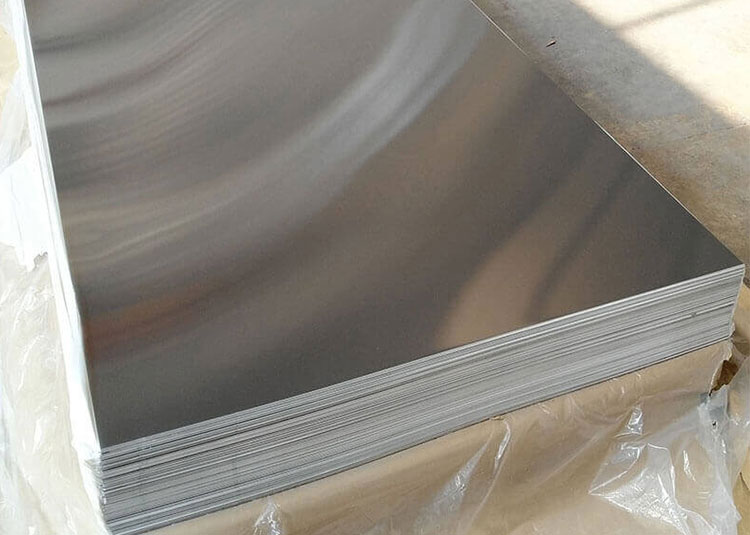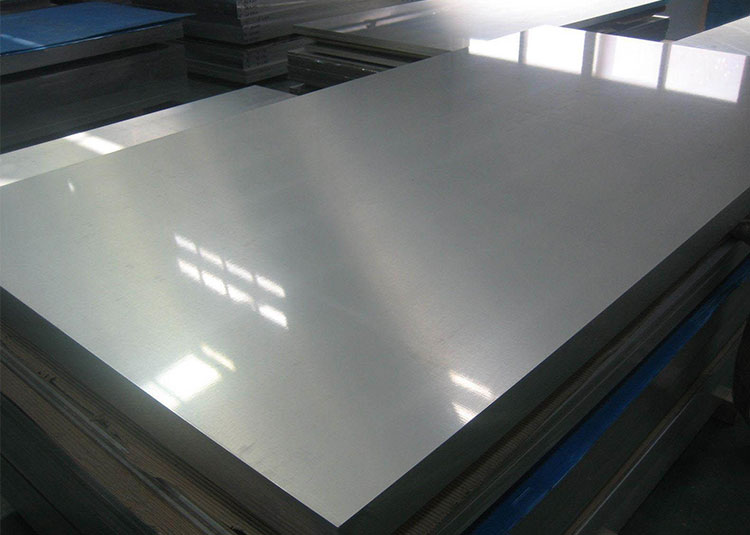

7075 Alloy Mill Finished Aluminum Sheets
7075 Alloy Mill Finished Aluminum Sheets: When Strength Is the Feature, Not the Marketing
In many aluminum projects, the sheet is chosen for how well it bends, how cleanly it welds, or how nicely it polishes. 7075 alloy mill finished aluminum sheet is different. Its value comes from what it refuses to compromise: structural strength, fatigue resistance, and performance in real load-bearing service. The "mill finish" isn't a decorative choice-it's often a practical one, signaling that the sheet is being selected for engineering outcomes rather than visual perfection.
If you think of aluminum as lightweight and "soft," 7075 exists to correct that assumption. This is one of the highest-strength wrought aluminum alloys in commercial use, a material that behaves less like a cosmetic metal and more like a serious structural component-especially when paired with the right temper.
What "Mill Finished" Really Means for 7075 Sheet
A mill finish surface is the as-rolled appearance straight from the mill. It can show light rolling lines and natural tonal variation. From a functional viewpoint, mill finish matters because it preserves the sheet's original condition for downstream manufacturing:
It provides a stable baseline for machining, forming, bonding, cladding, anodizing, or painting. Many aerospace, tooling, and precision industrial users prefer mill finish because it eliminates unnecessary surface processing cost while keeping tolerances and metallurgical condition as the priority.
For applications where surface appearance is secondary, mill finish is often the most honest form of the alloy: no extra steps, no masking-just performance.
The Functional Personality of 7075: Why It's Chosen
7075 is an Al-Zn-Mg-Cu alloy family designed for high mechanical strength through precipitation hardening. Its "function" is not simply being light-it's being light while carrying stress.
performance traits commonly associated with 7075 sheet include:
High strength-to-weight ratio, especially in peak tempers like T6 and T651
Strong fatigue performance for cyclic loading environments
Good machinability compared with many other high-strength alloys
Useful corrosion performance in specific tempers such as T73/T7351, particularly where stress corrosion cracking resistance is critical
Where 6061 is often selected for general fabrication and weldability, 7075 tends to be selected when strength and fatigue life dominate the design brief.
Typical Applications: Where 7075 Mill Finish Sheet Works Hard
7075 aluminum sheet frequently appears in industries that treat materials as part of a safety margin, not just a cost line.
In aerospace structures, it is used for fittings, ribs, bulkheads, and structural reinforcements where weight reduction and strength both matter. In transportation and motorsport, it can appear in high-stress brackets, suspension-related components, and performance frames where stiffness and mass control influence results. In defense and tactical equipment, 7075 sheet is often used for lightweight armor components, structural panels, and housings that must endure harsh service. In molds, jigs, and precision tooling, it supports long-term dimensional stability and resistance to deformation under load.
Even in high-end consumer engineering, 7075 is a common answer when designers want thin sections that still feel rigid and premium.
Temper Conditions: The Hidden Lever That Changes Everything
7075's properties are strongly determined by temper-heat treatment and stress relief states that tune strength, toughness, and corrosion behavior. Customers often "buy 7075," but engineers actually specify the temper.
Common tempers for 7075 sheet include:
T6: Solution heat treated and artificially aged. Delivers high strength, commonly used when maximum strength is the target.
T651: T6 with stress relief by stretching. Chosen to reduce residual stress and improve dimensional stability during machining.
T73 / T7351: Overaged tempers designed to improve resistance to stress corrosion cracking, especially in corrosive or marine-adjacent environments. Strength is lower than T6, but reliability in harsh service can be higher.
Choosing the temper is less about "better" or "worse" and more about matching the alloy to the failure mode you're trying to avoid.
Product Parameters Customers Usually Need
7075 alloy mill finished aluminum sheets are typically supplied with parameters aligned to manufacturing and quality control requirements:
Alloy designation: 7075
Product form: rolled sheet / plate (depending on thickness range)
Surface: mill finish
Thickness range: commonly from thin gauge sheet up through plate-like thicknesses (availability varies by mill)
Width and length: cut-to-size or standard mill sizes depending on stock and order volume
Protective film: optional (often used to prevent surface damage during handling)
Tolerances: supplied to applicable standards; tighter tolerances can be discussed for precision applications
Temper: T6, T651, T73, T7351 and other negotiated conditions depending on use-case
If your downstream process involves precision machining, stress-relieved tempers like T651 can help reduce distortion after material removal.
Implementation Standards and Common Specifications
7075 aluminum sheet is commonly produced and inspected under widely recognized standards. Depending on region and industry, typical references include:
ASTM B209 for aluminum and aluminum-alloy sheet and plate
EN 485 series for aluminum wrought products (European market)
AMS specifications commonly used in aerospace supply chains (temper and property-driven requirements)
GB/T standards in markets following Chinese national specifications
Actual compliance depends on the mill and the certification package provided. For projects requiring aerospace traceability, request MTC documentation and confirm the exact standard and revision.
Chemical Composition: The Alloy "Recipe" That Creates 7075
7075 is defined by a zinc-dominant chemistry with magnesium and copper additions. This is the foundation of its precipitation hardening response and high strength.
Below is a commonly referenced chemical composition range for AA 7075 (weight percent). Exact limits may vary slightly by standard.
| Element | Typical Specification Range (wt.%) |
|---|---|
| Zinc (Zn) | 5.6 – 6.1 |
| Magnesium (Mg) | 2.1 – 2.5 |
| Copper (Cu) | 1.2 – 1.6 |
| Chromium (Cr) | 0.18 – 0.28 |
| Iron (Fe) | ≤ 0.50 |
| Silicon (Si) | ≤ 0.40 |
| Manganese (Mn) | ≤ 0.30 |
| Titanium (Ti) | ≤ 0.20 |
| Others (each) | ≤ 0.05 |
| Others (total) | ≤ 0.15 |
| Aluminum (Al) | Balance |
From a practical viewpoint, zinc and magnesium are what push strength upward, copper adds further strengthening but can influence corrosion behavior, and chromium contributes to grain structure control and performance stability.
A Distinctive View: 7075 as "Engineered Certainty"
Many materials are chosen for how adaptable they are. 7075 is chosen for how predictable it can be under stress-when processed correctly. In real manufacturing, that predictability saves cost by reducing overdesign, minimizing thickness, and extending fatigue life where other alloys would require heavier sections.
Mill finished 7075 sheet is often the most efficient form to purchase when the finishing will happen later or when the sheet is going into machining or assembly where appearance won't be the limiting factor. The customer isn't buying shine-they're buying mechanical confidence.
Practical Notes for Selection
7075 is not typically the first choice for welding-heavy designs; its high-strength chemistry makes many weld scenarios challenging. When joining is required, designers often consider mechanical fastening, riveting, or adhesive bonding, or they redesign around weldable alloys. For corrosion-critical environments, selecting a temper like T73/T7351 and specifying suitable coatings or anodizing can significantly improve service reliability.
https://www.al-alloy.com/a/7075-alloy-mill-finished-aluminum-sheets.html