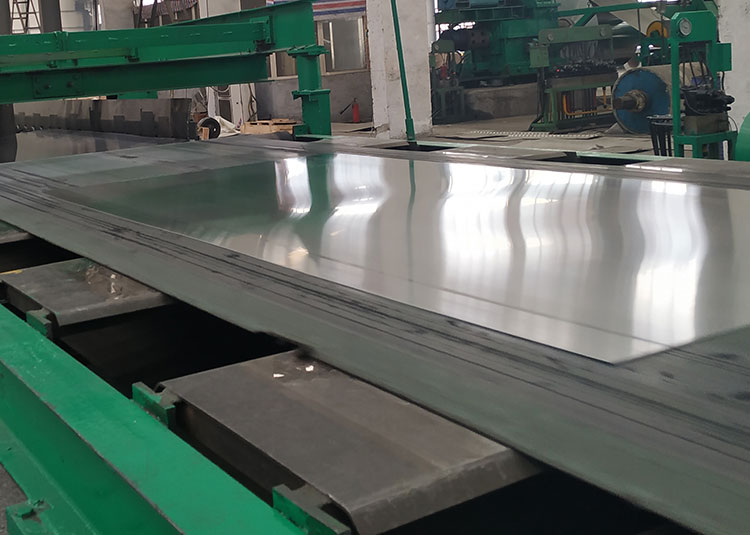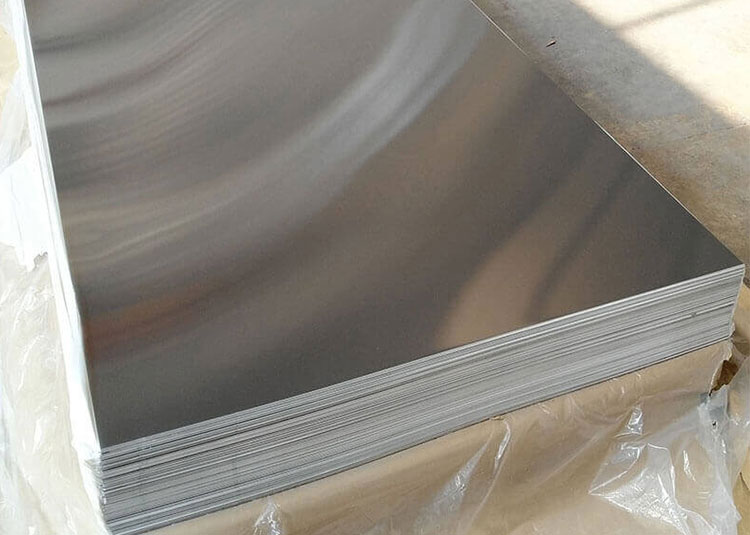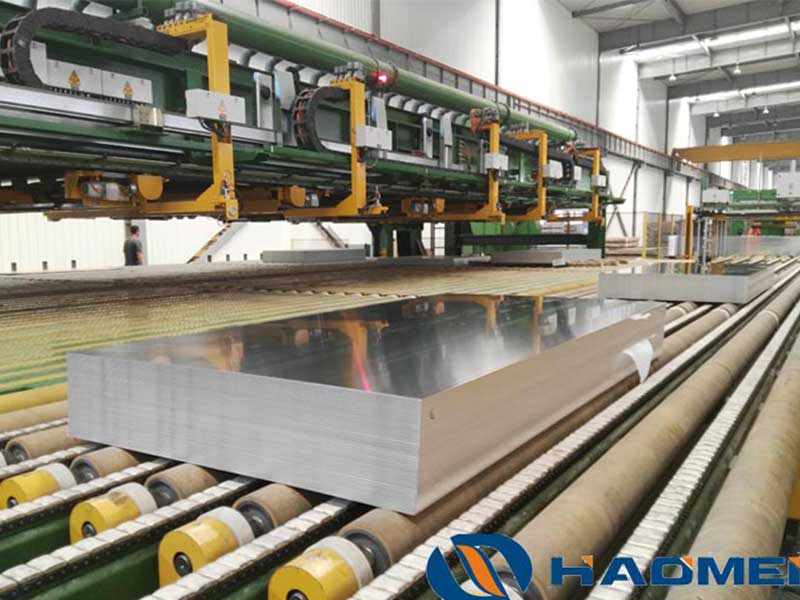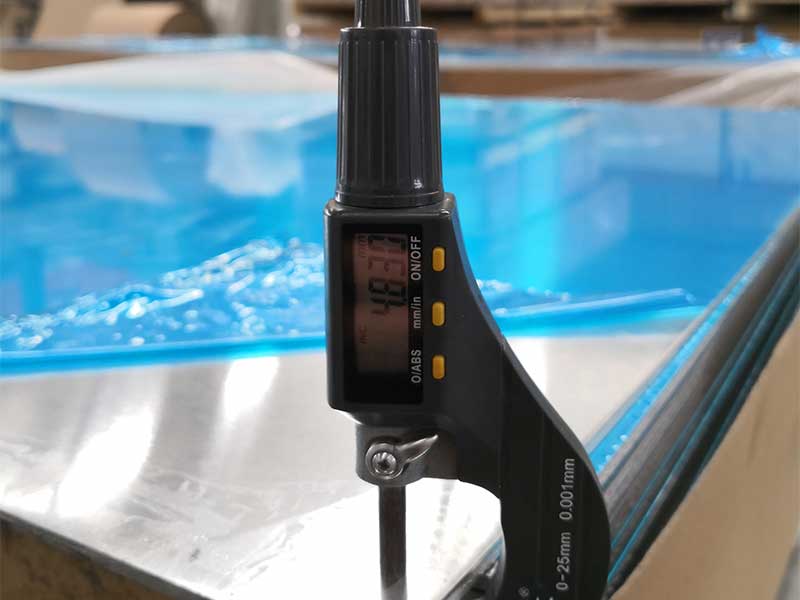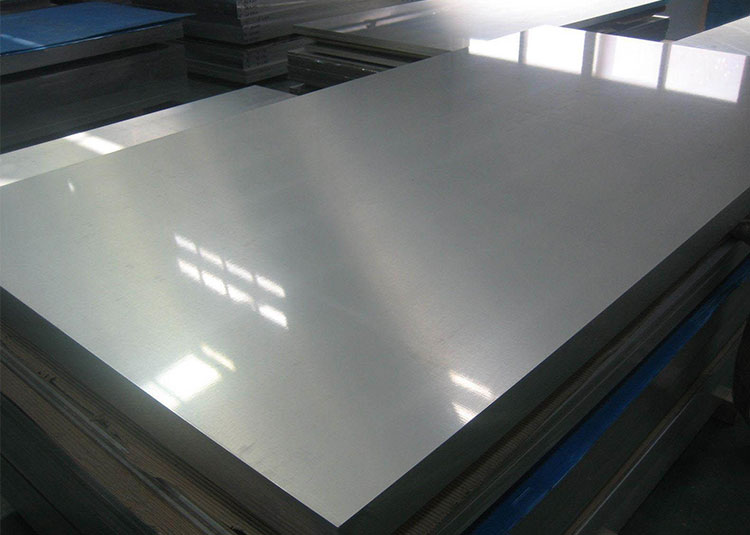

Alloy aluminum sheet 6mm
In a design office, 6 mm often looks like a trivial figure on a drawing. But when that 6 mm is an alloy aluminum sheet, it quietly decides whether a floor panel feels solid underfoot, a machine guard rings or stays silent, and a façade looks sharp after ten winters. Thinking about “alloy aluminum sheet 6mm” as a strategic material choice rather than a generic plate is where real project value begins.
This is not just about aluminum; it is about how 6 mm becomes a turning point between flexibility and rigidity, weight and strength, machinability and stability.
Why 6 mm is a “Decision Thickness”
Below roughly 3 mm, aluminum often behaves in projects like a skin: it bends easily, vibrates readily, and needs support from frames or stiffeners. Above 8–10 mm, it behaves like structure: heavy, expensive, and often overdesigned for many medium-duty needs.
At 6 mm, alloy aluminum sheet sits in a practical middle ground:
- Stiff enough to span moderate distances without a dense grid of supports
- Light enough to handle manually on site in manageable sheet sizes
- Thick enough for reliable threading, countersinking, and robust welding
- Thin enough to form, bend, and machine without specialized heavy equipment
Designers of truck bodies, machine frames, pressure casings, and marine components use 6 mm not because it is a default, but because it solves a specific problem: “I need something that feels structural, but I don’t want the weight and cost of a plate.”
Choosing the Alloy: Matching Behavior to Purpose
The phrase “alloy aluminum sheet 6mm” hides the most critical decision: which alloy and temper. At 6 mm, the wrong alloy can mean distortion during welding, brittle bends, or premature corrosion. The right alloy quietly disappears into the background and simply performs.
Some representative choices and their “personalities”:
5xxx series (magnesium alloys: 5052, 5083, 5754)
These alloys behave like workhorses in marine and structural sheet applications. They combine good strength, excellent corrosion resistance, and decent formability. At 6 mm, 5083-H116 or H321 is typical in ship hulls and offshore structures, while 5052-H32 shows up in vehicle panels, tanks, and enclosures.6xxx series (magnesium–silicon alloys: 6061, 6082)
These are the “machinist’s friends” when higher mechanical performance and good weldability are both needed. 6061-T6 or 6082-T6 in 6 mm thickness are common in machine bases, frames, platforms, and load-bearing brackets, especially when post-machining is required.2xxx or 7xxx series (copper or zinc–magnesium alloys)
These are rarely used as general 6 mm sheet in industrial environments where corrosion and weldability are central. They are more at home in aerospace or defense where strength-to-weight rules above all else and surface treatment is carefully controlled.
Here is a simplified comparison of three typical 6 mm alloy sheet options:
| Alloy & Temper | Typical Use at 6 mm | Strength (Typical) | Brinell Hardness | Weldability | General Corrosion Resistance |
|---|---|---|---|---|---|
| 5052-H32 | Tanks, covers, vehicle panels | Rₚ0.2 ≈ 193 MPa, Rₘ ≈ 228 MPa | ~60 HB | Excellent | Very good |
| 5083-H116 | Marine hulls, offshore structures | Rₚ0.2 ≈ 240 MPa, Rₘ ≈ 330 MPa | ~75 HB | Excellent | Excellent |
| 6061-T6 | Frames, machine bases, high-stiffness parts | Rₚ0.2 ≈ 275 MPa, Rₘ ≈ 310 MPa | ~95 HB | Good | Good |
Note: Values are indicative and can vary by standard, producer, and thickness.
Temper: How the Same Alloy Behaves Very Differently
At 6 mm, temper selection is especially visible. Bend a 6 mm 6061-O edge and it will roll over smoothly. Try the same with 6061-T6 and you may hear the click of a crack.
Soft tempers (O, H111, H112) allow deep forming and tight bends, but carry lower strength. They are attractive when the sheet must be curved or pressed into shape, then welded, and when deflection limits are relatively relaxed.
Strain-hardened tempers (H32, H34) in 5xxx alloys offer a balance: better strength and stiffness while maintaining fair bendability across and along the rolling direction.
T6/T651 tempers in 6xxx alloys provide high strength and excellent machining performance. At 6 mm, T6 behaves like a semi-structural plate, but with constrained bend radii and more care needed at corners and cutouts to avoid cracking.
When a customer asks for “6 mm 6061-T6 sheet,” a practical question to follow with is: “Will you bend it?” If the answer is yes, specifying a suitable bend radius (often 2–3 times thickness or more) and orientation to grain direction becomes not a detail, but a design requirement.
Standards and Tolerances: Making 6 mm Predictable
Engineering with 6 mm alloy aluminum sheet depends on more than alloy and temper. Dimensional consistency, flatness, and mechanical property ranges are governed by standards. Common references include:
- EN 485 / EN 573 (Europe) for wrought aluminum sheets and plates
- ASTM B209 (North America) for aluminum and aluminum-alloy sheet and plate
- GB/T 3880 (China) for rolled aluminum and aluminum alloy plate and strip
For a 6 mm sheet, typical parameters defined by these standards include:
- Thickness tolerance, often on the order of ±0.15 to ±0.25 mm depending on alloy and width
- Flatness tolerances that influence how easily the sheet can be clamped and machined
- Mechanical property ranges, such as minimum yield strength, tensile strength, and elongation for each alloy/temper
Disregarding these details can be costly. For instance, if a 6 mm floor panel is designed with no adjustment for thickness tolerance, a real-world sheet measuring 5.78 mm might reduce thread engagement or compromise bearing area. Engineers familiar with aluminum treat nominal 6 mm as a zone, not an exact plane.
Working with 6 mm: Fabrication Behaviors that Matter
From a fabricator’s point of view, 6 mm alloy aluminum sheet behaves like a hybrid: not as forgiving as thin sheet, not as stubborn as thick plate.
Some practical observations:
Bending
5xxx alloys in H32/H34 temper and 6 mm thickness will bend well with appropriate radii and correctly oriented to the rolling direction. 6xxx in T6 requires larger radii and careful tooling. Many shops will test a sample bend before committing an entire batch.Welding
At 6 mm, common processes such as MIG and TIG achieve good penetration and joint strength without demanding multiple heavy passes. However, selection of filler wire aligned with the base alloy (for example, ER5356 for 5xxx, ER4043 for 6xxx in many cases) protects against hot cracking and preserves corrosion resistance.Machining
The thickness is enough to tap reliable threads for common sizes (for instance M5, M6, ¼"-20) without resorting to bushings. 6061-T6 and 6082-T6 in 6 mm are particularly appreciated for clean chip formation and stable cutting, while softer 5xxx alloys can produce longer, more ductile chips.Vibration and Noise
A 6 mm panel resonates differently from a 3 mm sheet. Machine builders often shift to 6 mm for guards and covers not because they must, but because it removes that characteristic “drum” sound that lighter sheet can produce. The increased thickness also helps with damping when combined with correct mounting and gaskets.
Corrosion and Surface Treatment: Extending Life Beyond the Drawing
Alloy selection is the first defense against corrosion. A 6 mm 5083-H116 sheet on a boat hull is designed to live in saltwater; a 6061-T6 sheet in a dry industrial frame demands less in terms of corrosion protection but benefits from anodizing or painting when aesthetics or longevity are priorities.
At 6 mm, surface treatments can be tailored more aggressively:
- Anodizing creates hard, protective oxide layers; 6xxx alloys take decorative anodizing particularly well.
- Marine paints and epoxy systems over 5xxx sheets form robust systems for offshore and coastal installations.
- Chemical conversion coatings (chromate-free options increasingly preferred) enhance paint adhesion and provide moderate corrosion resistance even at cut edges.
Viewed as a system, a 6 mm marine-grade sheet plus appropriate surface treatment can outlast steel alternatives while weighing significantly less and avoiding rust-through.
A Different Way to Specify: Start from Behavior, Not Only from Alloy
There is a tendency to write “6 mm aluminum sheet, 6061-T6” in a specification and consider the job done. A more effective way is to begin from the behaviors needed:
- Must span 500 mm without unacceptable deflection
- Will be welded on two edges and bolted on the others
- Exposed to salt spray or industrial atmosphere
- Must be bent to 90° on a 12 mm radius along the short side
- Needs reliable M6 threads without inserts
From these behaviors, the choice between 5052-H32, 5083-H116, or 6061-T6 in 6 mm becomes clearer, and trade-offs between stiffness, corrosion resistance, formability, and machinability can be weighed explicitly.
In practice, “alloy aluminum sheet 6mm” is not a commodity line item; it is a design lever. Its thickness allows you to combine roles that would otherwise demand multiple materials or thicker, heavier plate. By how alloy, temper, standards, and surface treatment intersect at this specific thickness, you move from simply buying metal to engineering performance.
And that is where 6 mm stops being a number and starts being a strategy.