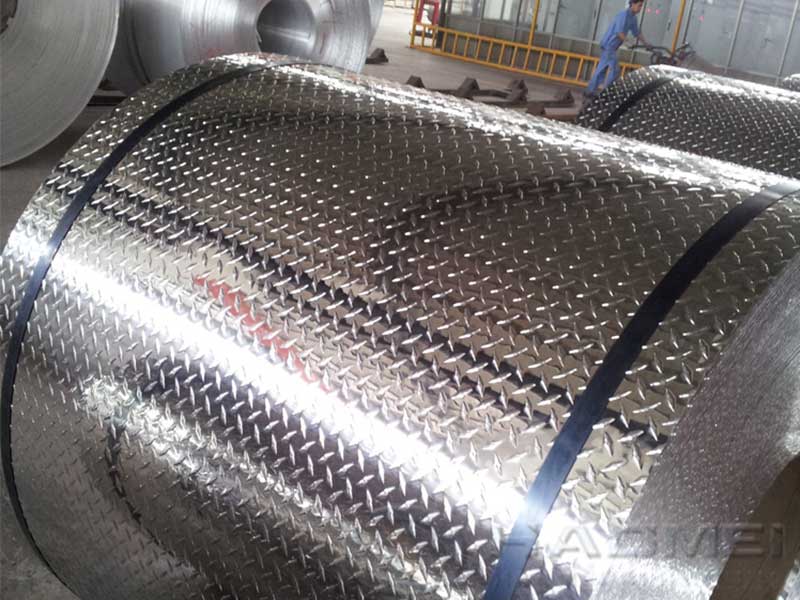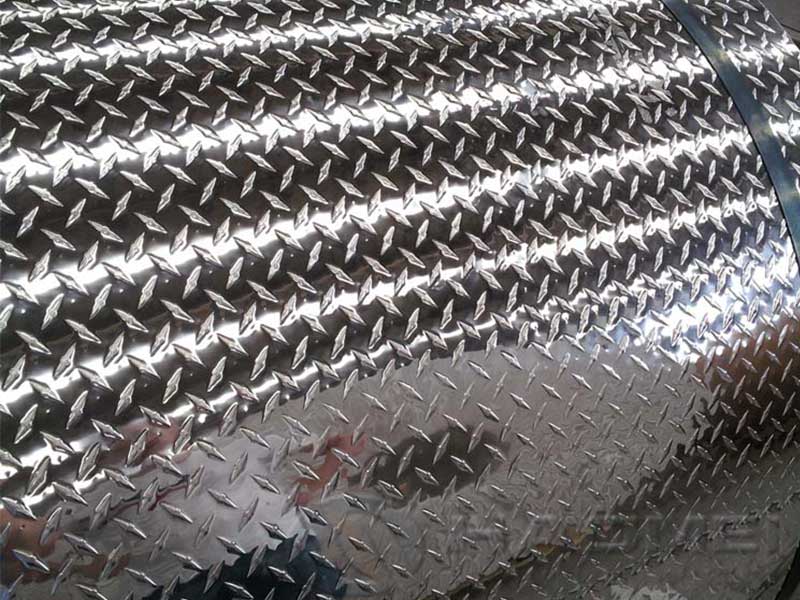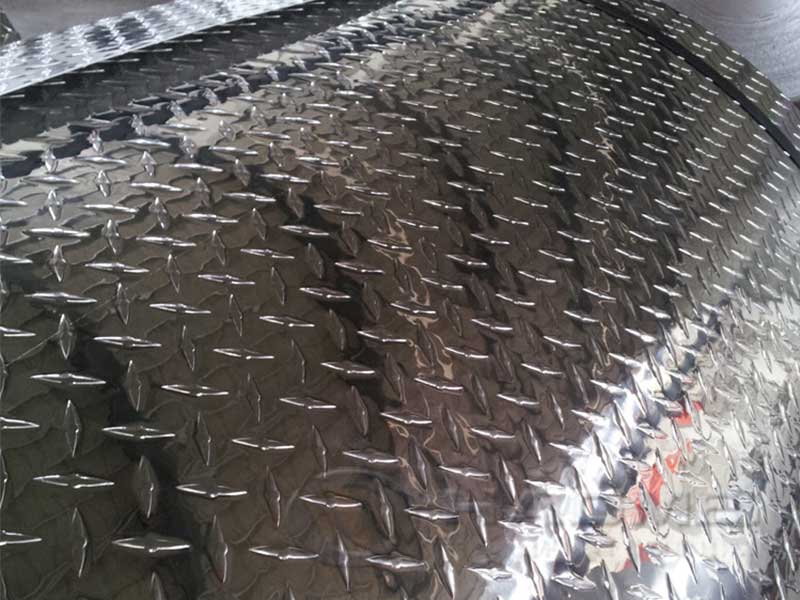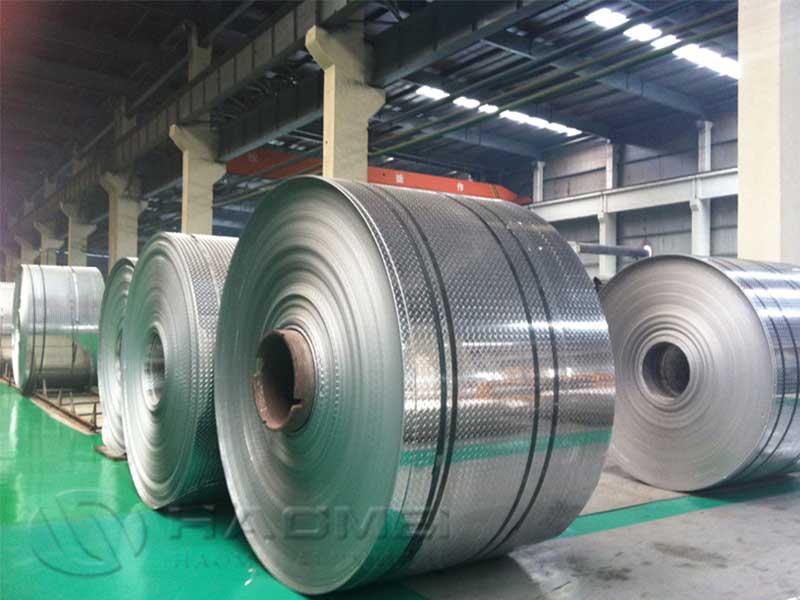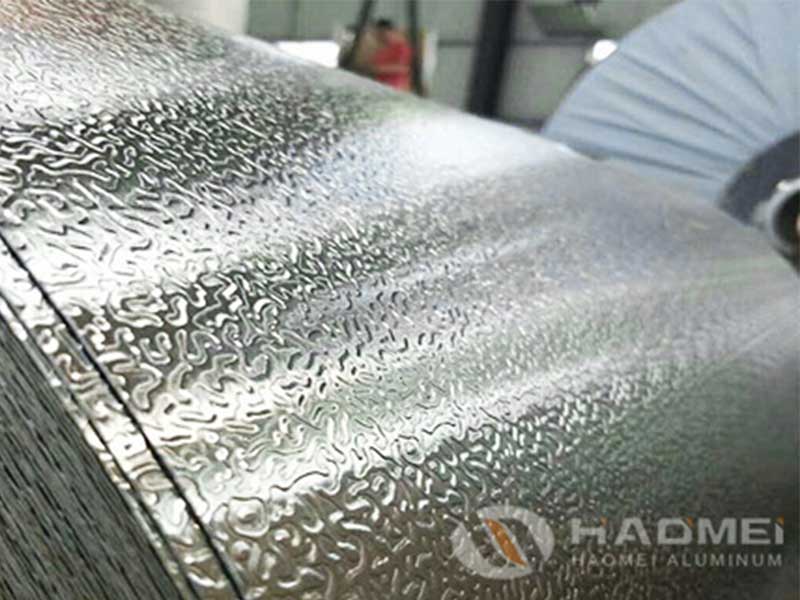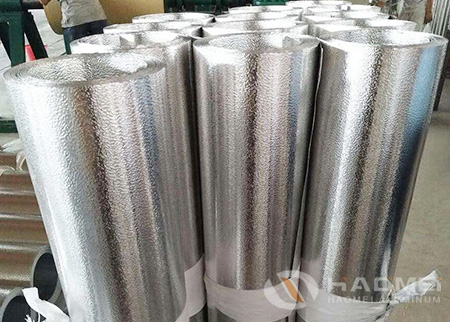

0.2-2.0mm thick stucco embossed aluminium sheet 1060 3003 5052
In many projects, a flat aluminum sheet is treated like a simple "skin." A 0.2–2.0mm thick stucco embossed aluminium sheet is different: it behaves more like a functional surface system. The characteristic orange-peel texture is not only an aesthetic choice, but a practical engineering feature that improves handling, durability, and in-service performance across insulation jacketing, HVAC, transportation, appliance housings, and architectural components. When produced in common alloys such as 1060, 3003, and 5052, stucco embossed sheet becomes a versatile material platform-lightweight, corrosion-resistant, and optimized for real-world fabrication.
What the stucco embossing really does (beyond "looks")
Stucco embossing adds controlled micro-relief to the surface. That changes how the sheet behaves in ways that are easy to feel and hard to overlook in production:
Grip and anti-slip handling: The textured surface reduces hand slip and improves vacuum-lifting reliability, especially on large-format thin gauges like 0.2–0.8mm.
Scratch and dent camouflage: Embossing diffuses reflections and visually hides minor scuffs from transport, bending, and installation. This matters for insulation cladding, trailer panels, and appliance back panels that must look clean without expensive protective films.
Stiffness-to-weight improvement: The embossed geometry provides a modest increase in perceived rigidity compared with flat sheet at the same thickness. For thin gauges, this helps reduce oil-canning and improves "panel feel" without adding mass.
Condensation and surface contact behavior: On insulation jacketing, the texture slightly reduces continuous contact area. In many installations, this helps limit visible water marks and improves appearance in humid environments.
In short, stucco embossing turns a standard sheet into a surface engineered for the messy realities of logistics, forming, and field installation.
Thickness range 0.2–2.0mm: why it is a sweet spot
This thickness window covers both "wrappable" and "structural skin" applications.
Around 0.2–0.5mm, stucco embossed aluminum is ideal for insulation jacketing, duct wrap, vapor barrier outer layers, and lightweight decorative cladding. It bends easily, forms neatly around pipes and elbows, and keeps installed systems looking uniform.
Around 0.6–1.2mm, it becomes a strong choice for appliance panels, HVAC casings, refrigerated equipment liners, container skins, and general fabrication where stiffness and impact resistance must improve but weight must stay low.
Around 1.5–2.0mm, it supports more demanding assemblies such as transport body panels, protective covers, and architectural infill where dent resistance, fastening integrity, and long-term durability are priorities.
Alloy selection: 1060 vs 3003 vs 5052, explained like an application engineer
Choosing between 1060, 3003, and 5052 is less about "better" and more about matching corrosion, formability, and strength to the job.
1060 (pure aluminum series): Known for high aluminum content, excellent corrosion resistance, and very good thermal conductivity. It's often selected for insulation jacketing, reflector-related uses, and applications where forming is gentle and strength demands are moderate. It also performs well where clean oxidation behavior and ease of processing are important.
3003 (Al-Mn alloy): The workhorse for general sheet metal. It offers better strength than 1060 while maintaining excellent formability and corrosion resistance in typical atmospheric environments. For HVAC housings, appliance panels, and general cladding, 3003 often provides the best balance of cost, forming ease, and durability.
5052 (Al-Mg alloy): Chosen when strength and marine-grade corrosion resistance matter. It resists salt-laden environments better than 3003 and is often used in transportation, coastal construction, fuel-related enclosures, and equipment skins that face harsher exposure. It also maintains good fatigue performance for vibrating assemblies.
Temper conditions: how "H" tempers control fabrication feel
For stucco embossed aluminium sheet, temper selection determines whether the material behaves like a soft wrap or a firm panel.
O temper: Fully annealed, the easiest to form. Best for complex wrapping, tight bends, and field fabrication.
H14 / H24: Common half-hard style options that increase strength while keeping reasonable formability. Suitable for appliance panels, ducting casings, and general fabrication.
H16 / H18: Harder tempers for higher stiffness and dent resistance. Used where flatter spans and impact resistance matter, while deep forming is limited.
5052 is frequently supplied as H32 because it provides a stable mix of strength and corrosion resistance with reliable forming behavior.
Typical product parameters (customizable by project)
Stucco embossed aluminium sheet is commonly supplied in coils or cut sheets with production-friendly tolerances.
Thickness: 0.2–2.0mm
Width: 100–1600mm common, wider available by agreement
Length: Coil or cut-to-length sheets
Surface: Stucco embossed (one side or both sides), mill finish, pre-painted optional
Core alloys: 1060, 3003, 5052
Common tempers: O, H14, H24, H32, H16, H18
Protective options: Interleaving paper, PE film, anti-scratch packaging
Emboss pattern: Classic orange-peel stucco, pattern depth and pitch configurable
Implementation standards and quality reference points
Projects often reference widely accepted standards to align expectations on chemistry, mechanical properties, and dimensional tolerance.
Chemical composition and alloy designation: ASTM B209 (Aluminum and Aluminum-Alloy Sheet and Plate)
Temper definitions and mechanical property guidance: ASTM B209 and corresponding EN standards
European material designation: EN 573 (chemical composition), EN 485 (sheet tolerances and mechanical properties)
General industrial quality expectation: RoHS compliance can be supplied if required for appliances and electronics-related uses
If the sheet is pre-painted or coated, additional coating standards and salt spray performance targets may apply depending on the system.
Chemical composition table (typical limits)
Values below reflect common specification ranges; exact limits depend on the governing standard and supplier's mill certificate.
| Alloy | Si (%) | Fe (%) | Cu (%) | Mn (%) | Mg (%) | Zn (%) | Cr (%) | Ti (%) | Al (%) |
|---|---|---|---|---|---|---|---|---|---|
| 1060 | 0.25 max | 0.35 max | 0.05 max | 0.03 max | 0.03 max | 0.05 max | - | 0.03 max | 99.60 min |
| 3003 | 0.60 max | 0.70 max | 0.05–0.20 | 1.0–1.5 | 0.05 max | 0.10 max | - | - | Remainder |
| 5052 | 0.25 max | 0.40 max | 0.10 max | 0.10 max | 2.2–2.8 | 0.10 max | 0.15–0.35 | 0.10 max | Remainder |
Functions and applications, seen from "lifecycle performance"
Stucco embossed aluminum earns its reputation because it performs across the entire lifecycle, not just at installation.
Insulation jacketing and pipe cladding: The texture protects appearance during handling, helps hide field scratches, and offers long-term corrosion resistance. 1060 and 3003 in O or H14 are frequent choices depending on stiffness preference.
HVAC and refrigeration equipment: Panels must look clean after assembly, resist small impacts, and remain dimensionally stable. 3003 H14/H24 and 5052 H32 are popular when strength needs rise.
Transportation and cargo equipment: Vibration, knocks, and weather exposure are constant. 5052's magnesium alloying supports better strength and corrosion resistance, while stucco texture reduces visible wear.
Appliances and enclosures: For back panels, liners, and protective casings, embossed sheet reduces cosmetic defects and improves rigidity at low thickness, supporting efficient high-volume fabrication.
Architectural cladding and decorative metalwork: Stucco embossing softens glare and creates a consistent surface that tolerates real-world contact better than mirror-like finishes.
Why customers keep choosing it
A 0.2–2.0mm stucco embossed aluminium sheet in 1060, 3003, or 5052 is a practical material choice disguised as a texture. It reduces cosmetic risk, improves handling, adds perceived stiffness, and extends the "clean look" period in demanding environments. When paired with the right temper and verified to ASTM B209 or EN 485/EN 573 expectations, it becomes a reliable, scalable solution for manufacturers and contractors who want fewer surface complaints, easier fabrication, and long-term corrosion confidence.
https://www.al-alloy.com/a/02-20mm-thick-stucco-embossed-aluminium-sheet-1060-3003-5052.html