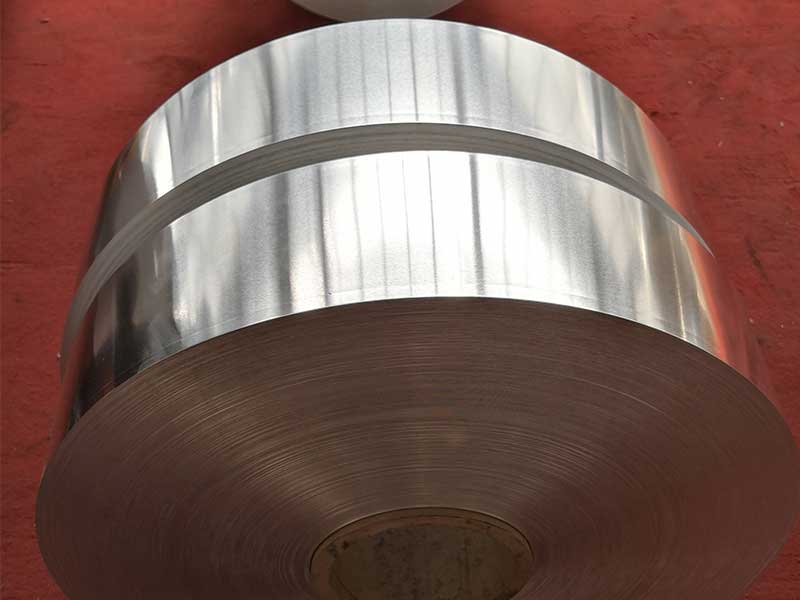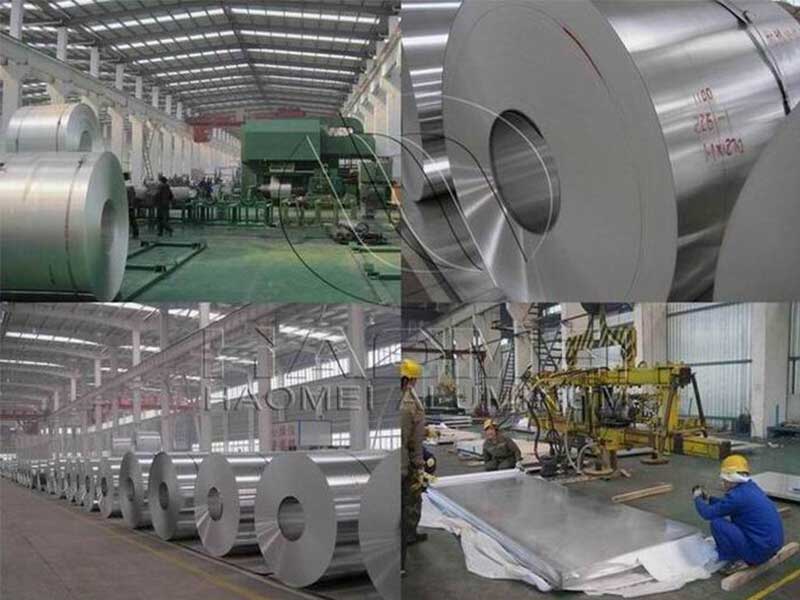

1060 aluminum coil 0.5mm thickness
A 0.5mm 1060 aluminum coil lives in a deceptively interesting space: thin enough to behave like a "metal film" during forming, yet substantial enough to carry heat, reflect light, and survive continuous handling in production. People often talk about aluminum coils by alloy number alone, but the thickness is the real plot twist. At 0.5mm, 1060's naturally high purity becomes a functional advantage you can feel on the shop floor-clean bends, stable surfaces, quick thermal response-while also exposing the realities of softness, surface sensitivity, and temper selection.
Why 1060 feels different at 0.5mm
1060 is essentially "nearly pure aluminum," typically around 99.6% Al. That purity brings very predictable behavior: excellent electrical and thermal conductivity, strong corrosion resistance in ordinary environments, and a surface that takes finishing well. When you compress those traits into a 0.5mm cross-section, they become more immediate.
Thin-gauge 1060 responds fast to temperature changes, which is why it shows up in heat transfer components and insulation-facing structures. It also conforms easily to dies and rollers, making it a natural candidate for stamping and roll forming where a harder alloy might crack at tight radii. But purity also means lower strength. With 0.5mm coil, "strength" is not just a lab number; it becomes a handling question: can the strip stay flat, resist denting, and avoid edge waves during uncoiling and leveling?
That's where temper becomes the steering wheel.
Temper as the hidden design parameter
For 1060, the common tempers include O (annealed), H14, H16, H18, and sometimes H24. In plain terms, these describe how much the metal has been strain-hardened after rolling, and whether it has been partially annealed.
At 0.5mm thickness, temper determines whether the coil is a supple forming material or a more stable sheet that resists minor scratches and handling dents. Annealed 1060-O is extremely formable and forgiving, ideal for deep drawing and tight bends, but it can be too soft for panels that must stay visually pristine during assembly. H14 or H24 can provide a better balance for general fabrication, offering improved rigidity and surface robustness while still bending cleanly with appropriate radii. H18 pushes toward maximum hardness for 1060, improving shape retention but reducing formability and increasing the risk of cracking in aggressive forming.
A distinctive way to view 0.5mm 1060 is to treat it like a "surface-first" material. Because the gauge is thin, surface condition and temper drive real performance as much as tensile strength does. That changes how you specify it: you don't just buy 1060, you buy flatness, surface grade, oiling/packing method, and a temper that matches the forming path.
Features that matter in real applications
High conductivity as a design shortcut
1060's conductivity makes it useful where you want heat or electricity to move easily without paying for copper. At 0.5mm, it can act as a rapid thermal spreader layer, a reflective heat shield, or a conductive foil-like component with better stiffness than ultra-thin foils. In busbar laminations or conductive shielding layers (where allowed by design), 0.5mm offers a practical compromise: thin enough to cut and punch economically, thick enough to hold shape.
Corrosion resistance with minimal alloying surprises
Because 1060 contains little alloying content, it performs reliably in many atmospheric environments. It's also an excellent base for anodizing, though the final appearance depends strongly on surface preparation and coil quality. In humid indoor settings, appliance skins, light reflectors, and trim elements benefit from stable natural oxide formation. If the coil will face aggressive chemicals or salt exposure, you'd typically move toward specialized alloys or protective coatings, but for general-purpose environments 1060 remains a strong candidate.
Formability that enables continuous manufacturing
At 0.5mm, continuous roll forming, profiling, and stamping become efficient. The coil format supports high throughput, and 1060's ductility reduces tool wear and cracking risk. This is why it shows up in components that are "quietly everywhere" rather than glamorous: liners, channels, housings, nameplates, lamp components, HVAC-related parts, and general sheet-metal assemblies.
Reflectivity and surface finish potential
Many lighting and decorative applications rely on aluminum's ability to reflect light and accept polishing, brushing, or coating. 1060 is frequently used when you need a clean reflective base for further finishing. The thin gauge helps when the part must be lightweight or when forming requires smaller forces.
Where 0.5mm 1060 coil is used-and why it wins there
Transformer and electrical auxiliary components
Not every electrical part needs high-strength alloying. In electromagnetic and electrical assemblies, 0.5mm 1060 can serve as shielding, spacers, wraps, and conductive layers where ease of forming and conductivity matter.
Heat-related structures and insulation-facing skins
In thermal insulation systems, aluminum layers often serve as jacketing, vapor barriers, or reflective facing. A 0.5mm coil provides durability during installation compared to very thin foil, while still being light and easy to form around corners and ducts.
Lighting and reflective assemblies
Reflectors and lamp housings often benefit from 1060's surface quality and reflectivity. The 0.5mm gauge helps maintain stiffness while allowing stamping and shaping into curved geometries.
General industrial stamping and panel work
When a product needs "good aluminum behavior" without high mechanical loads, 0.5mm 1060 is a pragmatic choice. It punches cleanly, bends easily, and supports coated or laminated structures.
Technical details that prevent problems later
Thickness tolerance, flatness, and edge condition are not secondary
With 0.5mm coil, small variations show up as waviness, poor fit-up, or inconsistent forming. For critical stamping or lamination, specify tight thickness tolerance and flatness requirements, and ensure edge trimming quality to reduce burrs and improve feeding behavior.
Bending guidance depends on temper
Annealed material allows tighter inside bend radii. Harder tempers require more generous radii to avoid edge cracking. When the application includes hemming or sharp flanges, match the temper to the forming severity rather than assuming "aluminum is always easy."
Surface protection is part of the spec
At 0.5mm, dents and scratches are more visible and more likely during handling. Many buyers add interleaving paper, protective film, or defined oiling practices. If the coil is destined for anodizing or high-gloss finishing, require clean rolling oil and controlled packaging to avoid stains or pressure marks.
Typical chemical composition (reference)
Actual limits depend on the governing standard and supplier mill practice. A common reference is ASTM B209/B209M for aluminum sheet and plate, with alloy chemistry aligned to AA/EN registrations. Typical 1060 chemical composition is shown below.
| Element | Typical limit / range (wt.%) |
|---|---|
| Aluminum (Al) | ≥ 99.60 |
| Silicon (Si) | ≤ 0.25 |
| Iron (Fe) | ≤ 0.35 |
| Copper (Cu) | ≤ 0.05 |
| Manganese (Mn) | ≤ 0.03 |
| Magnesium (Mg) | ≤ 0.03 |
| Zinc (Zn) | ≤ 0.05 |
| Titanium (Ti) | ≤ 0.03 |
| Others (each) | ≤ 0.03 |
| Others (total) | ≤ 0.10 |
Standards and supply considerations
1060 aluminum coil in 0.5mm is commonly supplied under ASTM B209/B209M or equivalent EN standards for rolled aluminum products, depending on region and project requirements. When you purchase, align temper designation, dimensional tolerances, surface finish, and inspection documents with your downstream process. For manufacturing lines sensitive to coil set, request controlled coil ID/OD, leveling capability, and consistent mechanical properties across the lot.
A final way to think about it
https://www.al-alloy.com/a/1060-aluminum-coil-05mm-thickness.html