
Aluminum coil Mill Finish 5052 5005 H16 H14
Aluminum Coil Mill Finish 5052 / 5005 H16 H14: Where "Uncoated" Becomes a Performance Surface
Mill finish aluminum coil often gets described as "raw" or "unfinished," but that framing misses its real value. In many industries, mill finish is not an absence of treatment-it's a deliberate choice to preserve the alloy's natural behavior: predictable forming, reliable conductivity, clean chemical resistance, and a surface that accepts fabrication steps without fighting back. When you combine mill finish with widely used alloys like 5052 and 5005 in H14 and H16 tempers, you get a coil product that behaves like a stable platform: easy to process, consistent in service, and adaptable across both aesthetic and functional applications.
What "Mill Finish" Really Means in Production
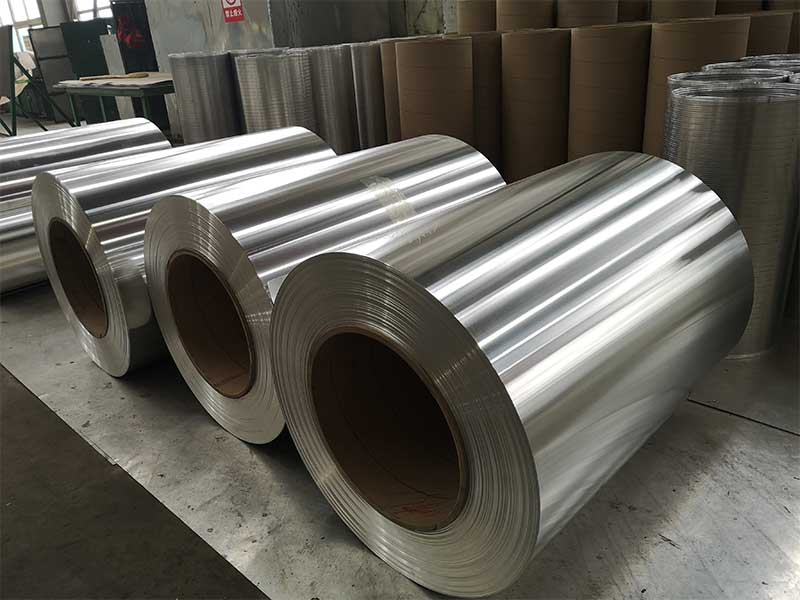
Mill finish refers to aluminum as it exits rolling and standard processing, without added coating or decorative finishing. The surface shows natural rolling marks and a metallic sheen that can vary slightly by lot and rolling direction. For many customers, this is an advantage:
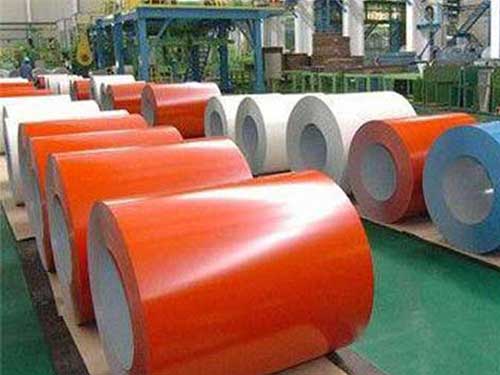
Mill finish supports downstream processes such as bending, stamping, roll forming, riveting, spot welding, and adhesive bonding. It also provides a cost-effective base for later anodizing, painting, laminating, or film coating, since you are not paying upfront for a surface you may later modify.
In practical terms, mill finish coil is frequently chosen when the surface is functional rather than cosmetic, or when the final appearance will come from a secondary operation.
the Two Alloys: 5052 vs 5005
5052 aluminum coil: strength and corrosion resistance with real-world toughness
5052 is an Al-Mg alloy, valued for its excellent corrosion resistance, especially in marine and industrial atmospheres. The magnesium content gives it notable strength compared with many non-heat-treatable alloys, while maintaining good workability. If your coil will be formed and then live in a humid, salty, or chemically active environment, 5052 is often the "quiet insurance" choice.
Common functional uses for 5052 mill finish coil include marine trim, tank and container components, chassis brackets, protective covers, transportation skins, and sheet-metal parts exposed to weather.
5005 aluminum coil: clean anodizing behavior and balanced formability
5005 is also an Al-Mg alloy, but with lower magnesium content than 5052. Its signature advantage is a more uniform response to anodizing and finishing, making it popular in architectural and decorative applications where visual consistency matters. In mill finish form, 5005 provides stable forming and a reliable base for painting or anodizing lines.
Typical applications include architectural flashings, interior panels, appliance skins, lighting components, trim, signage substrates, and general enclosures that may later be anodized or coated.
Temper as a "Factory Setting": H14 and H16 in Plain Terms
Both 5052 and 5005 are non-heat-treatable alloys; their strength is primarily achieved through strain hardening (work hardening). That's where temper comes in.
H14 indicates a half-hard temper: strengthened by cold work, offering a balanced combination of formability and stiffness.
H16 indicates a higher level of cold work than H14 (often described as three-quarter hard): greater strength and rigidity, with reduced forming allowance compared with H14.
From a functional perspective:
- Choose H14 when your part needs bending, hemming, drawing, or more aggressive forming without cracking risk.
- Choose H16 when you need flatter panels, improved dent resistance, tighter tolerance in roll forming, or higher strength in thin gauges.
Because mill finish coil is often processed at speed, temper selection is not only a mechanical decision-it affects yield stability, scrap rate, and tool wear.
Parameters Customers Usually Need (Typical Supply Range)
Actual availability depends on mill capability and your supplier's slitting/leveling equipment, but common coil supply parameters include:
- Alloy: 5052 or 5005
- Temper: H14, H16
- Thickness: typically 0.20–6.00 mm (thin gauges for skins, thicker for formed parts)
- Width: commonly 100–2000 mm (can be slit to custom widths)
- Coil ID: commonly 150/300/505 mm (or customer requirement)
- Coil OD: depends on weight and thickness
- Surface: Mill Finish, rolling direction visible
- Edge: mill edge or slit edge
- Packaging: export seaworthy, moisture protection, corner/edge guards as needed
If the coil will be anodized or used as a visible surface, it's worth specifying surface expectations in advance, since mill finish naturally varies more than pre-finished products.
Implementation Standards and Common References
Aluminum coil for these alloys is typically produced and inspected according to widely recognized standards. Common references include:
- ASTM B209 / ASTM B209M: Aluminum and Aluminum-Alloy Sheet and Plate (often used as the baseline reference for sheet/coil properties and tolerances)
- EN 485 series: Aluminum and aluminum alloys-sheet, strip and plate (European tolerance and mechanical property references)
- JIS H4000 / JIS H4040: Japanese industrial standards for aluminum and aluminum alloy products (often referenced in Asia-Pacific supply chains)
Your purchase specification usually defines the applicable standard, tolerances, mechanical property requirements, surface conditions, and testing documentation (such as MTC/COA).
Chemical Properties Table (Typical Composition)
Values below are typical composition limits (wt.%) commonly referenced in standards for these alloys. Exact limits can vary slightly by standard edition; always confirm against the governing specification for your order.
| Element (wt.%) | 5052 | 5005 |
|---|---|---|
| Si | ≤ 0.25 | ≤ 0.30 |
| Fe | ≤ 0.40 | ≤ 0.70 |
| Cu | ≤ 0.10 | ≤ 0.20 |
| Mn | ≤ 0.10 | ≤ 0.20 |
| Mg | 2.2–2.8 | 0.5–1.1 |
| Cr | 0.15–0.35 | ≤ 0.10 |
| Zn | ≤ 0.10 | ≤ 0.25 |
| Ti | ≤ 0.10 | ≤ 0.20 |
| Al | Balance | Balance |
This table explains much of the "personality difference" between the alloys: higher magnesium and chromium in 5052 typically translate into stronger corrosion performance and higher strength potential, while 5005 remains a finishing-friendly choice with stable processing characteristics.
Where These Coils Perform Best: Applications Through a Functional Lens
In fabrication, material choice often comes down to one question: what must not fail? Mill finish 5052 and 5005 in H14/H16 answer different failure modes.
For marine and outdoor equipment, 5052 helps prevent premature corrosion, surface pitting, and structural weakness over time. That's why it shows up in boat components, coastal installations, and protective housings. In H16, it adds dent resistance and panel stiffness-useful for transportation and equipment skins.
For architectural and consumer-facing products, 5005 is frequently chosen because it behaves predictably when anodized or painted. If your end product needs a clean, consistent finish after processing, 5005 H14 provides formability for trims and profiles, while H16 supports flatter panels and better rigidity for cladding and enclosures.
In HVAC and general sheet-metal manufacturing, both alloys are used depending on environment and finishing path. Mill finish coil keeps costs controlled and allows the line to decide later whether the surface remains functional-metal or becomes a coated aesthetic surface.
A Practical Selection Shortcut
If your part is exposed to harsher environments, needs stronger corrosion resistance, or must carry more mechanical demand at the same thickness, 5052 H14/H16 is usually the safer bet. If your priority is finishing consistency, anodizing quality, or architectural appearance after surface treatment, 5005 H14/H16 often provides the smoother path.
Mill finish doesn't mean "basic." In the right alloy and temper, it's a highly efficient starting point-an aluminum coil that behaves predictably in production and stays dependable in service, whether it's forming into a marine bracket, a clean architectural panel, or a durable industrial enclosure.
https://www.al-alloy.com/a/aluminum-coil-mill-finish-5052-5005-h16-h14.html