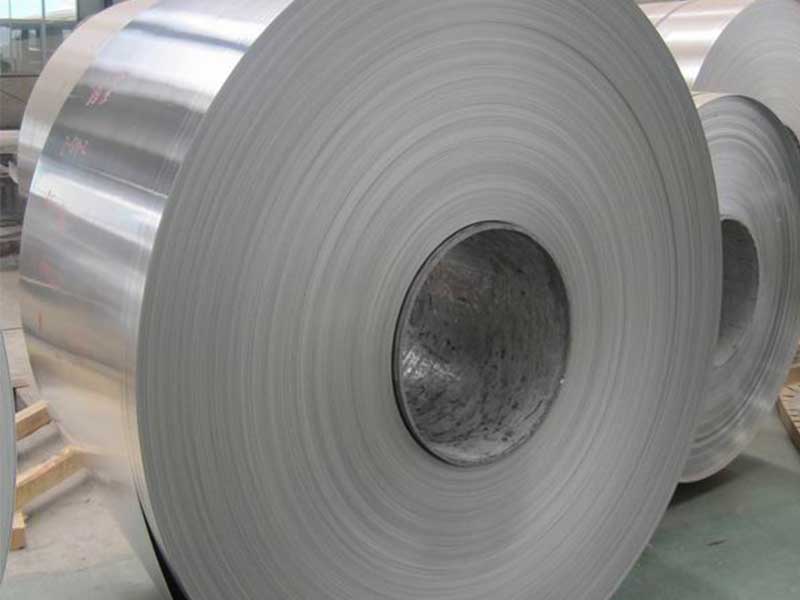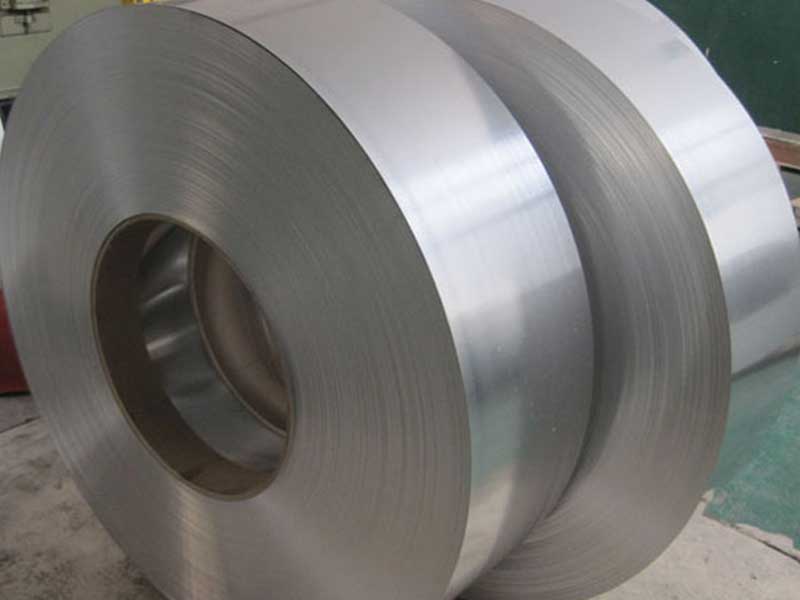

Aluminum strip for fin 1060 3003
Aluminum Strip for Fin 1060 3003: Where Heat Transfer Meets Formability
In heat exchangers, "fin material" is not just a thin piece of metal-it is the working surface that decides how efficiently heat moves, how long the unit survives moisture and vibration, and how stable the production line runs. Aluminum strip for fin 1060 and 3003 sits at the center of that decision because it combines lightweight conductivity with stamping-friendly behavior. From HVAC evaporators to automotive radiators and industrial coolers, these alloys are chosen not because they are merely common, but because their functions align with the physics of heat exchange and the realities of high-speed fin forming.
What a Fin Really Needs to Do
A fin's job sounds simple: increase surface area. But in real equipment, fins must perform several functions at once.
Efficient heat transfer
Aluminum fins must conduct heat rapidly away from tubes and distribute it across a large surface. Higher conductivity improves response and efficiency, especially in evaporators and condensers where temperature differences can be small.
High-speed formability
Fin stock is often fed into presses running continuous stamping, louvering, corrugating, and slitting operations. A "good" fin strip behaves consistently under tooling: stable yield strength, predictable elongation, and surface that resists galling.
Corrosion and moisture tolerance
Condensation, salt spray, and cleaning chemicals are common. While aluminum naturally forms a protective oxide film, fin stock frequently requires surface treatments or controlled chemistry to improve long-term resistance.
Bonding and assembly compatibility
Many heat exchangers rely on mechanical expansion, brazing, or bonding. Fin strip must match the chosen joining method-especially when braze clad layers or flux systems are involved (even when the fin itself is unclad).
Why 1060 and 3003 Are the Fin Industry's Workhorses
1060 Aluminum Strip for Fin: Conductivity First
1060 belongs to the 1xxx series, meaning it is high-purity aluminum. Its standout advantage is high thermal conductivity. When fin efficiency is prioritized-especially in applications where airflow is the bottleneck-1060 can help the fin respond faster to temperature changes.
At the same time, high-purity aluminum is typically softer and more ductile, which helps with forming intricate louver patterns. The trade-off is that strength is lower than manganese-alloyed grades, so fin design and handling must consider dent resistance and rigidity.
3003 Aluminum Strip for Fin: Balanced Strength and Formability
3003 is an Al-Mn alloy. A small addition of manganese significantly improves strength while preserving excellent formability. For many fin manufacturers, 3003 is the "production-stable" choice: it runs smoothly on high-speed presses and delivers a sturdier fin pack, which can be important for vibration resistance, spacing integrity, and assembly robustness.
In environments with moderate corrosion demands, 3003 performs reliably, and it is commonly selected when the fin needs a little more backbone without becoming difficult to stamp.
Typical Parameters for Fin Aluminum Strip (1060 / 3003)
Fin strip is a precision material; small variations affect press performance and fin geometry. Common supply ranges include:
- Thickness: 0.05–0.20 mm (many fins fall in 0.08–0.12 mm depending on design)
- Width: 16–600 mm (slit coils customized to fin die and feed width)
- Coil ID: 150 / 300 / 400 / 500 mm (by agreement)
- Coil OD: up to ~1200–1600 mm (depends on weight and line capability)
- Surface: mill finish, degreased, or coated (hydrophilic, epoxy, or anti-corrosion systems)
- Edge condition: slit edge with controlled burr direction for stable feeding
Dimensional tolerance typically follows contract requirements, with fin stock often demanding tighter thickness control and flatness than general-purpose strip.
Alloy Tempering and "How the Strip Behaves in the Die"
For fin production, temper is not an abstract code-it describes how the strip will respond during louvering and corrugation.
Common tempers used for fin strip include:
- O (Annealed): maximum ductility, easiest forming; used when complex louvers or deep corrugations are required
- H14 / H16 / H18 (Strain-hardened): higher strength and springback; selected when fin rigidity is important or when handling damage must be reduced
- H22 / H24 (Strain-hardened and partially annealed): a widely used "balanced" condition for fin stamping, combining stable forming with improved strength
In practice, fin manufacturers often choose a temper that minimizes tearing at louver edges while keeping the fin pack stiff enough to maintain airflow channels. The ideal selection also depends on tool design, louver density, and press speed.
Implementation Standards Commonly Referenced
Fin aluminum strip is typically produced and inspected under widely recognized aluminum standards, with details confirmed by customer specification:
- ASTM B209 / ASTM B209M: Aluminum and Aluminum-Alloy Sheet and Plate (commonly referenced for strip properties and tolerances)
- EN 485 series: European standard for wrought aluminum sheet/strip (mechanical properties and tolerances depend on part)
- JIS H4000 / JIS H4160: Japanese industrial standards often referenced in heat exchanger supply chains
- RoHS / REACH: compliance expectations for coatings, lubricants, and restricted substances
Actual fin stock often adds internal requirements beyond the base standard, such as flatness limits, surface cleanliness, pinhole control, and coating performance.
Chemical Composition (Typical Limits)
Below is a commonly used reference table for chemical composition. Exact limits may vary slightly by standard and supplier agreement.
| Alloy | Al (min) | Si (max) | Fe (max) | Cu (max) | Mn | Mg (max) | Zn (max) | Ti (max) | Others (each) | Others (total) |
|---|---|---|---|---|---|---|---|---|---|---|
| 1060 | 99.60% | 0.25% | 0.35% | 0.05% | 0.03% max | 0.03% | 0.05% | 0.03% | 0.03% | 0.05% |
| 3003 | Remainder | 0.60% | 0.70% | 0.05–0.20% | 1.0–1.5% | 0.05% | 0.10% | 0.10% | 0.05% | 0.15% |
A useful way to interpret this table for fins is: 1060 focuses on purity and conductivity, while 3003 uses manganese to raise strength without sacrificing stamping performance.
Applications: Where Each Alloy Fits Best
HVAC fin stock (evaporator and condenser)
Both 1060 and 3003 are widely used, often with hydrophilic coatings to manage condensate drainage and reduce odor or microbial risk. 1060 can help maximize thermal response; 3003 can help maintain fin geometry during assembly and service.
Automotive heat exchangers
3003 is frequently chosen for its strength and durability during vibration and thermal cycling. In some designs, 1060 may still appear where conductivity and formability are prioritized.
Industrial cooling, refrigeration, and power electronics
If the fin design is thin and dense, stable stamping is essential. 3003's balance is valuable, while 1060 can be beneficial for designs tuned for peak heat transfer.
Choosing Between 1060 and 3003: A Fin-Centered View
If your performance target is "move heat as fast as possible," 1060 is often the natural candidate. If your production target is "run fast, form clean, keep fins stiff," 3003 tends to deliver more margin. Many successful programs select the alloy based on the most expensive failure mode: efficiency loss, die wear, tearing, fin collapse, or corrosion complaints.
Aluminum strip for fin 1060 3003 is not just a material choice-it's a way to tune heat transfer, manufacturability, and durability at the same time. When thickness, temper, surface condition, and standards are aligned with the fin design, these alloys become reliable platforms for consistent heat exchanger performance.
https://www.al-alloy.com/a/aluminum-strip-for-fin-1060-3003.html