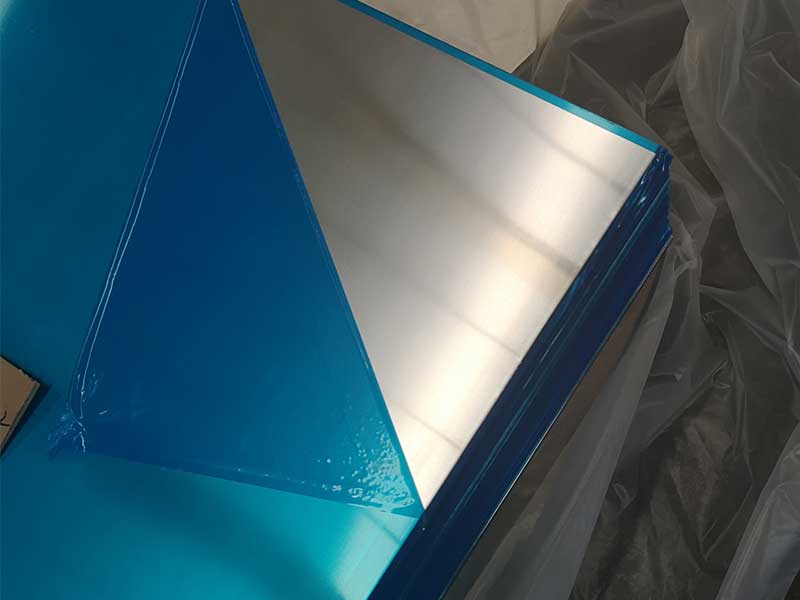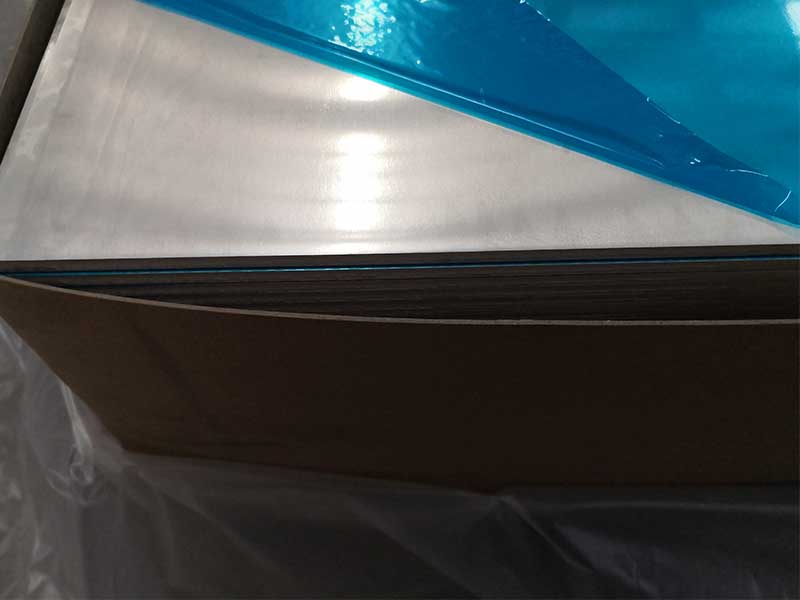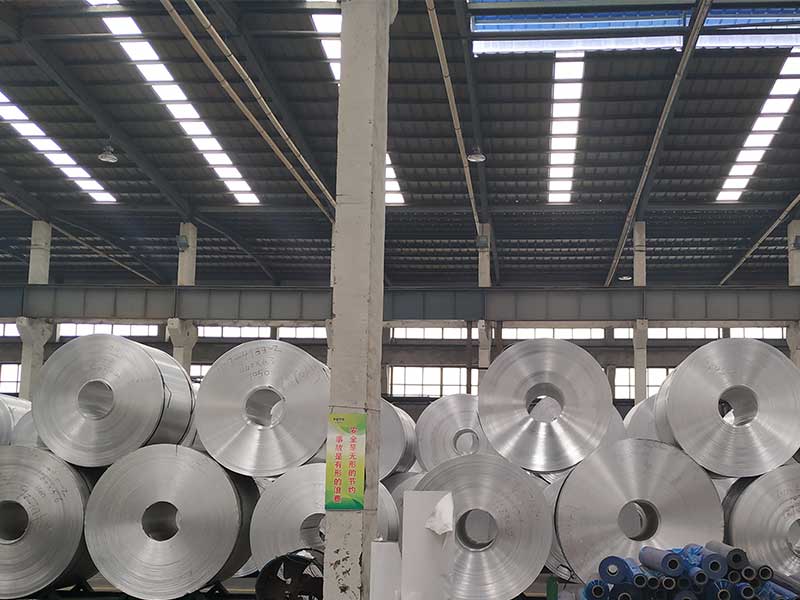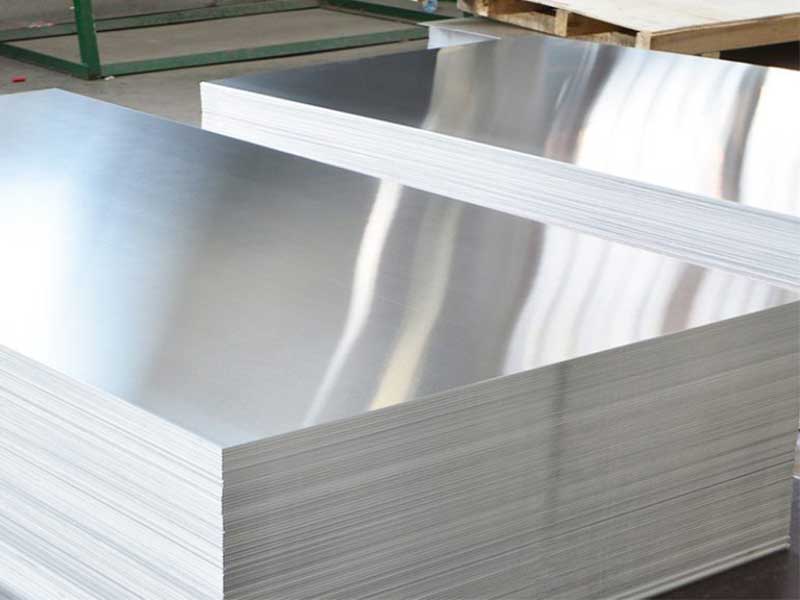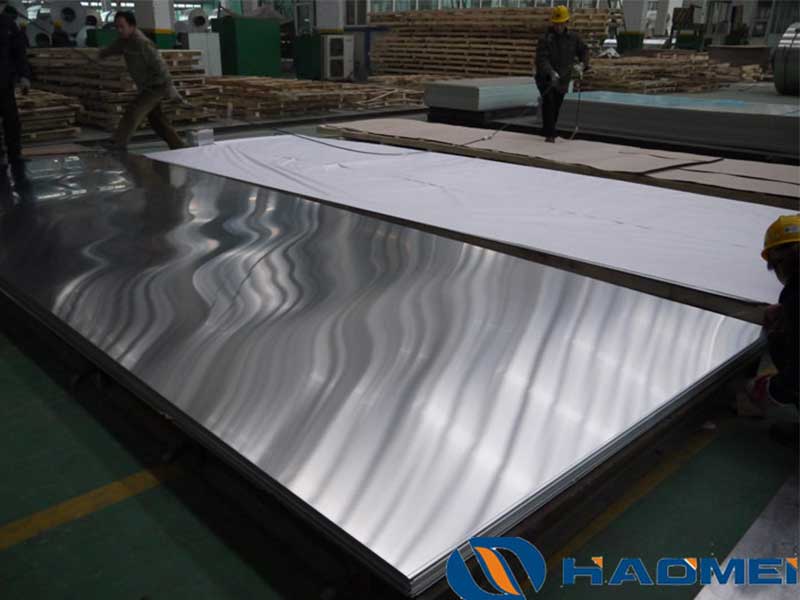

3003 h16 aluminum sheet 0.45 mm
3003 H16 aluminum sheet 0.45 mm: A Thin Layer That Carries Heavy Responsibility
Most engineers first think about strength, thickness, and cost when they specify sheet metal. Yet with 3003 H16 aluminum sheet in 0.45 mm thickness, the conversation quietly shifts to something more subtle: how to balance structural adequacy, formability, corrosion resistance, and surface quality in the thinnest margin of safety. This product lives where material is scarcely visible but performance is constantly tested.
What 3003 Really Is: Chemistry Behind the Behavior
3003 is a classic non heat treatable aluminum manganese alloy, belonging to the 3xxx series. Its chemistry is deliberately modest and stable, which is why industry relies on it for predictable behavior in forming, bending, and long term service.
A typical compositional range for 3003 is:
- Silicon Si: max 0.6 percent
- Iron Fe: max 0.7 percent
- Copper Cu: 0.05 to 0.20 percent
- Manganese Mn: 1.0 to 1.5 percent
- Zinc Zn: max 0.10 percent
- Others, each: max 0.05 percent
- Others, total: max 0.15 percent
- Aluminum Al: balance
Manganese is the real architect here. It refines the grain structure, improves strength over pure 1xxx aluminum, and helps maintain good corrosion resistance. The small addition of copper nudges the strength slightly upward, but the alloy remains firmly in the corrosion resistant, non heat treatable class.
Because 3003 is strengthened primarily by solid solution and strain hardening, its performance is highly dependent on temper and processing history, especially at thin gauges like 0.45 mm.
H16: The Temper as a Design Tool
The code H16 is not just a label. It defines the mechanical personality of the sheet.
- H indicates strain hardened (work hardened), not heat treatable
- The second digit 1 indicates that the material is strain hardened only, without a subsequent partial anneal or stabilization heat treatment
- The final digit 6 specifies the degree of strain hardening, roughly corresponding to about three quarters hard
From a behavior perspective, H16 means the sheet has been cold rolled to achieve a moderate to high level of strength while still retaining some workable ductility. It is notably stiffer and stronger than O or H14 temper, but less brittle than fully hard H18.
Typical mechanical properties for 3003 H16 sheet around 0.45 mm are:
- Tensile strength: about 165 to 195 MPa
- Yield strength: about 140 to 170 MPa
- Elongation: roughly 4 to 10 percent (depending on gauge and test direction)
These values are not arbitrary. They define whether a part will spring back, crack on a tight bend, or hold a crisp edge after stamping. At 0.45 mm, even small changes in temper can drastically change forming behavior, so H16 becomes a carefully chosen compromise rather than a default.
Why 0.45 mm Matters More Than It Seems
At first glance, 0.45 mm appears almost trivial. Yet in practice, this thickness sits at an interesting intersection of engineering decisions.
In sheet metals, every tenth of a millimeter matters. At 0.45 mm:
- The sheet is already thin enough for excellent heat conduction and rapid thermal response, essential in heat spreaders and low mass panels
- Stiffness per unit thickness follows the cube relationship with thickness. A drop from 0.6 to 0.45 mm is not just a 25 percent reduction in thickness; it is a greater reduction in bending stiffness. H16 temper is what helps reclaim some of that loss
- Forming limits tighten. Tooling radius, press tonnage, and blank layout must respect the reality that cracking can occur more abruptly than with thicker sheet or softer temper
In many designs, 0.45 mm is chosen not simply to save weight, but to hit a very precise balance: thick enough to resist handling damage and functional loads, thin enough to reduce material cost, rolling time, and overall mass.
Surface Quality, Flatness, and Coating Behavior
For such a thin product, the visual and surface performance become almost as crucial as mechanical properties.
3003 H16 sheet at 0.45 mm usually offers:
- Good surface for painting, powder coating, or lacquering
- Sufficiently fine grain and controlled roughness for consistent adhesion
- Reasonable reflectivity for light panels or internal cladding, though not as high as specialized bright alloys
Flatness is a subtle but critical parameter. A 0.45 mm sheet that is slightly waved on the coil will telegraph defects into any laminated or bonded composite. The H16 temper helps maintain shape stability, resisting minor handling distortions better than softer tempers, but tight rolling and tension leveling control are essential for demanding applications like signage, appliance skins, or precision housings.
Thermal and Corrosion Behavior in Real Service
From a physical standpoint, 3003 shares base aluminum properties:
- Density: about 2.73 g per cubic centimeter
- Thermal conductivity: roughly 160 to 190 W per meter Kelvin
- Coefficient of thermal expansion: about 23 micrometers per meter Kelvin
- Electrical conductivity: moderate, lower than 1xxx series but adequate for shielding and low current uses
That combination makes 0.45 mm 3003 H16 a natural candidate where heat must spread quickly but structural requirements are moderate. It can act as a heat spreader plate behind LED modules, as a lightweight backplate in electronic housings, or as a skin in HVAC equipment where temperature cycling is constant.
Corrosion resistance is better than many copper containing 2xxx or 7xxx alloys. In neutral and mildly acidic environments, 3003 forms a stable oxide layer, which is often sufficient without coating. In marine or strongly alkaline conditions, additional protection such as painting, anodizing, or clear coating is typically adopted. At 0.45 mm, pitting or localized attack must be taken seriously because there is no surplus thickness to sacrifice; protection strategies need to be properly engineered rather than assumed.
Bending, Stamping, and Forming from a Process Window View
Forming 3003 H16 at 0.45 mm is essentially about reading the process window accurately.
Compared to O or H14 temper, H16 will:
- Require larger bend radii to avoid surface cracking, especially when bending transverse to the rolling direction
- Generate more springback in air bending or roll forming
- Offer cleaner edges and reduced edge burring during stamping, due to higher strength and stiffer response
Tooling designers will recognize that corner radii, punch clearances, and draw bead setups for 0.45 mm H16 cannot simply be scaled from thicker sheet. Thin sheet is much more sensitive to minor misalignment and surface defects. Micro cracking from an excessively tight radius may not appear during forming, but can propagate over time under vibration or thermal cycling.
In automated production lines, the consistency of the H16 temper, thickness tolerance, and lubricant systems determines scrap rate. This is where the choice of alloy and temper moves directly onto the financial ledger: stable 3003 H16 properties translate to reduced tool adjustment, fewer splits, and more predictable line speeds.
Applications: Where 0.45 mm 3003 H16 Earns Its Place
When you examine where this alloy and thickness are actually used, a pattern emerges: it is specified wherever a relatively thin, light, corrosion resistant, and moderately strong sheet is needed, and where formability still matters.
Typical applications include:
- Architectural and interior cladding panels where weight must be minimized and corrosion protection is important
- HVAC casings, duct skins, and vent linings that benefit from good formability and resistance to condensation and mild chemical exposure
- Reflector liners, appliance backplates, and interior panels where thermal stability and dimensional accuracy are required
- Battery and electronics shielding enclosures, where moderate conductivity and good formability are paired with low mass
- Lightweight partitions, ceiling tiles, and decorative elements in transport and construction, often painted or coated after forming
In many of these roles, the 0.45 mm thickness is a calculated compromise. Thicker sheet adds unnecessary mass and cost, while thinner options can become difficult to handle, store, and form without wrinkles or dents. H16 temper, with its elevated yield strength, gives the sheet enough stiffness to feel solid in service, even when the actual mass per square meter is very low.
Standards, Tolerances, and Engineering Confidence
Although 3003 H16 aluminum sheet is not exotic, it is disciplined by a well defined framework of standards and tolerances. International and regional specifications typically define:
- Chemical composition ranges for 3003
- Mechanical property minimums for H16 temper
- Thickness and width tolerances for sheet products
- Flatness and surface condition requirements depending on finish class
For a 0.45 mm sheet, thickness tolerance is usually tight enough to support precise weight calculations per panel and predictable forming response. Engineers who model sheet performance in finite element software rely on this consistency; real world behavior only matches the model when material properties conform to the standards with minimal scatter.
A Strategic Material, Not a Commodity
It is tempting to think of a 0.45 mm 3003 H16 aluminum sheet as just a cheaper, thinner piece of metal. In actual design practice, it is a finely tuned compromise between cost, processability, performance, and durability.
The chemistry makes it resistant to corrosion while staying formable. The H16 temper raises strength and stiffness without completely sacrificing ductility. The 0.45 mm gauge places it in a niche where weight and thermal response are optimized, but handling and forming can still be performed at industrial speeds with the right tooling.
Used intelligently, this quiet, almost invisible layer of metal supports larger systems: air flows through it, electronics are cooled by it, structures are protected behind it. The design opportunity lies not just in the alloy name or the temper code, but in how this thin sheet behaves as part of a complete engineered assembly.
https://www.al-alloy.com/a/3003-h16-aluminum-sheet-045-mm.html