
Industrial colored Aluminum Foil
Industrial colored aluminum foil is a functional, coated aluminum foil engineered to deliver barrier protection, process stability, and high-visibility aesthetics in demanding industrial environments. Unlike decorative household foils, industrial colored foil is manufactured from controlled-alloy aluminum (typically in the 1xxx/3xxx families), tightly managed thickness tolerances, and color coating systems designed to withstand heat, chemicals, abrasion, and forming operations.
1) What Makes Industrial Colored Aluminum Foil Different?
Industrial colored aluminum foil combines three layers of value:
Aluminum foil substrate
Provides conductivity, formability, and excellent barrier properties (light, moisture, oxygen when properly laminated).Surface treatment + primer
Improves adhesion and corrosion resistance while stabilizing coating performance.Color coating (one side or two sides)
Adds identification, branding, reflectivity control, UV/weather resistance, and surface protection.
Depending on the use case, the foil can be supplied as:
- Single-side colored foil (color on one side, natural aluminum on the other)
- Double-side colored foil
- Laminated structures (foil + PET/PE/Paper/Nonwoven), often for insulation and packaging
- Embossed colored foil to increase stiffness, grip, or diffusion/reflectance behavior
2) Features and Customer Benefits
Performance-Driven Features
- Corrosion resistance: Coatings act as a protective skin; alloy selection further improves resistance in humid or mildly corrosive environments.
- Thermal performance: Aluminum's high thermal conductivity supports heat transfer and temperature uniformity; coatings can tune reflectivity or emissivity.
- Barrier capability: When laminated or properly sealed, foil delivers excellent barrier performance against light and moisture.
- Processability: Suitable for slitting, rewinding, stamping, forming, and lamination; embossing optional.
- Traceability and identification: Color coding improves line management, reduces mix-ups, and enables rapid visual inspection.
Practical Benefits for Buyers
- Reduced maintenance from surface protection
- Improved product differentiation (branding, SKU coding, safety marking)
- Better handling and less surface scratching vs. bare foil (depending on coating type)
- Enhanced end-product appearance without sacrificing industrial function
3) Common Alloy Choices (Substrate)
In industrial colored foil, the substrate alloy is selected based on strength needs, formability, and corrosion behavior. The most common are AA 1050/1060/1070 (high purity) and AA 3003 (Mn-added for higher strength).
Typical Chemical Composition (Reference Ranges)
Actual composition varies by standard (ASTM/EN/GB) and supplier melt control. Use this as a selection guide and confirm with mill certificates.
| Alloy | Al (min) | Si (max) | Fe (max) | Cu (max) | Mn (max) | Mg (max) | Zn (max) | Ti (max) | Notes |
|---|---|---|---|---|---|---|---|---|---|
| AA 1050 | 99.50% | 0.25 | 0.40 | 0.05 | 0.05 | 0.05 | 0.07 | 0.05 | Excellent conductivity & formability |
| AA 1060 | 99.60% | 0.25 | 0.35 | 0.05 | 0.03 | 0.03 | 0.05 | 0.03 | Better purity for consistent surface |
| AA 1070 | 99.70% | 0.20 | 0.25 | 0.04 | 0.03 | 0.03 | 0.04 | 0.03 | Highest purity, premium electrical/reflective uses |
| AA 3003 | Remainder | 0.60 | 0.70 | 0.05–0.20 | 1.0–1.5 | - | 0.10 | 0.10 | Higher strength; good for fin/insulation facings |
4) Mechanical Properties (Typical)
Properties depend on thickness, temper, and process route. For colored foils, the most common tempers include O (annealed) for deep forming and H18/H24 for stiffness and handling stability.
| Alloy | Temper | Tensile Strength (MPa) | Yield Strength (MPa) | Elongation A50 (%) | Typical Use Intent |
|---|---|---|---|---|---|
| 1050 | O | 60–100 | 20–35 | 20–35 | Forming, wrapping, laminating |
| 1050 | H18 | 130–160 | 120–150 | 2–5 | Stiff facings, caps, tags |
| 3003 | O | 90–130 | 35–55 | 18–30 | Better dent resistance |
| 3003 | H24 | 140–190 | 120–170 | 4–10 | Insulation jacketing, industrial covers |
5) Technical Specifications (Typical Supply Range)
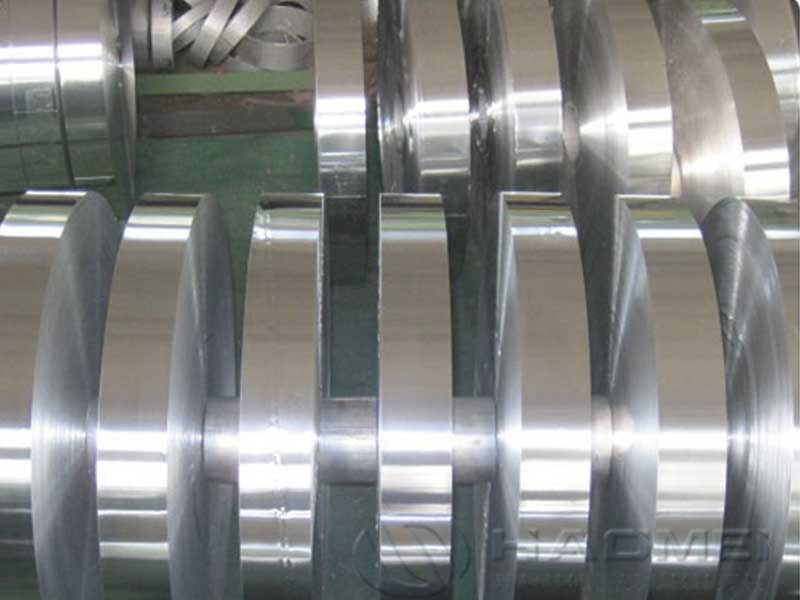
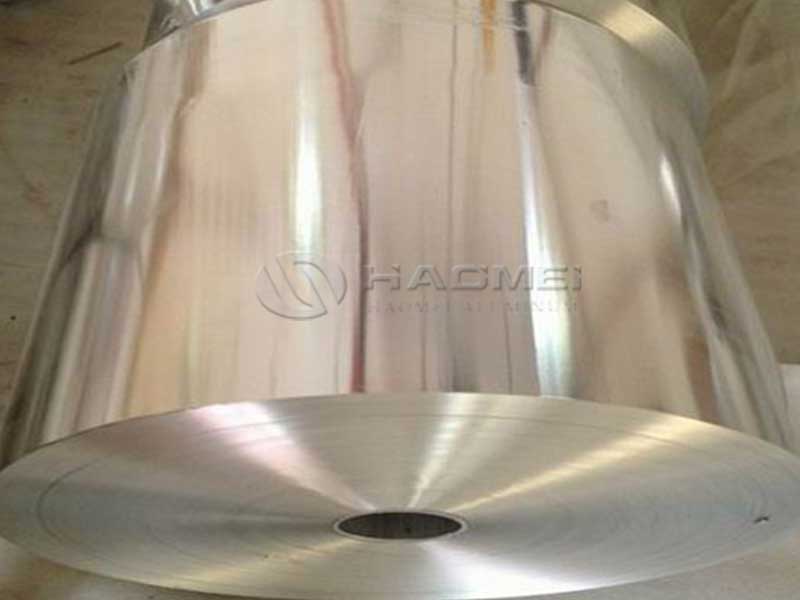
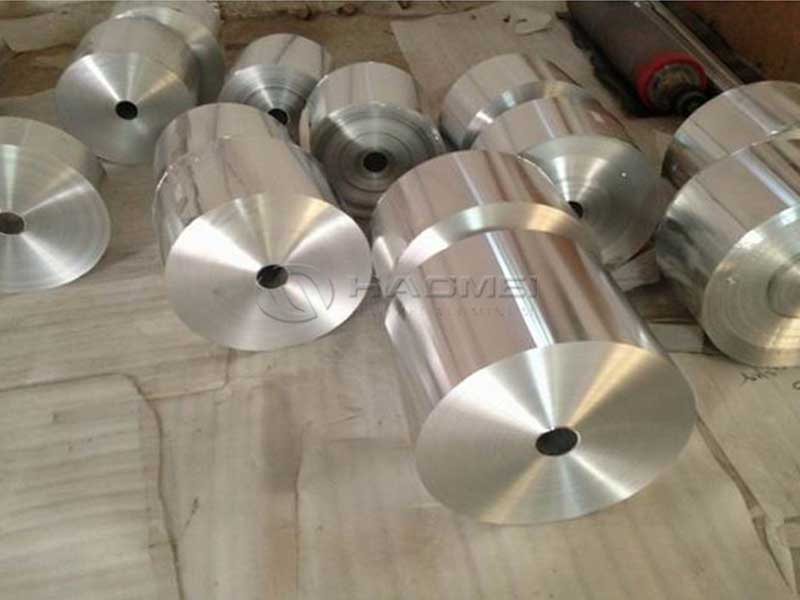
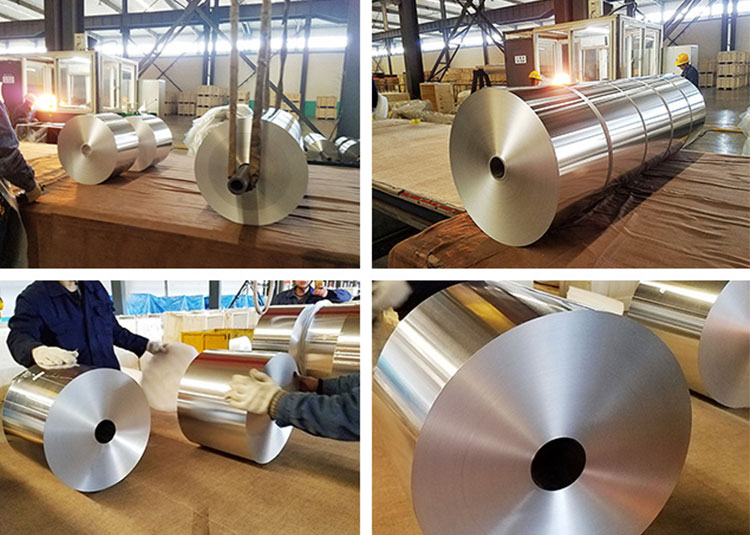
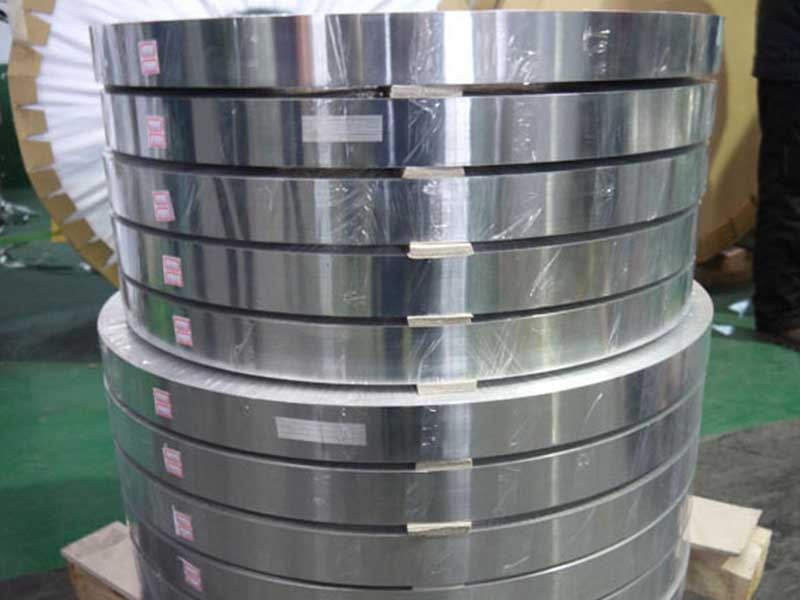
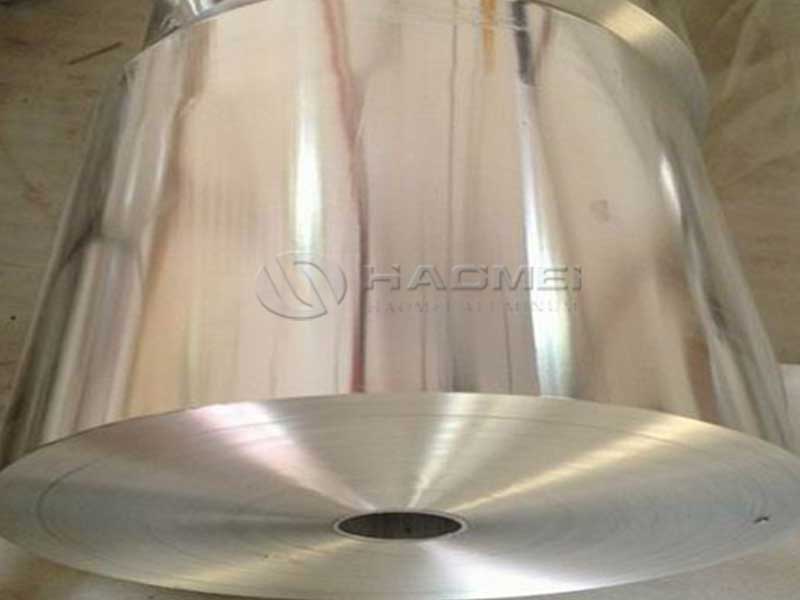
Industrial colored aluminum foil is usually supplied in coils with tight dimensional control and coating quality requirements.
| Parameter | Typical Range / Option | Notes |
|---|---|---|
| Foil thickness | 0.020–0.200 mm | 20–200 μm, depending on stiffness/barrier needs |
| Width | 100–1600 mm | Slit-to-width available |
| Coil ID | 76 mm / 152 mm | 3" or 6" common |
| Coil OD | Up to ~1200 mm | Depends on thickness & handling limits |
| Temper | O, H14, H18, H24 | Selection based on forming vs stiffness |
| Surface finish | Bright / matte / embossed | Matte reduces glare; embossing increases rigidity |
| Coating system | Polyester (PE), PVDF, Epoxy, PU | PVDF for outdoor/UV; epoxy for chemical resistance |
| Coating thickness | 3–25 μm (per side) | Balanced for flexibility + protection |
| Gloss | 5–90 GU | Matte to high-gloss options |
| Color matching | RAL/Pantone/custom | Batch control recommended for branding colors |
| Adhesion | Pass (e.g., cross-hatch) | Critical for stamping and bending |
| Heat resistance | ~120–250°C (system-dependent) | Confirm per coating chemistry |
| Packing | Export seaworthy | Moisture protection + edge guards |
6) Coating & Surface Performance Metrics (What to Check)
A colored foil is only as reliable as its coating system. For industrial buyers, these are the most meaningful acceptance indicators:
| Performance Item | Typical Target | Why It Matters |
|---|---|---|
| Adhesion (cross-hatch) | 0–1 grade loss | Prevents peeling during forming/lamination |
| Flexibility (T-bend) | 0T–2T | Lower is better for sharp folds |
| Pencil hardness | HB–2H (varies) | Scratch resistance during handling |
| Impact resistance | Pass (no cracking) | Packaging forming, stamping durability |
| Solvent resistance (MEK rub) | 50–200 double rubs | Verifies cure and chemical robustness |
| Salt spray (coated) | 120–500 h+ | Corrosion behavior in humid/saline conditions |
| Color difference (ΔE) | ≤ 1.0–2.0 | Ensures batch-to-batch color consistency |
7) Where Industrial Colored Aluminum Foil Is Used
A) Thermal Insulation & HVAC
Colored foil (often laminated) is widely used as an outer facing for:
- HVAC duct wrap and insulation boards
- Pipe insulation jackets
- Reflective insulation layers for industrial buildings
Value: high reflectivity options, improved tear resistance (when laminated), and quick job-site identification via color.
B) Cable Wrapping & Shielding Structures
Colored foil can act as:
- Binder or identification wrap
- Shielding component in multilayer cable constructions (typically with laminates)
Value: conductivity from aluminum plus visual management for cable families and production lines.
C) Industrial Packaging & Protective Wrap
Used for:
- Protective wrap for parts, coils, and components
- Moisture/light shielding when combined with proper sealing/lamination
Value: cleaner surface than bare foil, improved appearance, and reduced scuffing.
D) Building & Construction Decorative-Functional Layers
Applications include:
- Curtain wall accessory layers
- Insulation facings with branding colors
- Flashing or barrier layers (structure-dependent)
Value: color stability, weathering performance (especially PVDF), and consistent finish.
E) Labels, Tags, and High-Visibility Marking
Colored foil is excellent for:
- Heat-resistant tags
- Industrial labels (often laminated with adhesives)
- Safety or process identification tapes
Value: strong visual contrast, dimensional stability, and durability.
8) Selection Guide: How to Choose the Right Product
| Customer Need | Recommended Direction |
|---|---|
| Maximum formability (tight bends, stamping) | 1050/1060 + O temper + flexible coating (good T-bend) |
| Higher stiffness / dent resistance | 3003 + H24 or 1050 H18 (confirm forming limits) |
| Outdoor exposure / UV stability | PVDF coating system + controlled gloss and ΔE |
| Chemical contact (oils, cleaning agents) | Epoxy/PU systems; request solvent rub and chemical resistance data |
| Premium surface appearance | Higher-purity 1060/1070 + controlled primer + high-gloss PE/PVDF |
| Insulation facing / reflective function | Bright or metallized-look coating + lamination options (PET/PE) |
Industrial colored aluminum foil is a multi-performance material-lightweight, conductive, corrosion-resistant, and highly configurable through alloy choice, temper, surface finish, and coating chemistry. It serves not only as a barrier or thermal layer, but also as a process tool: improving identification, protecting surfaces, and elevating perceived quality in finished goods.
For best results, buyers should specify alloy + temper, thickness and tolerance, coating type and thickness, and core coating performance tests (adhesion, bend, solvent rub, and corrosion resistance) aligned to the real production and service environment.
https://www.al-alloy.com/a/industrial-colored-aluminum-foil.html