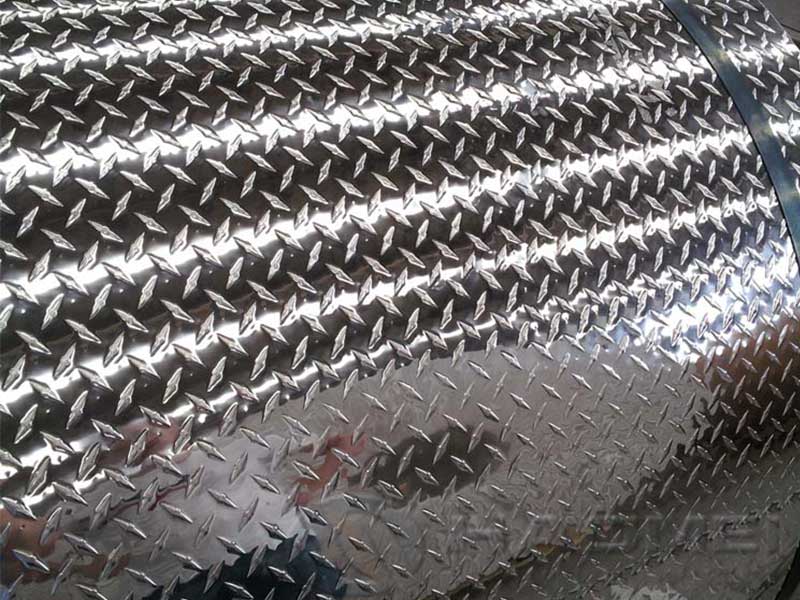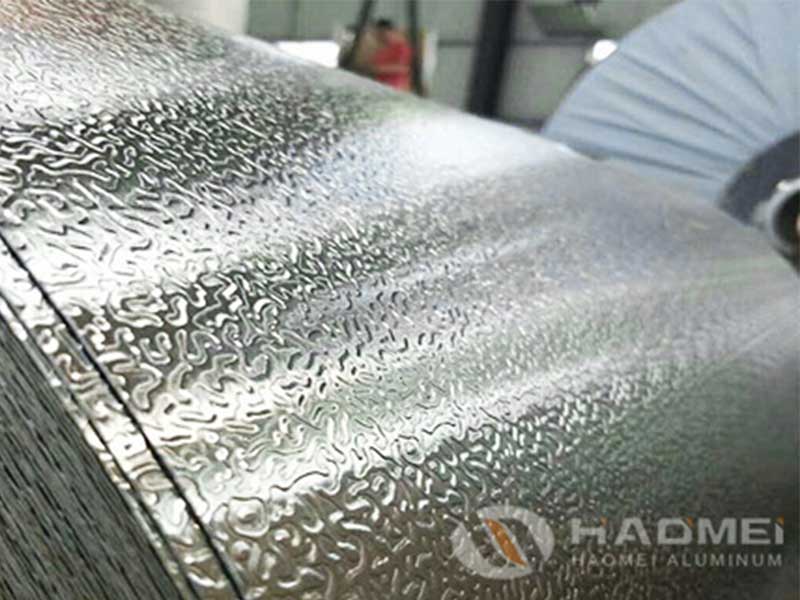

Aluminum tread plate Aa1050 H14 H24 H32 H34
Aluminum Tread Plate AA1050 H14 H24 H32 H34: Reading the Metal Behind the Pattern
Most people notice aluminum tread plate only when they step on it: the bright, patterned sheet underfoot on a truck bed, a stair, or a loading ramp. Yet behind those small diamonds or bars lies a carefully controlled combination of chemistry, temper, and processing. Focusing specifically on AA1050 tread plate in tempers H14, H24, H32, and H34 reveals how subtle changes in strength and formability can transform the same base alloy into four very different working materials.
Seeing AA1050 as a "pure" base canvas
AA1050 belongs to the 1xxx series of aluminum, often described as commercially pure. Its typical aluminum content is at least 99.5%. That purity gives it a distinct role: it is not the muscle of the aluminum world, but the reliable nerve system.
Because 1050 is unalloyed in a major way, it offers:
- Outstanding corrosion resistance
- Excellent electrical and thermal conductivity
- Very good formability and ductility
- Modest mechanical strength
This makes AA1050 an excellent base for tread plates used in environments where corrosion resistance and ease of fabrication matter more than extreme strength. Think of wet or humid conditions, food processing plants, chemical workshops, cold storage rooms, or architectural cladding where the tread pattern is as much about appearance and slip resistance as it is about structural performance.
Chemistry: why so little makes a big difference
Even in a "pure" alloy, every trace element is monitored, because small variations affect corrosion behavior, conductivity, and anodizing response. A typical chemical composition range for AA1050 is:
| Element | Typical content (wt%) |
|---|---|
| Al | ≥ 99.50 |
| Si | ≤ 0.25 |
| Fe | ≤ 0.40 |
| Cu | ≤ 0.05 |
| Mn | ≤ 0.05 |
| Mg | ≤ 0.05 |
| Zn | ≤ 0.07 |
| Ti | ≤ 0.03 |
| Others (each) | ≤ 0.03 |
| Others (total) | ≤ 0.10 |
The very low copper and magnesium content helps preserve corrosion resistance, particularly in aggressive or chloride-rich environments. That is one of the reasons AA1050 tread plates can survive for years on platforms, walkways, and truck bodies exposed to road salts and moisture, especially if combined with suitable surface treatments.
What the pattern really does
The raised pattern on an aluminum tread plate is often treated as a cosmetic feature, but its function is rooted in simple mechanics. The protrusions:
- Increase surface friction and reduce slip in wet or oily conditions
- Add local stiffness to the sheet, similar to corrugations in roofing
- Create a visual signal of a "safe walking surface"
However, rolling in those patterns is not neutral from a material viewpoint. The embossing step cold works the surface layers and introduces localized strain. That is where temper selection becomes crucial. The base sheet might be AA1050, but the service behavior is defined equally by its strain history.
Temper codes as a map of the metal’s journey
The H-tempers reflect how the material has been strain-hardened and possibly partially annealed. For AA1050 tread plate, H14, H24, H32, and H34 represent four different balances between strength and formability.
A simplified view of mechanical properties (typical values, not guaranteed, for reference only):
| Temper | Tensile strength Rm (MPa) | 0.2% Yield Rp0.2 (MPa) | Elongation (A50, %) |
|---|---|---|---|
| H14 | 95–125 | 75–105 | 5–12 |
| H24 | 80–115 | 65–95 | 7–14 |
| H32 | 90–120 | 70–100 | 6–13 |
| H34 | 100–135 | 80–110 | 4–10 |
Actual values vary with thickness and manufacturing practice, but the trend is clear: as strength increases, elongation and deep formability decrease.
H14: the straightforward workhorse
AA1050 H14 is strain hardened to about half hard. In tread plate form, it finds a sweet spot between stiffness and ease of bending.
From a fabrication perspective:
- It can be bent, roll-formed, and lightly stamped without cracking, even after the pattern is applied
- It offers enough strength for light-duty floors, covers, toolboxes, and wall protection panels
- It still responds reasonably to further cold work on site, such as forming or limited straightening
In environments where aggressive forming is not required, but handling and mild loads are present, H14 is often the practical default.
H24: when forming comes first
Temper H24 can be thought of as "worked, then partially softened". The metal is strain hardened and then subjected to partial annealing to reduce hardness and restore ductility.
For tread plate, this can be valuable when:
- Complex bending, folding, or curving is required in fabrication
- Deep or compound shapes are needed, such as stair nosings with tight radii or curved access covers
- Post-fabrication welding is planned, and the fabricator wants some ductility margin in the heat-affected zones
H24 sacrifices some strength relative to H14 but pays it back through improved formability and less risk of surface cracking around the patterned features.
H32: the balanced specialist
H32 is a controlled half-hard temper that is common in marine and structural sheet alloys like 5xxx series, but it also appears in 1xxx tread plates when more specific strength/formability balance is required.
In AA1050 tread plate, H32 is a good fit when:
- The plate is used in lightweight structural flooring or walkways with moderate spans
- Minor forming is needed, but maintaining stiffness is more important than achieving very tight radii
- Dimensional stability is critical; H32 often offers a slightly more predictable springback behavior
It is a temper favored in applications where engineers want a known and tightly controlled mechanical window, especially if the tread plates are part of an engineered system rather than ad-hoc cladding.
H34: the stiff, load-aware option
H34 moves closer to the harder end of the strain-hardened range while still allowing some fabrication. The pattern plus higher work hardening creates a noticeably stiffer panel.
Its typical usage scenarios include:
- Vehicle floors and truck beds where point loads from small wheels or legs are common
- Access platforms with higher traffic density and larger spans between supports
- Situations where deflection limits are more critical than ultimate strength
H34 is not the right choice if the design requires tight bends or complex forming after patterning. It is better suited to applications where the plate is supplied close to final shape and used primarily as a flat or gently curved structural skin.
Thickness, pattern type, and standards: the invisible framework
When specifying AA1050 tread plate, temper is only part of the story. Thickness and pattern geometry strongly influence performance. Thicker base sheet provides stiffness and impact resistance; more pronounced or denser patterns enhance slip resistance but can concentrate strain during forming.
Common standards that define tolerances, mechanical properties, and surface requirements include:
- EN 485 series and EN 1386 for wrought aluminum and tread plates in Europe
- ASTM B632/B632M and related documents in the US
- GB/T standards in China for pattern types and mechanical properties
Within these frameworks, a professional supplier will typically offer:
- Thickness range: about 1.5–6.0 mm for AA1050 tread plate
- Standard patterns: five-bar, diamond, or single bar, with specific bar height and spacing
- Dimensional tolerances on thickness, width, length, and bar height
Matching temper with thickness is essential. A thin sheet in H34 can be just as stiff in practical use as a thicker sheet in H24, but the choice will change weight, cost, and fabrication strategy.
Surface behavior: corrosion, cleaning, and finishing
Because AA1050 is so pure, its natural oxide layer forms quickly and protects well in most neutral or mildly acidic environments. For tread plates, this means:
- Good durability outdoors, especially when rinsed of de-icing salts
- Suitability for food or cold storage applications where cleanability is important
- Excellent compatibility with anodizing for decorative or additional protective finishes
However, the raised pattern makes cleaning more challenging. For hygiene-critical uses, a finer or lower bar pattern can be easier to maintain, and a carefully controlled anodized surface can reduce staining and improve wear resistance.
Choosing a temper by asking how the plate will live
A practical way to choose among AA1050 H14, H24, H32, and H34 is to imagine the plate's "life story" from mill to end use.
If the plate will be:
- Deeply formed, bent sharply, or curved on site: H24 is the safer path.
- Moderately formed, with a mix of strength and ductility needed: H14 or H32 are your core options, selected based on the required mechanical window and any standard or specification you must meet.
- Used mostly flat under higher loads or spans, with minimal forming: H34 earns its place.
The alloy is the same in all four cases; what changes is how far the manufacturer pushes the material along the work-hardening curve and, sometimes, how much they pull it back with controlled annealing.
The distinctive value of AA1050 tread plate
In a marketplace crowded with higher-strength 3xxx and 5xxx tread plates, AA1050 might seem modest. Yet its purity, corrosion resistance, and forgiving fabrication behavior make it uniquely valuable where reliability and ease of processing outweigh the need for maximum strength.
the interplay between AA1050’s chemistry, tread pattern, and the tempers H14, H24, H32, and H34 turns what looks like a simple sheet with raised bars into a precisely tunable component. For designers and fabricators, reading those temper codes correctly is the difference between a plate that merely looks right and one that performs safely and predictably over its entire service life.
https://www.al-alloy.com/a/aluminum-tread-plate-aa1050-h14-h24-h32-h34.html