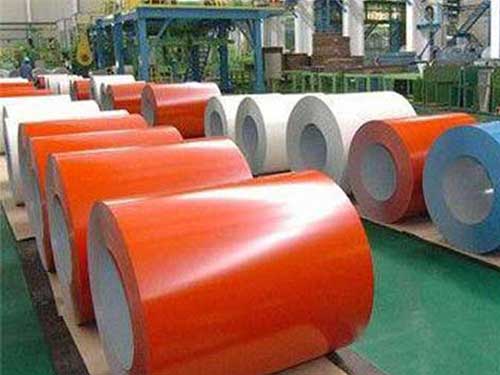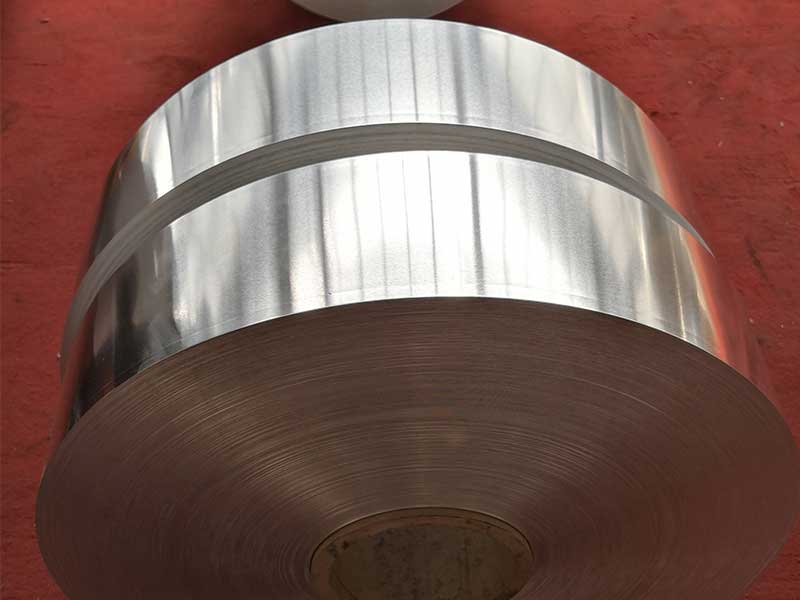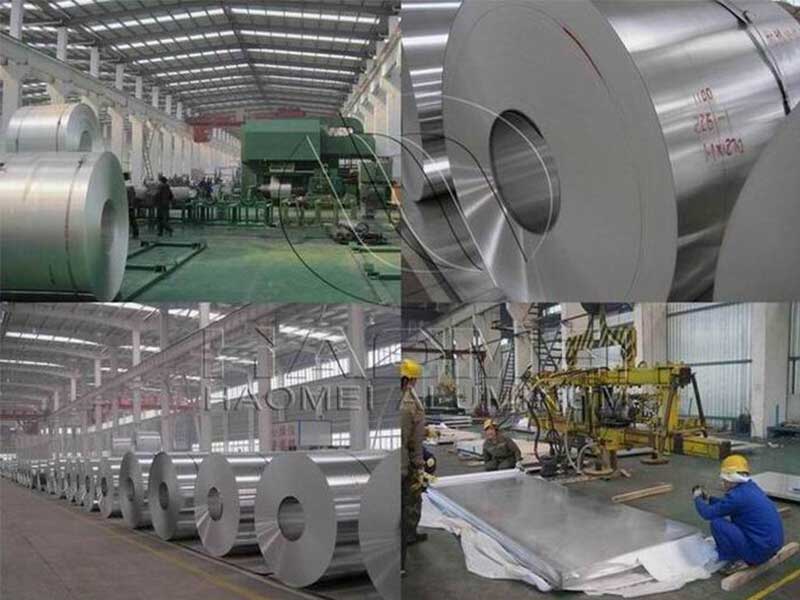

Aluminum coil 1050 1060
Aluminum coil 1050 and aluminum coil 1060 are high-purity, non-heat-treatable aluminum products designed for customers who value excellent formability, strong corrosion resistance, high reflectivity, and reliable conductivity. Both alloys belong to the "commercially pure aluminum" family, making them ideal for deep drawing, bending, roll forming, and surface finishing processes such as anodizing and polishing.
While 1050 and 1060 are similar in appearance and processing behavior, 1060 contains slightly higher minimum aluminum content, typically offering marginally better electrical conductivity and corrosion performance. For most general-purpose forming and finishing applications, either alloy can be selected based on availability, target conductivity, and customer specification.
Features at a Glance
| Feature | Aluminum Coil 1050 | Aluminum Coil 1060 | Customer Benefit |
|---|---|---|---|
| Purity (Al content) | ≥ 99.50% | ≥ 99.60% | Clean surface, stable properties, excellent finishing |
| Formability | Excellent | Excellent | Easy bending, stamping, deep drawing |
| Corrosion resistance | Very good | Excellent | Long service life in humid/mild chemical environments |
| Electrical conductivity | Very good | Excellent | Better performance in busbar/transformer/thermal uses |
| Weldability | Excellent | Excellent | Suitable for TIG/MIG, low cracking risk |
| Heat treatability | Not heat-treatable | Not heat-treatable | Strength controlled by temper (H/O), not solution treatment |
| Typical strength level | Low to medium | Low to medium | Best for forming rather than load-bearing parts |
| Item | 1050 | 1060 ||---|---|| Alloy series | 1xxx | 1xxx || General positioning | High-purity forming and finishing alloy | Higher-purity conductivity and finishing alloy || Typical selection logic | Cost-effective, widely available | Prefer when conductivity and purity targets are stricter |
In practical coil supply, the difference often matters most for electrical/thermal applications and for customers who specify minimum aluminum content. For purely decorative, cladding, or general fabrication, both are excellent.
Chemical Composition (Typical Limits, wt.%)
Chemical composition can vary slightly by standard (ASTM/EN/JIS). The table below reflects commonly used industry limits for 1050 and 1060.
| Alloy | Al (min) | Si (max) | Fe (max) | Cu (max) | Mn (max) | Mg (max) | Zn (max) | Ti (max) | Others (each / total) |
|---|---|---|---|---|---|---|---|---|---|
| 1050 | 99.50 | 0.25 | 0.40 | 0.05 | 0.05 | 0.05 | 0.05 | 0.03 | 0.03 / 0.10 |
| 1060 | 99.60 | 0.25 | 0.35 | 0.05 | 0.03 | 0.03 | 0.05 | 0.03 | 0.03 / 0.10 |
What this means for customers: lower alloying content generally improves reflectivity, corrosion resistance, and electrical conductivity, while keeping strength modest and formability outstanding.
Available Tempers and Typical Mechanical Performance
1xxx alloys gain strength mainly through cold work. Temper selection is the lever for balancing formability and rigidity.
| Temper | Description | Typical Use | Tensile Strength (MPa) | Yield Strength (MPa) | Elongation (%) |
|---|---|---|---|---|---|
| O | Fully annealed | Deep drawing, spinning, soft forming | 60–95 | 20–35 | 25–40 |
| H12 | Quarter-hard | Light forming, better stiffness | 80–110 | 55–85 | 10–20 |
| H14 | Half-hard | Roll-formed parts, panels | 95–125 | 75–105 | 6–15 |
| H16 | Three-quarter hard | Higher flatness stability | 105–135 | 85–115 | 4–10 |
| H18 | Full-hard | Maximum strength for 1xxx | 115–145 | 95–125 | 2–6 |
Notes: values are typical ranges influenced by thickness, processing route, and standard. If your application involves tight bending radii or deep drawing, O temper is usually the safest choice.
Coil Technical Specifications (Supply Range)
| Parameter | Typical Supply Range | Notes |
|---|---|---|
| Thickness | 0.20–6.00 mm | Thinner gauges for fin stock/decoration; thicker for busbar/plates |
| Width | 20–2000 mm | Slitting available for narrow widths |
| Coil ID | 150 / 300 / 505 mm | Common IDs depending on line and customer equipment |
| Coil OD | Up to ~1600 mm | Depends on thickness/weight limits |
| Coil weight | 1–8 tons (typical) | Custom packing for logistics constraints |
| Edge | Mill edge or slit edge | Slit edge improves dimensional control for stamping |
| Surface finish | Mill finish, brushed, polished | Finish depends on target appearance and coating |
| Protective options | Interleaf paper/film, PE coating | Helps prevent scratches during handling |
| Standards (common) | ASTM B209, EN 485, JIS H4000 | Confirm per project requirement |
Physical and Functional Properties (Practical Reference)
| Property | Typical Value / Behavior | Why it matters |
|---|---|---|
| Density | ~2.71 g/cm³ | Lightweight structures and easier handling |
| Thermal conductivity | High (excellent heat transfer) | Heat exchangers, LED housings, cookware bases |
| Electrical conductivity | High (1060 slightly higher) | Busbar, transformer winding, electrical components |
| Corrosion resistance | Strong in atmospheric exposure | Roofing, insulation jacketing, cladding |
| Reflectivity | High, especially when polished | Lighting reflectors, decorative panels |
| Anodizing response | Very good | Uniform anodized appearance, stable oxide layer |
Processing and Fabrication Notes
| Process | Performance | Recommendations |
|---|---|---|
| Bending / forming | Excellent | Use O/H12 for tight radii; control springback with tooling |
| Deep drawing | Excellent in O temper | Ensure clean lubrication and correct blank-holder pressure |
| Welding | Very good | TIG/MIG recommended; keep joint surfaces clean for best quality |
| Machining | Fair | Softer tempers can "gum"; use sharp tools and proper chip control |
| Surface treatment | Excellent | Suitable for anodizing, painting, lamination, and embossing |
Because these alloys are soft relative to stronger 3xxx/5xxx/6xxx grades, attention to handling, packaging, and surface protection pays off-especially for cosmetic or reflective products.
Typical Applications
| Application Segment | Why 1050/1060 Fits | Common Coil Tempers |
|---|---|---|
| Insulation jacketing and cladding | Corrosion resistance, light weight, easy forming | H14, H16 |
| Roofing and architectural trim | Formability, weather resistance, surface finish | H14 |
| Lighting reflectors | High reflectivity, excellent polishing | O, H12 |
| Heat exchangers and thermal parts | High thermal conductivity | O, H12, H14 |
| Electrical conductors and busbar (light duty) | High conductivity, weldability | H12–H18 (depending on stiffness) |
| Nameplates, signage, decorative panels | Anodizing/printing quality | O, H14 |
| Packaging and general stamping | Reliable forming and surface | O, H12 |
If the part is primarily structural and needs higher strength, customers often step up to 3003/5052/6061. If the part is about forming, finishing, and conductivity, 1050/1060 is typically the fastest and cleanest solution.
Quality Control Items Customers Usually Care About
| Control Item | What we check | Customer outcome |
|---|---|---|
| Thickness & width tolerances | Gauge control, edge quality | Stable forming and consistent assembly |
| Surface defects | Scratches, dents, oil, roll marks | Better cosmetics and coating yield |
| Flatness & coil set | Tension leveling, process control | Easier feeding in stamping/roll forming |
| Mechanical properties | Temper verification | Predictable bending/drawing performance |
| Chemical compliance | Melt analysis | Meets project and standard requirements |
Quick Buying Guidance
| If you need… | Recommended choice |
|---|---|
| Best conductivity and high-purity requirement | 1060 coil |
| General-purpose forming and cost-effective supply | 1050 coil |
| Deep drawing, spinning, very tight bends | O temper (1050-O / 1060-O) |
| Panels that must hold shape well | H14 or H16 |
| Maximum stiffness within 1xxx series | H18 |
Aluminum coil 1050 1060 is a high-purity 1xxx series material known for excellent formability, corrosion resistance, and high electrical and thermal conductivity. With common tempers from O (annealed) to H18 (full hard), 1050/1060 aluminum coils are widely used for insulation jacketing, architectural trim, lighting reflectors, heat transfer parts, signage, and electrical applications. Typical supply includes 0.20–6.00 mm thickness, up to 2000 mm width, and surface options such as mill finish, brushed, polished, and protective film. For customers seeking higher purity and conductivity, 1060 is often preferred, while 1050 offers a cost-effective, versatile option with similar processing performance.