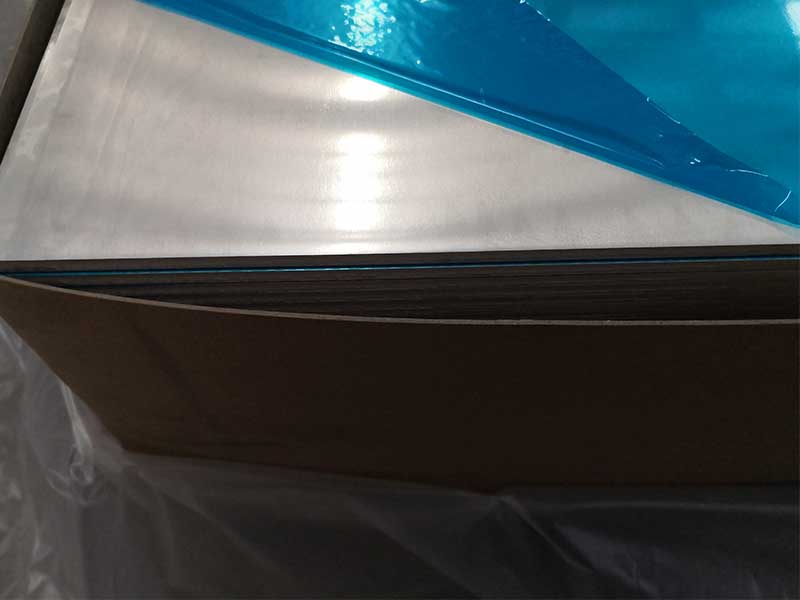

3003 5005 5052 Aluminum Plate for Traffic Sign
3003 5005 5052 Aluminum Plate for Traffic Sign: A Practical, Technical Guide
When you drive down a highway at night and clearly see a reflective speed limit or direction sign, there is a high chance the base material is 3003, 5005, or 5052 aluminum plate. These three alloys dominate the traffic sign industry because they balance strength, formability, durability, and surface quality better than most alternatives.
Why aluminum plate is the backbone of modern traffic signs
Steel is strong but heavy and prone to rust. Plastics are light but lack stiffness and UV stability over long periods. Aluminum hits the sweet spot:
- Lightweight enough for easy handling and installation on poles and gantries
- Naturally corrosion-resistant due to its oxide layer
- Smooth surface, ideal for reflective film adhesion and screen or digital printing
- Fully recyclable without property loss
Among aluminum alloys, 3003, 5005, and 5052 have become the standard choices because they are non-heat treatable, weldable, easy to form, and optimized for outdoor exposure.
the three core alloys by their “role” in a traffic sign
Think of each alloy as a different “character” in the traffic sign system.
- 3003: the economical workhorse, ideal for many standard road signs
- 5005: the surface specialist, preferred for premium anodizing and color consistency
- 5052: the strength and durability expert, suited for demanding environments
3003 aluminum plate – the stable base for everyday signs
3003 is an aluminum–manganese alloy. Manganese increases strength slightly over pure aluminum while maintaining excellent formability, which is important when fabricating sign blanks, flanged edges, or formed panels.
functions in traffic signage:
- Widely used for flat regulatory and guidance signs
- Suitable for stamping, shearing, bending, and punching
- Cost-effective for large projects where extreme strength is not critical
5005 aluminum plate – the anodizing and surface consistency leader
5005 is an aluminum–magnesium alloy with low magnesium content. It stands out for:
- Excellent color uniformity when anodized, especially when matched with 5000-series architectural components
- Good surface finish, ideal when appearance of the bare or anodized metal is important
- Slightly better corrosion resistance than 3003
5005 is often selected for:
- High-visibility traffic signs in urban environments
- Projects requiring anodized, brushed, or decorative finishes
- Applications where reflective film adhesion and long-term appearance are critical
5052 aluminum plate – the heavy-duty performer
5052 has higher magnesium content than 5005, giving it significantly higher strength while keeping good formability and weldability.
Typical uses in traffic signage:
- Large freeway signs that need higher stiffness and superior wind-load resistance
- Signs installed in harsh coastal or industrial environments with salt spray and pollutants
- Sign structures, stiffeners and brackets where higher strength is beneficial
Alloy tempers: how the same alloy behaves differently
The “temper” describes how the metal is processed to adjust strength and formability.
Common tempers for traffic sign aluminum plate:
- H14: strain-hardened to a half-hard condition. Good balance between strength and workability, widely used for sign blanks.
- H24: strain-hardened and partially annealed, similar use to H14 with a bit more formability.
- H32 (mainly for 5052): strain-hardened and stabilized for higher strength while retaining moderate formability.
In practical terms:
- For small and medium-sized flat signs, 3003 H14 or 5005 H14 is often chosen: easy to process, stable in use.
- For large panels or high-wind areas, 5052 H32 provides extra resistance to bending and vibration.
Typical dimensions and parameters for traffic sign plates
While exact specifications depend on regional standards and project requirements, some common ranges are:
Thickness:
- Urban and secondary roads: about 1.0–2.0 mm
- Highways and large guide signs: about 2.0–3.0 mm (often 5052 H32 or 5005 H14)
Width and length:
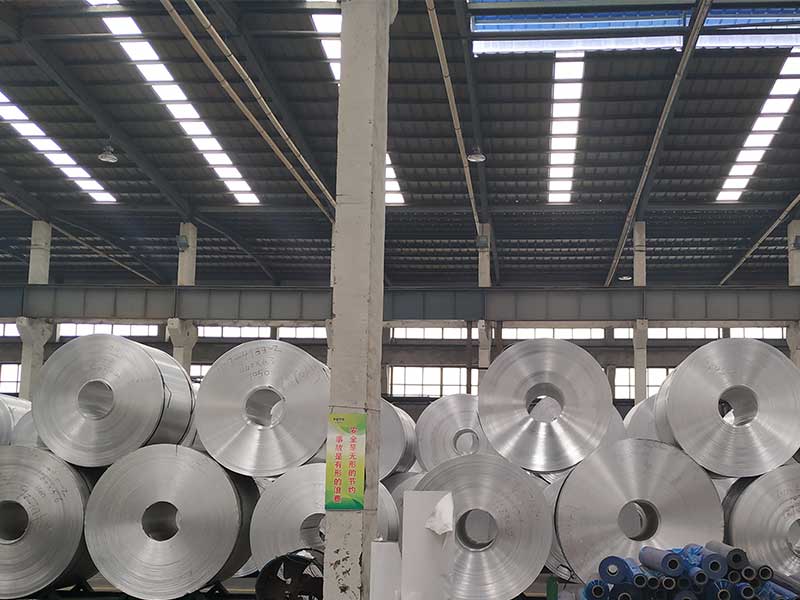
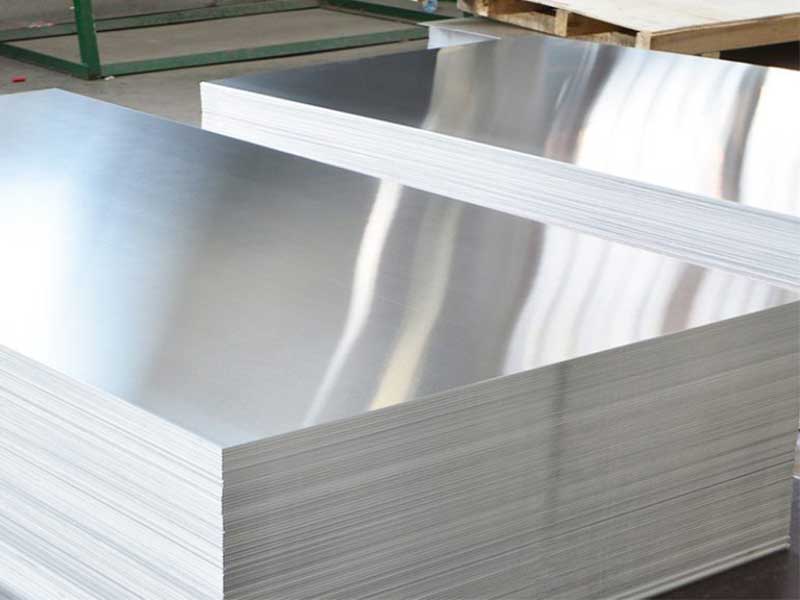
- Supplied as coils or sheets, widths typically from 600 mm to 2000 mm
- Lengths can be cut-to-size for standard sign modules or fully customized
Surface condition:
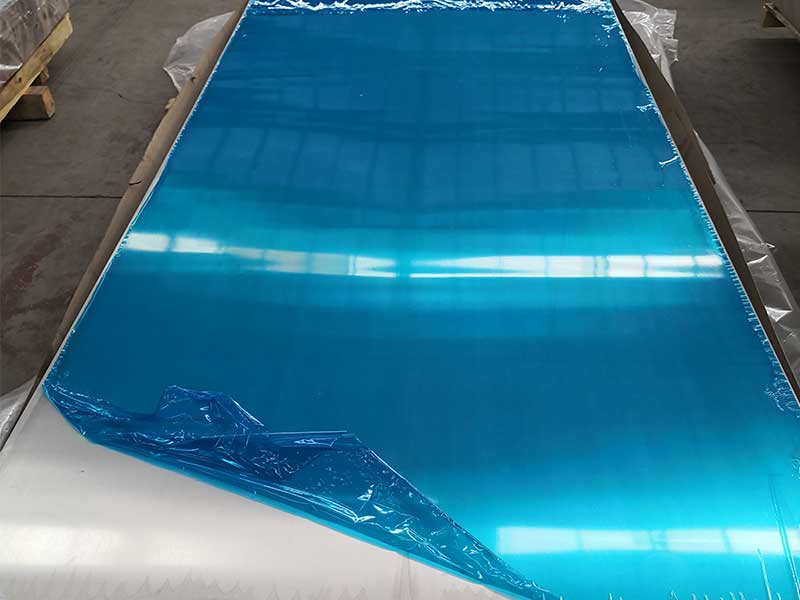
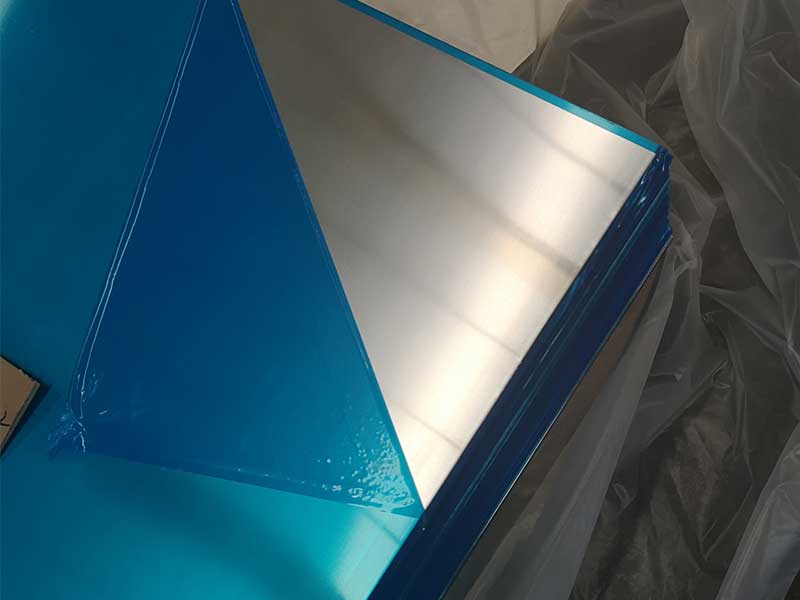
- Mill finish for general reflective film lamination
- Pre-treated (degreased, chemically cleaned, conversion coated) to improve film adhesion
- Anodized or coated when specified for aesthetics or additional protection
Implementation standards and typical industry references
Traffic sign aluminum plates generally follow a combination of:
- Alloy and product standards such as:
- ASTM B209 / EN 485 / EN 573 for aluminum plate and sheet
- National or regional traffic sign standards, for example:
- EN 12899 for fixed, vertical road traffic signs in Europe
- Various national standards specifying thickness, reflectivity, and substrate performance
In practice, purchasers often specify:
- Alloy and temper (e.g., 5052 H32)
- Thickness tolerance and flatness requirement
- Surface quality level (free from oil stains, scratches, roll marks, and pinholes)
- Suitability for adhesive bonding of reflective sheeting
Chemical compositions of 3003, 5005, and 5052 aluminum plates
Below is a typical range of chemical compositions (mass percentage). Actual values depend on the applicable standard (ASTM, EN, GB) and mill specifications.
3003 aluminum (Al–Mn):
| Element | Si | Fe | Cu | Mn | Mg | Zn | Ti | Others (each) | Others (total) | Al |
|---|---|---|---|---|---|---|---|---|---|---|
| % | ≤0.6 | ≤0.7 | 0.05–0.20 | 1.0–1.5 | – | ≤0.10 | – | ≤0.05 | ≤0.15 | Balance |
5005 aluminum (Al–Mg):
| Element | Si | Fe | Cu | Mn | Mg | Cr | Zn | Ti | Others (each) | Others (total) | Al |
|---|---|---|---|---|---|---|---|---|---|---|---|
| % | ≤0.30 | ≤0.70 | ≤0.20 | ≤0.20 | 0.50–1.1 | – | ≤0.25 | ≤0.10 | ≤0.05 | ≤0.15 | Balance |
5052 aluminum (Al–Mg):
| Element | Si | Fe | Cu | Mn | Mg | Cr | Zn | Ti | Others (each) | Others (total) | Al |
|---|---|---|---|---|---|---|---|---|---|---|---|
| % | ≤0.25 | ≤0.40 | ≤0.10 | ≤0.10 | 2.2–2.8 | 0.15–0.35 | ≤0.10 | ≤0.03 | ≤0.05 | ≤0.15 | Balance |
These alloying elements define behaviors:
- Magnesium (Mg): raises strength and improves corrosion resistance, especially in marine or de-icing salt environments.
- Manganese (Mn): stabilizes the structure, enhances strength and impact resistance.
- Chromium (Cr, in 5052): improves corrosion resistance and helps maintain mechanical properties.
How the alloy choice affects real-world performance
When selecting a plate for traffic signs, three questions matter most:
- What environment will the sign face?
- Coastal, high-humidity, or de-icing salt regions favor 5052 for higher corrosion resistance and strength.
- How large and structurally demanding is the sign?
- Large gantry signs often benefit from thicker 5052 H32 or 5005 H14/ H34 for stiffness.
- What visual and surface quality is required?
- For highly uniform anodized finishes and critical appearance, 5005 is usually the first choice.
- For cost-sensitive standard signs, 3003 remains a reliable, economical solution.
From factory floor to roadside: processing considerations
On the production side, 3003, 5005, and 5052 share important advantages:
- They shear, punch, drill, and bend without cracking when correct radii are used.
- They are compatible with common sign manufacturing processes: CNC routing, press forming, edge flanging, and riveting.
- Their surface can be pre-treated to ensure strong bonding with pressure-sensitive reflective films and inks.
Because these alloys are non-heat-treatable, their mechanical properties are primarily controlled through cold working and temper selection, not post-heat treatment. That simplifies manufacturing and keeps dimensional stability high.
3003, 5005, and 5052 aluminum plates together cover almost every traffic sign scenario:
- 3003: cost-effective, highly workable substrate for standard regulatory and guide signs
- 5005: superior surface quality and anodizing performance for visually demanding and architectural-integrated signage
- 5052: high-strength, corrosion-resistant solution for large, critical, or harsh-environment installations
By their functions, tempers, parameters, and chemical foundations, you can match each alloy to your project’s environment, structural needs, and appearance requirements, ensuring safer roads and longer-lasting signs with optimal lifecycle cost.
https://www.al-alloy.com/a/3003-5005-5052-aluminum-plate-for-traffic-sign.html