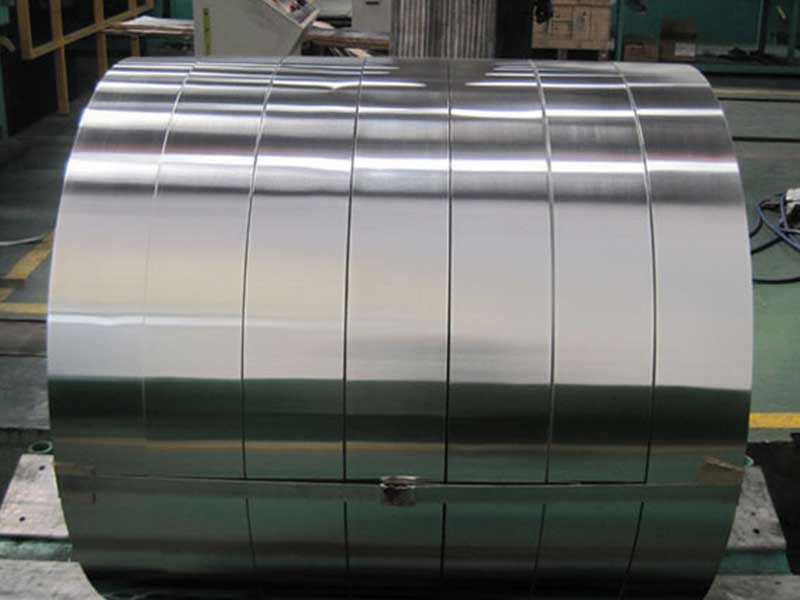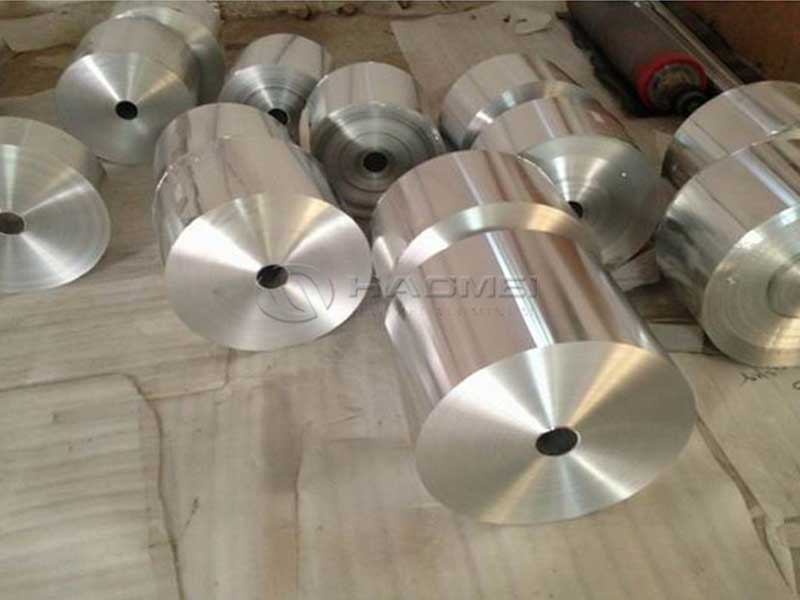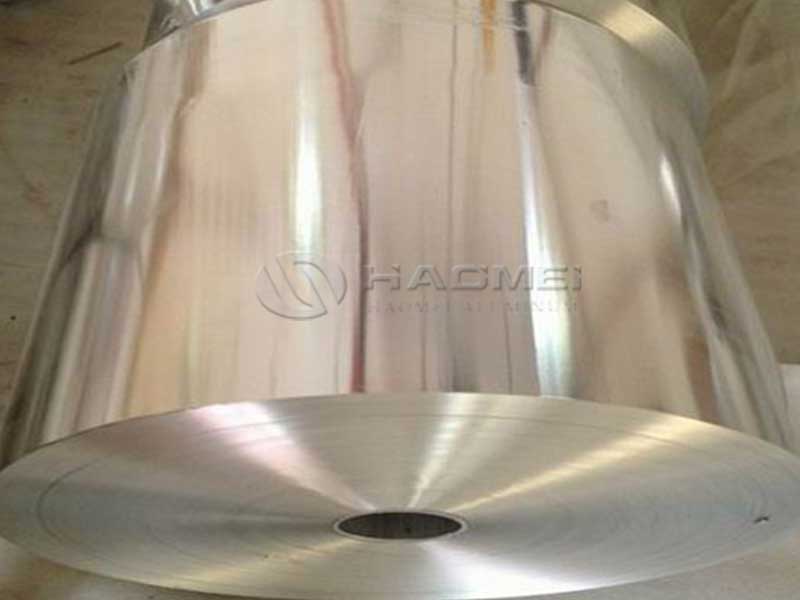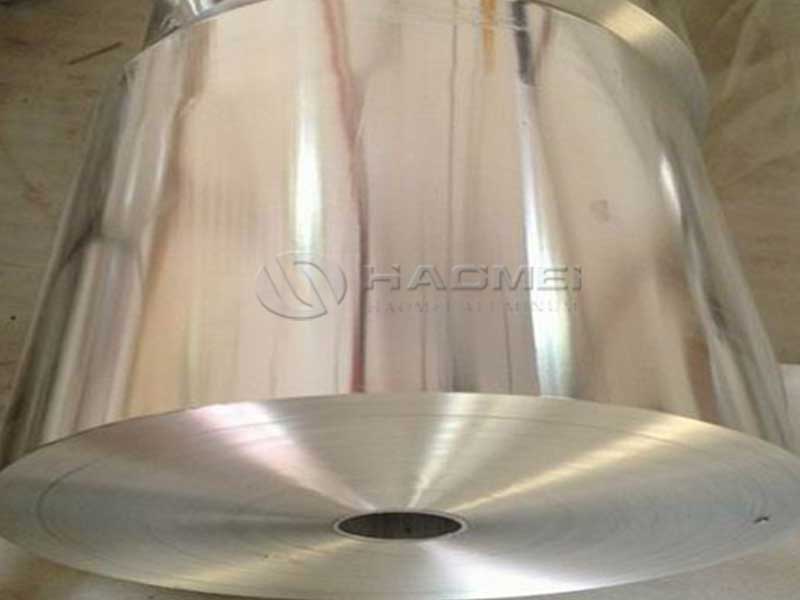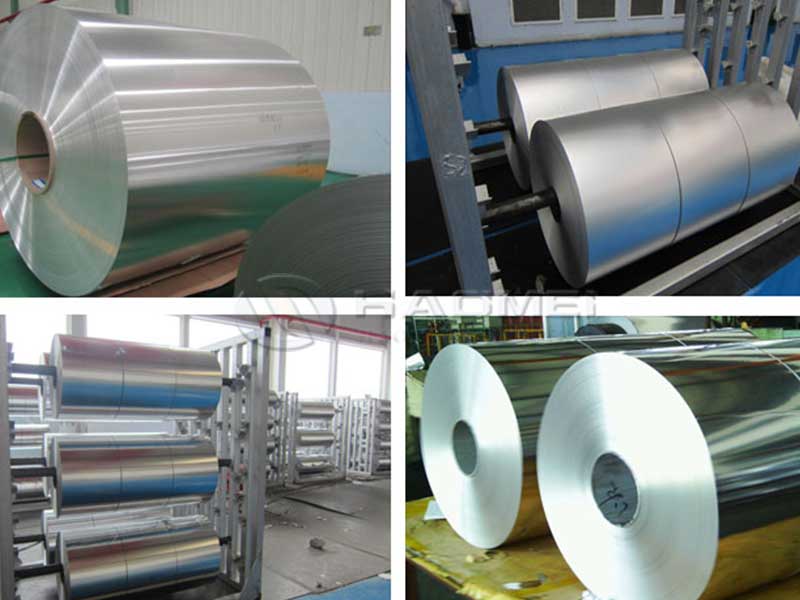

8011 Aluminum foil 20mm
8011 aluminum foil in 20 mm width is a specialized strip foil product designed for high-barrier packaging, sealing, insulation, and technical applications. Alloy 8011 belongs to the Al‑Fe‑Si series and is known for its excellent formability, corrosion resistance, and reliable mechanical performance, especially after surface treatment and coating.
Features at a Glance
- High strength among aluminum packaging foils
- Excellent barrier against light, moisture, and gases
- Good formability and deep‑draw performance
- Compatible with various coatings, lacquers, and adhesives
- Stable performance in both soft (O) and hard tempers
- Good corrosion and oxidation resistance
- Low weight with high yield per roll in narrow width (20 mm)
Chemical Composition – 8011 Alloy
Typical composition of 8011 aluminum foil (values are approximate and may vary slightly by standard and supplier):
| Element | Symbol | Typical Range (wt.%) | Function / Effect |
|---|---|---|---|
| Aluminum | Al | Balance | Base metal; provides low density and ductility |
| Iron | Fe | 0.60 – 1.00 | Increases strength; improves thermal resistance |
| Silicon | Si | 0.50 – 1.00 | Enhances strength and processability |
| Copper | Cu | ≤ 0.10 | Slight strength increase; controlled for corrosion |
| Manganese | Mn | ≤ 0.20 | Contributes to strength and stability |
| Magnesium | Mg | ≤ 0.05 | Usually kept low to maintain formability |
| Zinc | Zn | ≤ 0.10 | Controlled to avoid intergranular corrosion |
| Titanium | Ti | ≤ 0.08 | Grain refinement; improves process stability |
| Others (each) | — | ≤ 0.05 | Impurity limits |
| Others (total) | — | ≤ 0.15 | Impurity limits |
The Fe‑Si content is higher than in common alloys like 1060 or 1100, which gives 8011 foil better strength and toughness, especially useful for deep‑drawn containers and sealing applications.
Standard Tempers and Surface Options
8011 aluminum foil 20 mm can be supplied in several tempers and surface finishes depending on application demands.
| Item | Options / Description |
|---|---|
| Tempers available | O (soft), H14, H16, H18, H24, H26 |
| Surface finish | Bright / mill finish, matte, or one side bright / one side matte |
| Coatings | Heat‑seal lacquer, epoxy, polyester, hydrophilic, primer‑only |
| Laminations | Paper, plastic film (PE, PP, PET), non‑woven, etc. |
| Edge type | Slit edge, deburred edge, special edge protection on request |
| Roll core | Steel or paper core (common IDs: 76 mm, 150 mm) |
Soft temper is preferred for forming and wrapping, while harder tempers are used where higher stiffness or tear resistance is required.
Typical Dimensional and Technical Specifications
Below are common parameters for 8011 aluminum foil with 20 mm width. Exact values can be customized.
Dimensional Range
| Parameter | Typical Range / Value |
|---|---|
| Alloy | 8011 |
| Width | 20 mm (±0.1–0.2 mm typical) |
| Thickness range | 0.005 – 0.200 mm |
| Standard thicknesses | 0.006, 0.007, 0.009, 0.012, 0.015, 0.02, 0.03 mm |
| Length per roll | 500 – 6000 m (by thickness and core) |
| Coil ID | 76 mm or 150 mm |
| Coil OD | Up to ~1200 mm (by request) |
Mechanical Properties (Reference Values)
Typical values for 8011 foil under standard conditions:
| Temper | Tensile Strength (MPa) | Yield Strength (MPa) | Elongation A50 (%) | Typical Use Case |
|---|---|---|---|---|
| O | 60 – 110 | ≤ 60 | 5 – 20 | Wrapping, lamination, deep drawing |
| H14 | 110 – 150 | 80 – 120 | 2 – 8 | Lids, tape, technical strips |
| H18 | 140 – 185 | ≥ 120 | 1 – 5 | Hard foil, blisters, heavy‑duty seals |
Mechanical properties vary with thickness, production process, and standards (ASTM, EN, GB/T). For critical applications like pharmaceutical packaging, final data sheets should be referenced.
Physical And Performance Data
| Property | Typical Value / Description |
|---|---|
| Density | ~2.71 g/cm³ |
| Melting range | ~640 – 660 °C |
| Electrical conductivity | ~36–40 % IACS (varies with temper) |
| Thermal conductivity | ~200–230 W/(m·K) |
| Reflectivity | Up to ~85–90 % (bright side, visible & IR) |
| Water vapor barrier | Practically 0 g/m²·day (for pinhole‑free foil) |
| Oxygen barrier | Practically 0 cm³/m²·day (for pinhole‑free foil) |
| Corrosion resistance | Good in most neutral atmospheres and many media |
| Formability | Excellent in O temper, good in H‑tempers |
Core Features and Advantages
High Barrier Performance
The continuous metallic structure of 8011 aluminum foil provides near‑zero permeability to gases and moisture. In multilayer laminates (such as Al/PE, Al/PET/PE), even ultra‑thin foil layers ensure:
- Protection of aroma and flavor
- Extended shelf life of food and pharmaceuticals
- Excellent light and UV shielding
Robust Mechanical Strength in Foil Form
Compared with pure aluminum foils (e.g., 1235), 8011 has higher Fe and Si content, which enhances:
- Tear resistance and puncture resistance
- Stiffness of narrow foil strips (like 20 mm width)
- Stability during high‑speed slitting, printing, and forming
This makes it well suited for automatic packaging lines and demanding forming operations.
Good Formability and Sealing Compatibility
In soft temper, 8011 foil can withstand deep drawing, folding, and crimping without cracking. Its surface readily accepts:
- Heat‑seal lacquers (for PP, PE, PVC, PS, PET, etc.)
- Coatings for sterilizable packaging
- Adhesives in paper or film laminates
This combination allows secure sealing, easy peeling (with designed coatings), and consistent performance in sterilization or pasteurization processes.
Corrosion Resistance and Clean Surface
With controlled impurities and proper processing, 8011 foil has:
- Good resistance to food ingredients, oils, and many chemicals
- Stable behavior under typical storage conditions
- Clean surface suitable for direct food contact when properly produced and certified
Typical Applications of 8011 Aluminum Foil 20mm
Because of the narrow 20 mm width and alloy advantages, this product is widely used in both packaging and technical fields.
Food and Beverage Packaging
| Application | Role of 8011 Foil 20 mm |
|---|---|
| Strip seals for flexible pouches | Narrow strip sealing; added barrier and strength |
| Wine and beverage closures (laminated) | Liner layers inside caps and closures |
| Tea, coffee, spice sachets (laminated) | High aroma barrier, narrow tape sealing |
| Stick‑pack formats | Side sealing or structural layer in laminates |
Its high barrier maintains product freshness, aroma, and taste, while the narrow width makes it suitable for strip sealing and localized reinforcement.
Pharmaceutical and Medical Packaging
| Application | Benefit |
|---|---|
| Blister packaging (in laminate) | Used as narrow reels for lidding structures |
| Strip packs | High barrier to moisture and oxygen |
| Sealing tapes for sachets | Controlled peel strength; consistent sealing behavior |
| Medical device pouches (laminates) | Sterilization‑resistant when correctly coated/laminated |
For pharmaceutical uses, alloy 8011 is favored because of its formability, barrier properties, and its ability to meet strict cleanliness and validation requirements when manufactured under pharmaceutical‑grade conditions.
Household and Consumer Products
| Application | Description |
|---|---|
| Sealing strip on yogurt / dairy lids | 20 mm foil used as rim reinforcement or seal area |
| Cosmetic and personal‑care sachets | Decorative and protective strip in multi‑layer structures |
| Single‑use packets and samples | Narrow reinforcement and tamper‑evident sealing strips |
Laminated or coated 8011 foil can be printed and embossed, enabling branding and aesthetic design while preserving content quality.
Industrial and Technical Uses
| Application | Function of 8011 Foil 20 mm |
|---|---|
| Cable and communication shielding | EMI/RFI shielding in narrow wrapped tapes |
| HVAC and insulation systems | Narrow reflective bands and joint tapes |
| Battery tabs or wrapping (in specified designs) | Conductive, corrosion‑resistant foil elements |
| Duct and pipe wrapping (laminates) | Reflective layer plus moisture barrier |
The alloy’s conductivity, reflectivity, and corrosion resistance are leveraged here, often in combination with adhesives or backing materials (e.g., fiberglass cloth, PET film).
Processing And Fabrication
Converting Options
8011 aluminum foil 20 mm can be further processed by:
| Process | Description / Suitability |
|---|---|
| Slitting & rewinding | High‑speed slitting from wide coils to 20 mm strips |
| Printing | Flexo, gravure, or offset on coated/primed foil |
| Embossing | Surface textures for grip, appearance, or increased stiffness |
| Lacquering | Heat‑seal or protective coatings applied line‑side |
| Laminating | Bonding with plastic films, paper, or non‑woven substrates |
Proper handling is essential to avoid wrinkles, edge damage, and pinholes, especially for thinner gauges.
Quality And Inspection Points
Typical quality focus areas for 8011 foil:
| Item | Control Requirement |
|---|---|
| Thickness tolerance | Narrow tolerance according to customer spec |
| Width tolerance | Tight edge control; typically ±0.1–0.2 mm |
| Surface quality | Free from oil stains, black spots, scratches, and pinholes (per spec) |
| Coil geometry | Even tension, no telescoping, good flatness |
| Mechanical properties | Verified tensile strength and elongation by temper |
Why Choose 8011 Aluminum Foil 20mm
- Optimized balance of strength and formability for narrow strips
- Reliable barrier function for high‑value contents (food, pharma, cosmetics)
- Flexible in design: can be lacquered, printed, and laminated to many substrates
- Suitable for automated, high‑speed packaging and converting lines
- Lightweight and recyclable, supporting sustainable packaging concepts
For specific projects, customers typically define exact thickness, temper, coating, and lamination system. 8011 aluminum foil in 20 mm width serves as a robust, versatile base material that performs consistently across diverse industries, from everyday consumer packs to demanding technical assemblies.