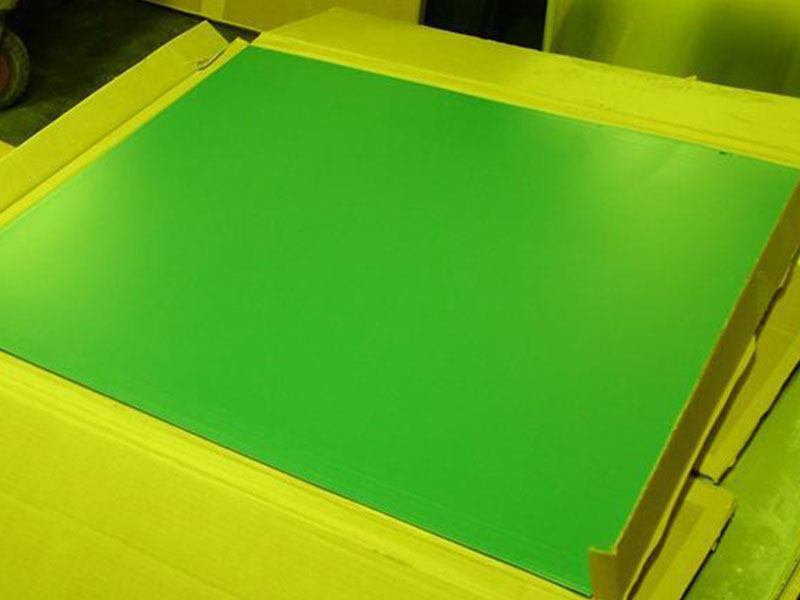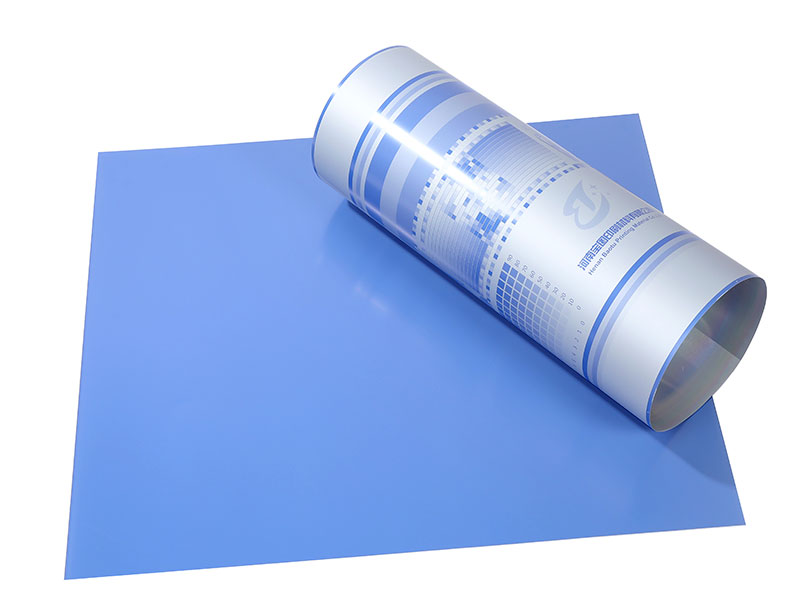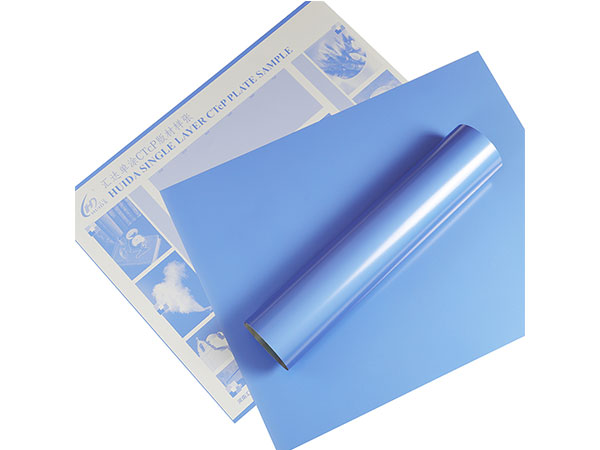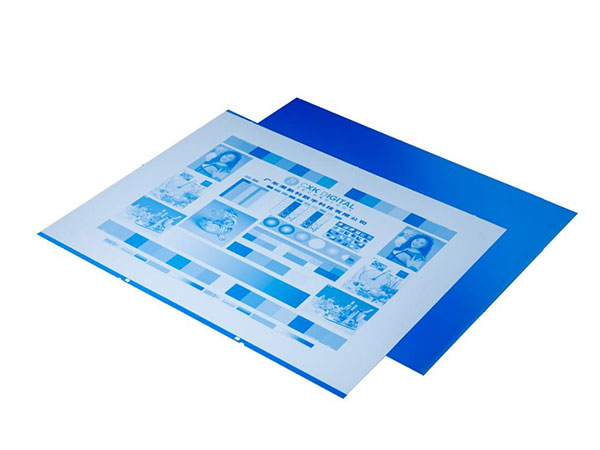

Photopolymer violet CTP plate
Photopolymer Violet CTP Plate: The "Daylight Engineer" of Modern Offset Printing
A photopolymer violet CTP plate can be understood as a precision "daylight engineer" for offset printing: it translates a violet laser signal into stable ink–water balance on press, while keeping processing practical, fast, and repeatable. Compared with older workflows that depended on film or higher-energy imaging systems, violet photopolymer plates sit in a sweet spot where exposure efficiency, dot fidelity, and press durability are balanced for commercial, publication, and packaging applications.
What makes this plate category especially interesting is that its performance is not only defined by imaging resolution or run length. It is defined by how chemistry, aluminum metallurgy, and surface engineering cooperate to create a printing tool that behaves predictably under fountain solution, ink tack, and mechanical abrasion.
What "photopolymer violet" really means in function
The core working layer is a photopolymer that responds to violet laser energy, typically in the 405 nm band. When imaged, the plate's exposed and unexposed areas develop different solubility or affinity characteristics, so the plate can be processed to form clear hydrophilic (non-image) and oleophilic (image) regions. On press, this separation becomes the practical outcome printers care about: clean backgrounds, stable tone reproduction, and reduced sensitivity to minor fluctuations in dampening.
From a functional perspective, violet photopolymer plates are valued for:
- Fast imaging with violet laser diodes, often with favorable energy requirements
- Sharp dot reproduction suited to fine text, line work, and screen stability
- Reliable press balance that supports consistent color in long press sessions
- Compatibility with mainstream plate processors and chemistry programs in many plants
Applications: where violet photopolymer plates fit best
Violet photopolymer CTP plates are widely used where throughput and predictable quality matter more than extreme UV bakeable endurance. Typical applications include:
Commercial printing such as brochures, catalogs, flyers, and corporate materials, where fast changeovers and consistent color are key.
Publication printing including books, manuals, and periodicals, where dot consistency and plate-to-plate repeatability reduce waste.
Light packaging and labels (depending on ink systems and press conditions), where fine detail and stable solids are needed, often with moderate run lengths.
For many printers, the practical advantage is that the plate becomes a "quiet component" in the workflow: it images reliably, develops with a stable window, and performs on press without demanding constant compensations.
The distinctive viewpoint: the plate as a controlled interface, not just a substrate
Thinking of the plate only as "aluminum plus coating" misses the engineering point. A photopolymer violet CTP plate is essentially a controlled interface designed to switch behavior under three environments:
- Imaging environment: violet laser energy triggers polymer crosslinking or solubility change
- Processing environment: developer chemistry removes targeted regions cleanly without undercutting dots
- Press environment: the aluminum base holds water while the image area carries ink, resisting abrasion and chemical attack
This is why the aluminum base and its treatment matter as much as the coating chemistry. The base is not passive; it is the hydrophilic engine that stabilizes non-image areas and helps the plate resist scumming.
Typical parameters customers want to confirm
Specifications vary by manufacturer and product grade, but the ranges below reflect common industry expectations for photopolymer violet CTP plates:
Imaging wavelength: 405 nm (violet)
Laser sensitivity: commonly around 60–120 mJ/cm² (device and plate dependent)
Resolution capability: suitable for 200 lpi and higher screening; FM screening supported in many workflows
Plate thickness: 0.15 mm, 0.20 mm, 0.24 mm, 0.30 mm (typical commercial options)
Run length: often 50,000 to 150,000 impressions unbaked; higher with optimized press conditions or post-treatment (product-dependent)
Shelf life: commonly 12 months when stored cool, dry, and protected from strong light
Safe light: yellow safe light recommended; minimize stray violet/UV exposure
In procurement terms, sensitivity and run length should be evaluated together: a plate tuned for lower energy imaging may trade some robustness if press conditions are harsh, while a more durable plate may require slightly higher exposure energy.
Implementation standards and process control (what "stable" looks like)
A violet plate performs best when its processing is treated as a controlled manufacturing step, not a casual wash. Commonly referenced control logic aligns with established plate-processing and offset printing practices, including:
Consistent developer activity control, conductivity or replenishment management, and regular cleaning to prevent sludge carryover.
Water quality management for rinse stages to reduce salt deposits and background toning risks.
Verification routines using control strips and dot gain checks aligned with ISO-based print quality systems, commonly associated with ISO 12647 methodology for offset reproduction targets.
Many plate lines also follow internal QC practices influenced by ISO 9001-style quality management, even when not explicitly stated on datasheets.
The operational takeaway is simple: violet plates reward consistency. When developer condition and temperature drift, the first symptom is rarely catastrophic failure; it's subtle dot rounding, background tinting, or unstable solids that cost time during makeready.
Aluminum alloy, tempering, and base conditions: why the metal matters
Most CTP plates use high-purity aluminum alloys engineered for lithographic base performance, commonly in the 1xxx series (such as 1050 or 1060) or closely related variants depending on regional supply and plate design. The temper condition is typically selected to balance flatness, mechanical strength, and surface treatment response.
Commonly used temper conditions include:
H18 or similar work-hardened tempers for dimensional stability and handling resistance
H16 or intermediate tempers where forming and flatness are balanced
The aluminum base typically goes through electrochemical graining and anodizing. Graining creates micro-roughness to hold water uniformly, while anodizing builds an aluminum oxide layer that improves hydrophilicity and abrasion resistance. A post-anodic treatment can further enhance water receptivity and reduce sensitivity during startup.
Chemical properties and material characteristics (reference table)
The plate's "chemistry" is best viewed in two layers: the aluminum base (metallic and oxide behavior) and the photopolymer coating (organic photochemistry). The table below summarizes common chemical-related properties customers ask about.
| Component | Property | Typical Behavior / Notes |
|---|---|---|
| Aluminum base | Corrosion tendency | Aluminum is amphoteric; strong acids/alkalis can attack it. Anodized oxide layer improves resistance in normal press chemistry. |
| Aluminum oxide (anodized layer) | Hydrophilicity | Naturally hydrophilic; supports water film stability in non-image areas. |
| Aluminum base | Compatibility with fountain solution | Stable under typical pH ranges used in offset dampening; extremes increase risk of oxidation or attack. |
| Photopolymer layer | Violet-light response | Sensitive around 405 nm; exposure drives polymerization/crosslinking or solubility shift to form image/non-image pattern. |
| Photopolymer layer | Developer interaction | Designed for controlled dissolution of targeted regions; over-development can reduce dot integrity, under-development can cause toning. |
| Plate system | Solvent/chemical tolerance | Generally compatible with standard press washes when used correctly; aggressive solvents or prolonged contact can reduce coating life. |
| Plate system | Thermal behavior | Heat can accelerate aging; storage in cool, dark conditions maintains imaging consistency and shelf life. |
For buyers comparing options, the practical chemical question is not the exact monomer recipe; it is whether the plate maintains clean non-image areas under the fountain solution chemistry actually used on press, and whether it tolerates the shop's wash-up routines.
Why customers choose violet photopolymer plates today
A photopolymer violet CTP plate is often chosen when a printer wants reliable imaging with common violet CTP devices, strong dot reproduction, and stable press behavior without overcomplicating the workflow. Its performance comes from the cooperation of a 405 nm-responsive photopolymer layer and an engineered aluminum base, typically a high-purity alloy in stable temper conditions, treated by graining and anodizing to keep the press's water film under control.
https://www.al-alloy.com/a/photopolymer-violet-ctp-plate.html