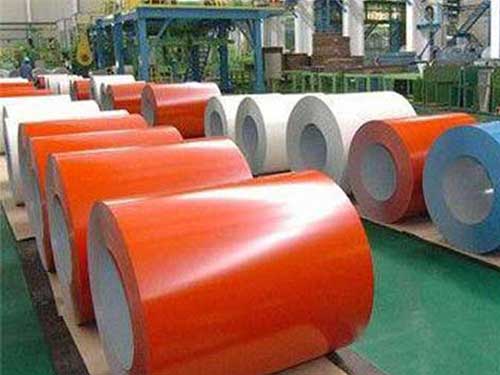

5005 anodized aluminium coil
Most people choose anodized aluminium by looking at color charts, gloss levels, and price sheets. Engineers and buyers compare “5005 vs 3003 vs 5052” as if they were only different SKUs. But if you step back and look at 5005 anodized aluminium coil from the perspective of long-term visual consistency and process predictability, a different picture appears.
5005 is not the strongest or the cheapest alloy. Its real value shows up years later, when panels still match, joints still look uniform, and anodic films still behave the way the designer intended. In other words, 5005 is an alloy chosen to prevent future problems you cannot yet see.
Below is a practical, implementation-focused look at 5005 anodized aluminium coil from that predictive, problem-prevention viewpoint.
Why 5005 Is the “Architect’s Alloy”
Ask façade engineers and signage fabricators why they keep coming back to 5005 for anodized surfaces, and you rarely hear “mechanical strength” as the first reason. Instead, they talk about:
- Color match with extruded profiles
- Uniform anodizing response across large areas
- Resistance to “mottling” or patchy appearance
- Stability of appearance in outdoor exposure
5005 is an aluminium–magnesium alloy with a moderate magnesium content. It sits in a sweet spot: high enough purity to anodize cleanly and consistently, but with enough alloying to deliver good formability and corrosion resistance. This balance makes it uniquely suited to visible, decorative, and architectural anodizing.
Where many alloys are chosen for strength or machinability, 5005 is often specified to ensure that, five or ten years later, the envelope of a building still looks coherent.
Alloy Composition and Why It Matters for Anodizing
For anodized coil, purity is not an abstract concept; it directly affects how light interacts with the anodic film. The approximate chemical composition of aluminium alloy 5005 is:
| Element | Typical Range (wt%) |
|---|---|
| Magnesium (Mg) | 0.50 – 1.10 |
| Silicon (Si) | ≤ 0.30 |
| Iron (Fe) | ≤ 0.70 |
| Copper (Cu) | ≤ 0.20 |
| Manganese (Mn) | ≤ 0.20 |
| Chromium (Cr) | ≤ 0.10 |
| Zinc (Zn) | ≤ 0.25 |
| Others (each) | ≤ 0.05 |
| Others (total) | ≤ 0.15 |
| Aluminium (Al) | Balance |
From an anodizing standpoint, three things stand out:
- Relatively low copper and iron content
- Controlled magnesium content
- Tight limits on “others”
These constraints keep the metal matrix clean enough that the anodic oxide grows uniformly and remains nearly colorless. When sealed, the film can deliver a bright, consistent appearance, particularly in clear, champagne, and light bronze finishes.
Higher copper or silicon, as found in some other alloys, can darken the anodized appearance or lead to streaking and uneven tone, especially on large panels. 5005’s chemistry is optimized to avoid those side effects.
Mechanical and Physical Properties Relevant to Coil Users
5005 does not compete with heat-treatable high-strength alloys; it is a workhorse for forming and finishing. Typical mechanical properties (range depends on supplier and exact temper):
| Property | H14 (half-hard) | H32 (strain-hardened & stabilized) |
|---|---|---|
| Tensile strength (MPa) | approx. 145 – 185 | approx. 145 – 185 |
| Yield strength (0.2% offset, MPa) | approx. 110 – 145 | approx. 110 – 145 |
| Elongation (50 mm gauge, %) | approx. 5 – 12 | approx. 5 – 12 |
| Density | ~2.70 g/cm³ | same |
| Modulus of elasticity | ~69 GPa | same |
In practical terms, these values support:
- Coil processing: slitting, blanking, cutting
- Light to medium forming: bending, roll forming, shallow draw
- Stamping of signage blanks, cladding elements, caps, and trims
The from a workflow perspective is predictability. Coils in H14 or H16 temper, for instance, behave consistently through decoiling, straightening, and forming, which is critical when the subsequent anodizing step is sensitive to residual stress and surface condition.
The Role of Temper in Anodizing Quality
One aspect often underestimated is how temper affects anodizing results. The temper designation (such as H14, H16, H32) describes how the alloy has been strain-hardened and, in some cases, stabilized.
For 5005 anodized coil, common tempers include:
- H14: Half-hard, good balance of strength and formability
- H16: Slightly harder, better for flatness and stiffness in thin gauges
- H32: Strain-hardened and stabilized, often used where modest forming is required but dimensional stability is crucial
Why temper matters for anodizing:
- Surface damage: Softer tempers may pick up handling marks or minor dents more easily before anodizing, which later become permanent visual defects under the anodic film.
- Residual stress: Heavily strained material can introduce subtle distortions during processing or service, especially in larger panels; this can disturb light reflection and create visual “waves.”
- Edge cracking during forming: Overly hard tempers can crack at bends, and these cracked regions anodize differently, showing up as dark lines or stains.
For architectural cladding or high-end signage, many fabricators prefer a temper that is firm enough to resist handling damage but still forgiving during bending, often H14 or carefully specified H32.
Surface Preparation: The Invisible Determinant of Appearance
When we talk about “5005 anodized coil,” what actually reaches the eye is not just the alloy but the entire surface and process history. Several upstream choices determine whether anodizing will be visually successful:
- Mill finish quality: Fine, uniform mill finish reduces the need for aggressive pre-treatment, preserving thickness and consistency of the final anodic layer.
- Rolling direction: For brushed or mechanically grained finishes, aligning visible grain with design intent avoids mismatched reflections on façade panels.
- Lubricants and contaminants: Coil used in stamping or forming must be cleaned thoroughly before anodizing. Trapped oils or shop dirt lead to spotty anodic growth and color variation.
In coil lines dedicated to anodizing-quality 5005, processes are tuned to minimize surface defects at every stage. The goal is not just “clean metal” but “predictable optical behavior” after anodizing.
Anodizing Behavior: Why 5005 “Plays Nice” in the Tank
The anodizing process converts the aluminium surface into an integral aluminium oxide (Al₂O₃) layer. For 5005, in conventional sulfuric acid anodizing, typical parameters might be:
- Acid: Sulfuric acid bath, around 150–220 g/L
- Temperature: Approximately 18–22 °C
- Current density: Often in the range 1.0–1.5 A/dm² (varies by line)
- Time: Adjusted for target film thickness, often 10–25 microns for architectural applications
From the process engineer’s point of view, 5005 is forgiving:
- It develops a clear to slightly warm-toned oxide layer, which takes dyes or electrolytic coloring predictably.
- The risk of significant “burning” (localized overheating) is lower than with some higher-alloyed grades, as long as current density and agitation are well controlled.
- Pitting is minimized if bath chemistry and pretreatment are within specification, due to the alloy’s balanced composition.
However, consistency depends on consistency: mixing coils from different suppliers, with slightly different impurity levels, can subtly shift color tone or gloss. Many large projects lock in a single mill source and require “anodizing quality 5005” with agreed tolerances on alloying elements and surface finish.
Matching Coils to Extrusions: The 5005 vs 6060 Challenge
Architectural systems often combine extruded profiles (commonly 6060 or 6063) with sheet or coil (often 5005). The design intent is for both to anodize to the same color and tone.
But extruded 6xxx alloys contain magnesium and silicon forming Mg₂Si, which influences the anodized appearance differently than 5005. From a purely metallurgical angle, they are not perfect matches.
To bridge this gap:
- Coil suppliers tailor 5005 composition and surface preparation to approach the tone of 6060/6063 after anodizing.
- Anodizers adjust pre-treatment, film thickness, and coloring parameters to harmonize color and gloss.
- Project specifications sometimes call out “5005 AQ” (anodizing quality) together with standards like EN 485, EN 13523, or project-specific mock-up approvals.
Viewed this way, 5005 isn’t just a material; it becomes a negotiation tool between coil producer, extruder, anodizer, and architect, all aiming at visual coherence on a built structure.
5005 anodized aluminium coil is not only about appearance; it is also a durable and relatively sustainable choice:
- The anodic layer is integral, not a paint film, and won’t peel or flake under normal conditions.
- With proper sealing, it provides excellent resistance to UV, industrial atmospheres, and marine environments.
- Aluminium’s recyclability remains intact; anodizing does not prevent closed-loop recycling of 5005 scrap, coils, or offcuts.
In life-cycle terms, choosing 5005 for anodized cladding or signage is often a decision to avoid repeated repaint cycles, reduce maintenance, and preserve aesthetic value over decades.
When 5005 Anodized Coil Is the Right Solution
From the distinctive viewpoint of “avoiding tomorrow’s visual and process problems,” 5005 anodized aluminium coil excels when:
- Large visible surfaces must remain visually uniform over time.
- Coils and extrusions are used together and must appear coherent after anodizing.
- Forming operations are moderate and must not compromise surface quality.
- Longevity of appearance is as important as structural performance.
By paying attention not only to nominal alloy type, but also to temper, surface preparation, anodizing parameters, and supplier consistency, users can unlock the full potential of 5005: not just as a commodity coil, but as a carefully controlled system for reliable, long-term, anodized aesthetics.
https://www.al-alloy.com/a/5005-anodized-aluminium-coil.html