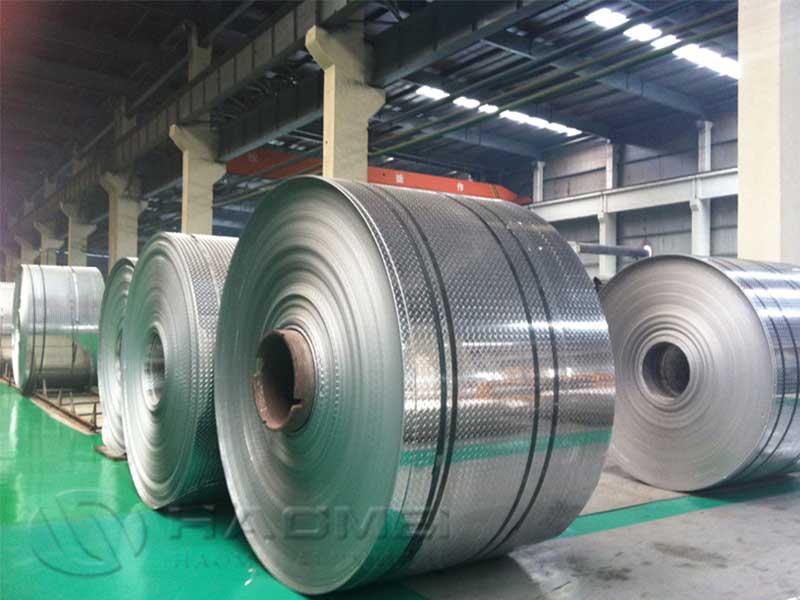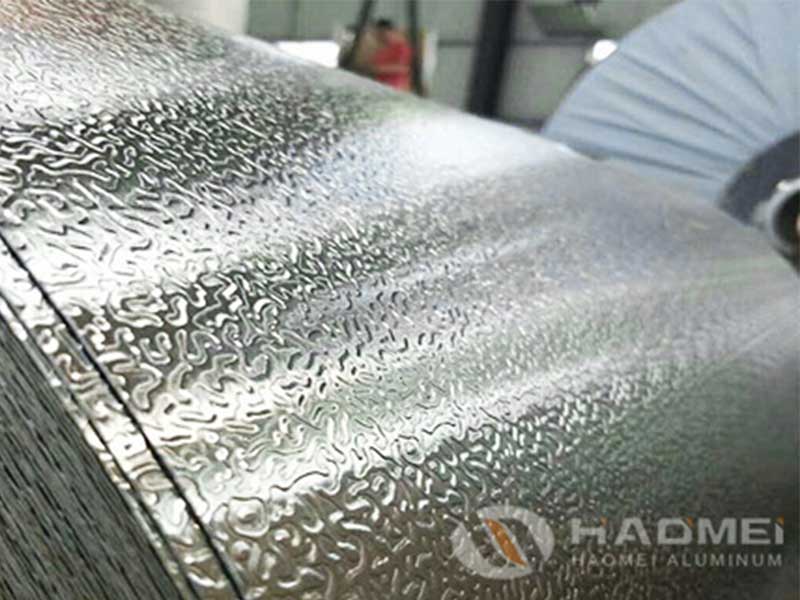

Aluminum tread plate 5083 5754 5a05 5A06
When most people look at an aluminum tread plate, they see a pattern: diamonds, small five-bars, big five-bars, lentils. To engineers and buyers who work with marine decks, truck floors and industrial walkways, that pattern is only the skin. The real story lies behind the texture, inside the alloy itself.
Focusing on 5083, 5754, 5A05 and 5A06, you can think of these tread plates as four “personalities” in the same family: related by magnesium-rich chemistry, but shaped for different working lives. Choosing between them is less about liking a pattern and more about knowing what the plate will have to endure: salt water, vibration, welding heat, or permanent load.
The tread plate as a working surface
A tread plate is not just a sheet with a raised pattern. On a truck step, that plate is the last defense between a boot soaked in mud and a concrete floor. On a yacht gangway exposed to seawater spray, it is simultaneously a structural member, a safety feature and a corrosion barrier.
The raised pattern does three things:
- Increases friction when wet or oily
- Stiffens the panel without adding thickness
- Prevents local denting under point loads
But none of that matters if the alloy below the pattern cracks at the weld, softens at elevated temperature, or slowly pits away in a marine atmosphere. This is where the 5xxx series alloys—5083, 5754, 5A05, 5A06—have become the go-to materials.
One family, four characters
All four are aluminum–magnesium alloys, non-heat-treatable, gaining strength mainly through cold work (strain hardening). They share good corrosion resistance, especially in marine and industrial atmospheres, and good weldability. The differences are in how much magnesium they carry, the presence of manganese and minor elements, and how they balance formability, strength, and toughness.
A simplified view:
- 5083: The marine workhorse, high strength, robust in seawater
- 5754: The versatile all-rounder, great for forming, good weldability, medium strength
- 5A05: The formability specialist, excellent for deep drawing and complex shapes
- 5A06: The toughness and low-temperature expert, particularly valued in some Asian and Russian standards
Chemical composition snapshot
Typical composition ranges (mass percent):
| Alloy | Si | Fe | Cu | Mn | Mg | Cr | Zn | Ti | Others (each) | Al |
|---|---|---|---|---|---|---|---|---|---|---|
| 5083 | ≤0.40 | ≤0.40 | ≤0.10 | 0.40–1.0 | 4.0–4.9 | 0.05–0.25 | ≤0.25 | ≤0.15 | ≤0.05 | Balance |
| 5754 | ≤0.40 | ≤0.40 | ≤0.10 | ≤0.50 | 2.6–3.6 | ≤0.30 | ≤0.20 | ≤0.15 | ≤0.05 | Balance |
| 5A05* | ≤0.40 | ≤0.50 | ≤0.10 | 0.30–0.6 | 4.8–5.5 | ≤0.10 | ≤0.20 | ≤0.05 | ≤0.05 | Balance |
| 5A06* | ≤0.40 | ≤0.50 | ≤0.10 | 0.50–0.8 | 5.8–6.8 | ≤0.10 | ≤0.20 | ≤0.05 | ≤0.05 | Balance |
*5A05 and 5A06 follow Chinese GB/T or related standards; exact limits vary slightly by standard edition and mill practice.
As you move from 5754 up to 5A06, magnesium content increases, bringing higher strength but more sensitivity to certain fabrication details, such as hot cracking risk and work hardening rate. Manganese supports strength and toughness, especially beneficial in 5083 and 5A06.
Tread plate tempers: where texture meets performance
Because these are non-heat-treatable alloys, their “temper” codes mainly express how much cold work or stabilization has been done. In tread plate, you will commonly encounter:
- H114: A strain-hardened, lightly stabilized temper specifically common in tread plate, combining formability and strength
- H111 or H112: Slightly strain-hardened, close to annealed, better for forming and bending
- H32 / H34 (more for 5754): Half-hard or three-quarter-hard, used where higher strength is needed and forming is modest
- O: Fully annealed, used only when extreme formability is required, then often followed by forming and service without further strengthening
For flooring and walkways, the pattern rolling itself adds localized cold work in the raised parts, giving additional stiffness even when the base sheet is in a relatively soft temper.
Four alloys, four practical viewpoints
5083 tread plate: thinking like a shipyard
In a shipyard, a 5083 tread plate is more than a surface; it is part of the vessel’s structural integrity. The typical priorities are:
- Resistance to seawater corrosion and stress-corrosion cracking
- Ability to retain strength after welding
- Reliable performance at sub-zero temperatures
5083 stands out for its balance of strength and weldability in marine environments. In H111 or H116 type tempers, it offers high yield strength with good toughness. For marine decks, gangways, and RIB working platforms, 5083 tread plates are often the default. Welds made with 5356 filler align well with the base alloy’s properties and corrosion resistance.
From a practical point of view, a yard choosing 5083 tread plate wants:
- Minimal loss of mechanical properties in the heat-affected zone
- Surfaces that resist pitting corrosion under stagnant splashes or deposits
- Compatibility with classification society rules such as DNV, ABS, LR for marine-grade aluminum
5754 tread plate: the logistics and vehicle specialist
Look at truck toolboxes, trailer floors, loading ramps, and you will see a lot of 5754. This alloy offers:
- Moderate strength, enough for vehicle flooring under distributed loads
- Very good formability for bending and swaging the edges of steps and panels
- Excellent surface appearance, suitable for anodizing or painting
For transport equipment, the pattern matters less than the combination of light weight and durability. 5754 in H114 or H22–H34 tempers is easy to cut, bend and weld with minimal risk of cracking. It also stands up well to road salts and atmospheric exposure, although its seawater resistance is slightly below 5083’s.
Designers who favor 5754 are often balancing cost, ease of fabrication, and adequate strength rather than aiming for the extreme corrosion performance demanded offshore.
5A05 tread plate: the forming-friendly option
5A05 sits closer to 5083 in magnesium content but is typically optimized for formability. It is often used where parts must be deeply drawn or significantly bent while still benefiting from good corrosion resistance.
When the application involves:
- Embossed steps with complex curvatures
- Molded tread surfaces that need multiple forming operations
- Parts that must be welded after forming, without excessive distortion
5A05 becomes relevant. It is common in certain regional standards and industries where forming complexity beats maximum strength demands. Think of industrial platforms with folded edges, stair stringers with intricate geometry, or housings that must combine tread function with a shaped enclosure.
5A06 tread plate: the low-temperature and endurance specialist
5A06 pushes magnesium contents even higher and combines that with manganese to deliver:
- High strength for a non-heat-treatable alloy
- High fracture toughness and good performance at cryogenic or very low temperatures
- Strong resistance to fatigue and cyclic loading
It is favored in some pressure vessels, storage tanks, low-temperature equipment, and critical walkways exposed to both heavy mechanical load and harsh environments. Where a plant operates in cold climates, or where equipment cycles between ambient and low temperatures, 5A06 tread plates help maintain safety margins over time.
The trade-off is that the higher magnesium content demands tighter control over welding procedures, filler selection and cooling to avoid hot cracking or excessive softening in the heat-affected zone.
Standards, implementation, and dimensional considerations
When specifying tread plate in these alloys, standards are your contract language. Common references include:
- EN 1386, EN 485 series, EN 573 series for European aluminum alloys and products
- ASTM B209 / B209M for flat-rolled aluminum and alloy sheet and plate
- GB/T 3880, GB/T 3618 and related Chinese standards for 5xxx series and tread products
- Mill standards or classification society approvals for marine and offshore use
parameters to lock down in a purchase specification include:
- Alloy and temper (for example, 5083-H114, 5754-H111)
- Pattern type and orientation (five-bar, diamond, lentil, height of pattern)
- Thickness range defined on the base metal, not including the tread height
- Flatness tolerances, especially critical if the plate will be welded to a frame
- Surface condition and any requirements for anodizing or pre-treatment
In structural use, designers should treat tread height carefully. Structural calculations usually rely on the base thickness alone, ignoring the raised pattern as structural thickness, but recognizing its contribution to stiffness and slip resistance.
Welding, corrosion, and life-cycle thinking
All four alloys weld well with common fillers such as ER5356, but the weld design should respect the alloy’s sensitivity to over-aging, loss of strength in the heat-affected zone, and possible sensitization in long-term elevated temperature service around 65–200 °C. In most tread plate applications, continuous service at such temperatures is rare; still, for structures near engines or exhausts, it is worth considering.
In marine or chemical plants, galvanic coupling with steel frames, fasteners, or other metals can dominate the corrosion behavior. Choosing compatible fasteners, using isolation washers, and specifying suitable coatings around cut edges typically does more for long-term life than marginal differences between 5083, 5754, 5A05 and 5A06.
From a life-cycle perspective:
- 5083 and 5A06 shine where failure risks are high-consequence, such as marine or low-temperature structures
- 5754 often wins in transport and general industry through a combination of cost, processability and sufficient performance
- 5A05 fills the niche where geometry requirements drive the choice more than ultimate strength
Seeing beyond the pattern
The raised bars that catch the light on a new aluminum tread plate are only the beginning of the story. Behind them are deliberate choices in magnesium levels, minor alloying additions and tempering routes that define how that plate bends, welds, resists corrosion and survives impact.
When you specify tread plate in 5083, 5754, 5A05 or 5A06, you are not merely selecting a surface. You are choosing how your structure will age in salt spray, how a stair tread will behave after a thousand freeze–thaw cycles, and how a weld will carry load after years of vibration. The most successful projects treat the pattern as the visible signature—and the alloy and temper as the real engineering decision.
https://www.al-alloy.com/a/aluminum-tread-plate-5083-5754-5a05-5a06.html