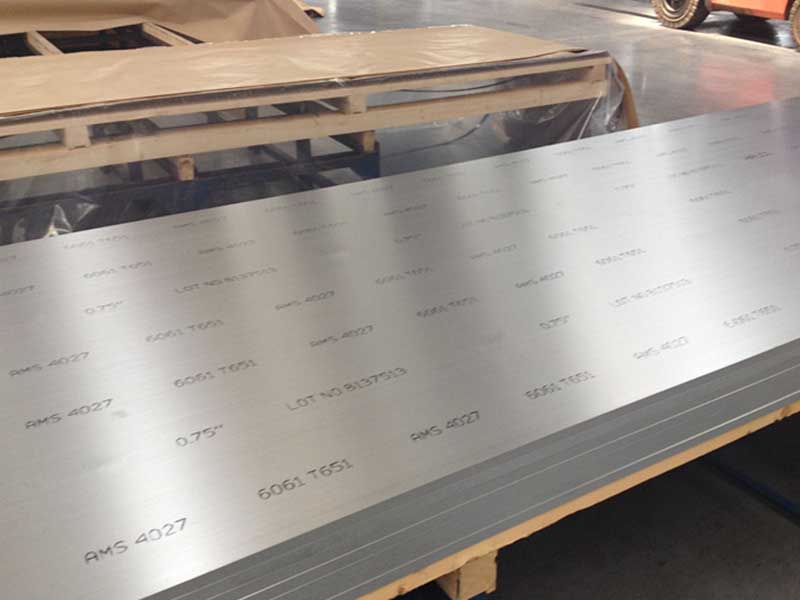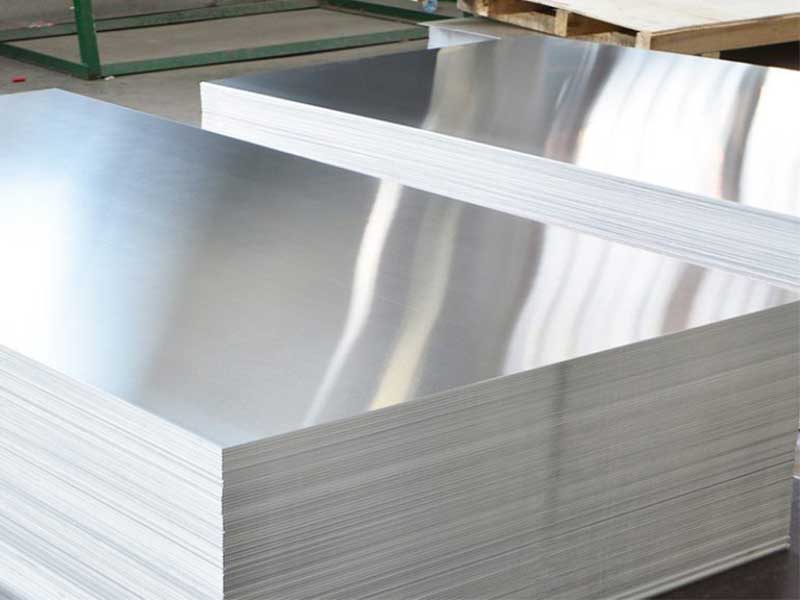

6mm 6061 T6 Aluminum Sheet
When buyers specify 6 mm 6061 T6 aluminum sheet, they often treat “6 mm” as just a thickness and “6061 T6” as just an alloy/temper code. From an engineering standpoint, though, this combination sits at a very particular “threshold”:
- Thick enough to become a true structural member, not just cladding.
- Thin enough to be cut, bent, and CNC’d on typical fabrication equipment.
- Strong and stiff in T6, but still workable with the right radii and methods.
This threshold nature is what makes 6 mm 6061 T6 a “workhorse” gauge for frames, machine bases, vehicle armor skins, ramps, tooling plates, fixtures, and even marine and aerospace parts. Below is a deeper, integrated look—mechanical behavior, tempers, processing realities, and matched applications—from that distinctive “threshold” perspective.
1. What Makes 6061 T6 “6061 T6”?
6061 is a precipitation-hardenable Al–Mg–Si alloy, designed to balance:
- Medium–high strength
- Good corrosion resistance
- Weldability better than most heat-treatable alloys
- Good machinability
comparison anchors:
- Much easier to machine and heat-treat than 2xxx / 7xxx aerospace alloys
- Stronger and stiffer than 5xxx non-heat-treatable sheet (especially in T6)
- More versatile but not quite as weld-optimised as 5xxx marine grades
A typical chemical composition range (mass %):
| Element | Typical Range (%) |
|---|---|
| Si | 0.40 – 0.80 |
| Fe | ≤ 0.70 |
| Cu | 0.15 – 0.40 |
| Mn | ≤ 0.15 |
| Mg | 0.80 – 1.20 |
| Cr | 0.04 – 0.35 |
| Zn | ≤ 0.25 |
| Ti | ≤ 0.15 |
| Others (each) | ≤ 0.05 |
| Others (total) | ≤ 0.15 |
| Al | Balance |
The Mg and Si form Mg₂Si precipitates during T6 tempering, which is where most of the strength comes from.
2. What Does “T6” Really Mean for 6 mm Thickness?
T6 = solution heat-treated + artificially aged to peak (or near-peak) hardness.
Process in essence:
- Solution heat treatment (~530–550 °C, alloy & spec dependent)
- Rapid quench (traditionally into water)
- Artificial aging (~160–185 °C, several hours)
At 6 mm, you’re in a thickness range where:
- The quench is still very effective — little risk of large core/slab temperature lag, so you’ll get good, relatively uniform properties through the thickness.
- Distortion during quench is manageable but must still be considered in flatness control.
6061‑T6 is considered near peak-strength condition. Aging more (T7x-ish) relaxes internal stresses and slightly improves stress-corrosion chin but sacrifices some strength. This is where 6 mm shines:
- In T6 it is strong yet thin enough that standard fixturing can flatten it.
- It can be mechanically or mildly thermally stress-relieved post-machining if critical.
3. Mechanical Properties of 6 mm 6061 T6: “Threshold” Behavior
Typical European/ASTM values (sheet/plate range, for reference):
| Property | 6061 T6 (Typical) |
|---|---|
| Tensile strength, Rm | ~ 260–310 MPa |
| 0.2% Yield strength, Rp0.2 | ~ 240–280 MPa |
| Elongation (A50) | ~ 8–12 % |
| Brinell hardness, HBW (10/500) | ~ 90–100 |
| Modulus of elasticity, E | ~ 69–71 GPa |
| Shear strength | ~ 170–200 MPa |
| Density | ~ 2.70 g/cm³ |
| Poisson’s ratio | ~ 0.33 |
From a design viewpoint:
- At 6 mm, flexural stiffness EI becomes significantly higher than at 3 mm (factor of ~2 in thickness, but I ∝ t³, so ~8× bending stiffness for the same span and width).
- You can then switch many designs from “sheet that needs a subframe” to “sheet itself as a structural panel”.
Design implications:
- A single 6 mm sheet can often replace ribbed 3 mm constructions, easing fabrication and assembly.
- Reduced frame members/interface joints → fewer welds and bolted joints, which is beneficial for fatigue.
4. Why 6 mm Is a “Sweet Spot” in Fabrication
From a fabricator’s set-up perspective, 6 mm falls into a distinctly amenable band:
4.1 Forming & bending
6061‑T6 is less ductile than its softer tempers (T4, O), so minimum bend radii matter.
General guide for 90° air bending about the transverse direction:
- Inside bend radius ≈ 1–2 × t (i.e., 6–12 mm for 6 mm sheet) to avoid micro-cracks.
3–4 mm sheets in T6 can sometimes be “bullied” on less optimal tooling; 6 mm politely refuses — you are forced to respect correct radii, punch tip radius, and grain direction.
If you must execute tight radii:
- Use 6061‑T4 or O for forming → then solution treat & age to near T6 (or choose a T42/T62 route following specs such as ASTM B918 for reheat treatment).
- Or redesign the joint to use formed ribs, hems with larger radii, or weldments.
4.2 Machinability
6061‑T6 is one of the machinability benchmarks in aluminum:
- 6 mm is thick enough for stable clamping on milling tables or routers.
- You can machine pockets, lightening holes, counterwalls and still maintain integrity.
Typical parameters (illustrative, to be optimised per machine and tool):
- Carbide end milling:
- Cutting speed: 250–600 m/min (based on tool quality/coolant setup)
- Feed per tooth: 0.05–0.20 mm/tooth
- Use high-helix tools, sharp edge geometries, adequate chip evacuation.
Thin sheets (1–2 mm) are a vibration and distortion puzzle; at 6 mm, general shop equipment handles it reliably. In many industries, 6 mm is where laser-only sheet work turns into combined laser/machining jobs because more 3D profiling and countersinking become practical.
4.3 Joining and welding: HAZ realism
6061 T6 is fully weldable, but T6 strength is lost in the heat-affected zone (HAZ):
- HAZ near welds can drop to 6061‑O/T4 level (~100–160 MPa yield).
- For structural hype, welded joints must be designed based on reduced HAZ strength, not parent T6.
Why 6 mm matters:
- Enough section thickness to tolerate milled joint preparations and deep weld penetration.
- Thicker section aids distortion control during MIG/TIG.
- HAZ width remains manageable relative to plate width.
Many fabricators balance this by:
- Using 6 mm 6061-T6 for bolted/jointed frames where HAZ constraints are minimal.
- Or over-sizing welded joints / including stiffeners to compensate HAZ reduction.
5. Thermal Conductivity, Weight & Stiffness in Real‑World Use
Individually, properties like thermal conductivity, density, stiffness are textbook facts. For 6 mm 6061 T6, the interesting part is how they come together in actual design:
5.1 Thermal and electrical behavior
Typical values:
- Thermal conductivity: ~ 167–180 W/m·K
- Coefficient of thermal expansion (CTE): ~ 23–24 µm/m·K
- Electrical conductivity: ~ 40 % IACS
At 6 mm thickness, plate/sheett can double as:
- Controller and heatsink: in power electronics, EV battery support plates, LED walls.
- Thermal spreader to move localized heat over a wider radiator area.
If this were 2 mm sheet, thread depth, structural strength, and thermal inertia may be insufficient; at 8–10 mm, weight and cost jump sharply. 6 mm allows you to simultaneously design for mechanics, permament threads, and thermal control.
5.2 Structural panel weight gains
At 2.7 g/cm³:
- 6 mm sheet weighs ~16.2 kg/m².
Comparisons:
- Mild steel (S235) at the same bending stiffness would need much thinner sheet given its ~200–210 GPa E, but stiffness equalisation vs density makes 6 mm Al often competitive — with higher corrosion resistance and about 1/3 the density.
This is why 6 mm 6061 T6 appears frequently as:
- Floor/roof panels in trucks, special vehicles, and mobile units,
- Lift gates, ramps, pallet/trailer decks,
- Machinery enclosures where both stiffness and easy machining for openings are required.
6. Corrosion & Surface Finishing: Getting Durability From That Middle Ground
6061 is not a marine-grade hero like 5083/5086 but offers honestly good corrosion resistance in many atmospheres.
- For general atmospheric exposure, no coating is often necessary, especially inland/industrial applications.
- In coastal or mildly marine environments, protective systems help:
- Anodizing (typically 10–25 µm)
- Powder coating over proper pretreatment
- Bare + consistent freshwater washdown for less critical uses.
At 6 mm, corrosion allowances become more forgiving:
- Slight pitting or galvanic attack around fasteners does not rapidly threaten load-bearing capacity, unlike in 1–2 mm skins.
6.2 Anodizing and powder coating
6061 anodizes very well:
- Clear or colored anodic layers up to ~25 µm easily.
- Best practice: match finish to role
- Decorative/architectural: 6061 sanded/etched + anodized (clear or tinted)
- Industrial: conversion coating or anodize + powder coat
A notable feature at 6 mm:
- Machined bevels, pockets, flatness-critical surfaces still take uniform anodic layers. Distortion during finishing is negligible when racking/support is decent.
7. Applications Where 6 mm 6061 T6 Excels
Instead of just listing sectors, it’s useful to match property/profile to actual job types.
7.1 Transportation & vehicle systems
Use: Structural body panels, floors, ramps, toolboxes, subframes.
Chosen because:
- T6 strength → Load-bearing members (running boards, railings, crossbars).
- 6 mm is thick enough for secure bolting and threaded inserts for modules, tie-downs.
- Ease of CNC cut-out around hinge, latch, and locking structures.
- Weight savings vs steel improves payload and fuel efficiency.
7.2 Industrial equipment & machinery bases
Use: Machine tables, bases, guard plates, linear-rail supports, fixture plates.
- 6 mm T6 can form torsion-resistant skins of welded or riveted box structures, boosting rigidity greatly.
- Ground/machined surfaces hire 6061-T6 as:
- Connector interfaces
- 2.5D coolant manifolds
- Optical/machine alignment carriers
Extra advantage:
- Entire frames can remain non-magnetic, crucial for equipment near magnets, sensors, precision dies, or scanning systems.
7.3 Robotics, automation & test rigs
Use: Robot arms’ armatures, control cabinet panels, sensor mounting plates, mobile robot chassis.
Robotics often begins with 3 mm sheet prototypes. Scaling up payload or operating stiffness often transitions to 6 mm 6061:
- CNC-friendly, yet you can cut routines and openings without welded weld distortion.
- Allows close-tolerance across wide plates: linear motion rails, encoded scales, pick-and-place machines. Realistic M8/M10 bolting into tapped aluminum with thread inserts if needed.
7.4 Marine & coastal use (selective)
6061 isn’t the top deck for aggressive seawater immersion, but shared responsibilities:
- *Superstructure, rails, walkways, masts and brackets that are exposed but well‐drained.
- 6 mm ensures adequate structural safety margins if limited corrosion or galvanic attack occurs, as even moderate pitting depth doesn’t sharply reduce load capacity.
Commonsense rules:
- Provide galvanic isolation from stainless hardware (nylon/PE washers, sleeves).
- Consider 5xxx series for submerged load-bearing parts and 6061 for structural sub-assemblies and machined components above thorough sea exposure line.
7.5 Aerospace & UAV/general aviation support structures
6061 is not the aerospace heavyweight that 2024/7075 are. Yet 6 mm 6061 T6 there plays critical secondary roles:
- Ground support tooling, assembly fixtures, transportation frames.
- UAV structures (low/medium demand mechanical loads) where low weight and cost outrank maximum static-lending performance.
- Rib flanges, reinforced access panels, spreader plates, enclosures.
Because fatigue perf & weldable nature are better than many stronger aerospace-only alloys, 6061 is widely used in non-primary load shells and support systems.
8. Temper and Condition Choices Around 6 mm
If 6061‑T6 appears too tough for bending or too sensitive to welding, treat 6 mm as a thickness where temper strategy pays off.
8.1 Common 6061 tempers seen in 6 mm
- T6: Peak-age hardness (as described). Default for machined components and panels.
- T651: T6 + stretching to relieve residual stresses (common for plate rather than narrow sheet; improves flatness stability during machining).
Where required for intensive forming:
- T4/T42 for bending: more ductile, then heat-treated (temper conversion) after forming to achieve near-T6 properties.
For highly welded frameworks or to improve SCC resistance:
- T61/T63/T64 or T7x family can be specified or produced, offering a stress-corrosion bonus and emphasising more relaxation compared to as-early T6, at modest strength trade-off.
9. Implementation Standards & Specification Pathways
Common international references for 6061 sheet/plate include:
- ASTM B209 – Aluminum and Aluminum-Alloy Sheet and Plate
- EN 485 / EN 573 / EN 515 – Compositional and mechanical for wrought Al alloys
- AMS QQ‑A‑250/11 – Aluminum Alloy 6061, Plate and Sheet, O, T4, T6, T651 tempers
For 6 mm, note:
- In ASTM and EN conventions, thickness around 6 mm may be listed as “sheet” or “plate” depending on manufacturer and specification. From a performance standpoint the takeaway data (grain direction, temper, flatness specs) is more critical than the term itself.
When writing a spec for purchasing:
- State explicitly:
- Alloy: 6061
- Temper: T6 or T651
- Thickness: “6.0 ± x mm”
- Delivery standard: e.g., ASTM B209 or EN 485-2
- Mechanical-property and flatness requirements
- If critical: grain direction, rolled direction vs bending line; certification requirements (EN 10204 3.1).
10. Practical Design Guidelines – Exploiting the Threshold Nature
When your part is specifically 6 mm 6061‑T6, a few practical simplifications become reasonable defaults:
Span vs deflection
- For panels in the 1–1.5 m span range under normal service load (500–2000 N/m²), 6 mm often means deflections are manageable without extra stringers. Use basic plate-deflection estimates or FEA back-of-envelope run to compare 3 mm vs 6 mm—your subframes may be dramatically simplified.
Bolt/fastener design
- 6 mm gives decent edge distances and minimum distances for putting M4–M10 holes without tear out, when choosing proper washers/loading direction.
- Thin 2–3 mm Al may rely on rivets; 6 mm shifts economics to bolts and helicoids, plus integrated threaded holes.
Bend line planning
- For straightforward structures (simple chassis, rack brackets), maintain inside radii around 6–10 mm perpendicular to rolling direction. This gives consistent results without re-qualification of each bend.
Opened pockets and cutouts
- You can comfortably mill large slots or lighten areas down to remaining wall thickness of 2–3 mm at non-critical sections, shaping dynamic stiffness. 3 manual gauge seldom provide this margin for integrated pockets; in 6 mm thickness integrated layout is mainstream architecture.
Flatness and machining strategy
- For critical patience after heavy machining, prefer T651 plate stock in 6 mm, clamp across the entire surface, use light imbalance side cuts each pass. The yield strength and moderate thickness collaborate with prior stress-relief to keep distortion small.
In design offices and fabrication workshops, the transition from “skin” to “panel” to “structural plate” often begins around 6 mm. When combined with the versatile, weldable, machined-friendly 6061 T6 alloy, this thickness becomes a turning point:
- It simplifies assemblies by turning plates into integral structural elements.
- It enables both machining and forming—with disciplined radii and clear-grain respect.
- It offers the right mass/strength ratio for floors, ramps, machinery frameworks, robot bases, and transport components.
- It co-operates well with surface finishing and moderate corrosion-control requirements.