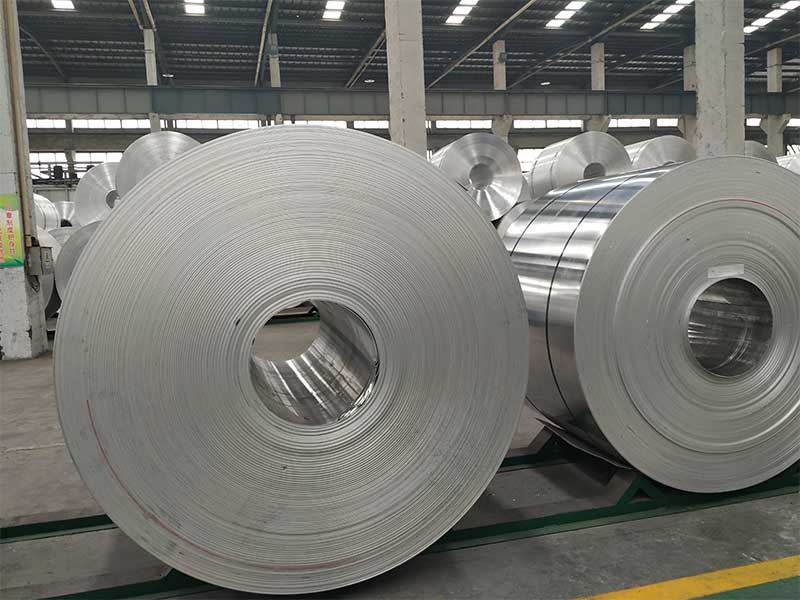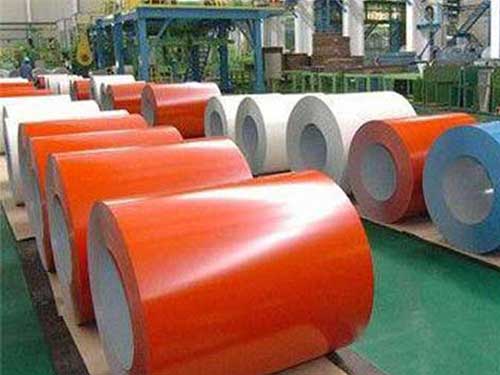

Aluminum coil 3105 h34
Aluminum coil 3105 H34 is a non-heat-treatable, corrosion‑resistant, medium-strength aluminum-manganese alloy widely used for roofing, facades, closure stock, and general sheet metal work. With excellent formability, good paint adhesion, and stable mechanical properties after cold work hardening, 3105 H34 is a cost-effective choice for decorative and functional building and packaging applications.
Aluminum coil 3105 H34 is an aluminum–manganese alloy supplied in a work-hardened, partially annealed condition. The H34 temper indicates that the coil has been strain-hardened to a strength level between half‑hard and full‑hard and then stabilized to balance formability and strength.
This alloy is essentially a 98% pure aluminum with minor additions of manganese, magnesium, and other elements to enhance mechanical performance and corrosion resistance. It is non-heat-treatable, meaning its strength is developed through cold working rather than heat treatment, which simplifies processing and guarantees consistent properties across coils.
Features and Benefits
- Medium strength with excellent balance of rigidity and workability
- Outstanding corrosion resistance, suitable for outdoor and humid environments
- Excellent formability: bending, roll forming, stamping, and shallow drawing
- Very good weldability and brazability with common aluminum filler metals
- Good surface quality for painting, powder coating, embossing, and anodizing (decorative)
- Stable mechanical properties in H34 temper for consistent fabrication results
- Non-heat-treatable, simplifying production routes and minimizing distortion
- Lightweight, improving transport, installation speed, and structural efficiency
Typical Applications of 3105 H34 Aluminum Coil
Due to its combination of appearance, strength, and corrosion resistance, 3105 H34 is a standard material in multiple industries.
Building and Construction
- Roofing sheets and coils, including color‑coated systems
- Wall cladding and façade panels
- Soffits, gutters, downspouts, and rainwater systems
- Ceiling panels and interior decorative panels
- Insulation jacketing for HVAC and piping
Packaging and Closures
- Bottle caps and closure stock
- Can lids and lightweight container parts
- Food and beverage packaging components that require good lacquer adhesion
Appliances and General Sheet Metal
- Components for refrigerators, air conditioners, and household appliances
- Furniture trim, nameplates, and display panels
- Signboards, traffic signs, and advertising panels
- Cable wraps and jacketing for insulation and protection
Chemical Composition of Aluminum Alloy 3105
The following table shows typical limits for alloy 3105 according to common international standards. Actual values can vary slightly with production standards, but remain within the specification range.
| Element | Typical Content (%) | Remarks |
|---|---|---|
| Al | Balance | Remainder, typically ≥ 96–98% |
| Si | ≤ 0.60 | Improves castability and strength |
| Fe | ≤ 0.70 | Impurity control; affects strength |
| Cu | ≤ 0.30 | Slightly increases strength |
| Mn | 0.30 – 0.80 | alloying element for strength |
| Mg | 0.20 – 0.80 | Enhances strength and strain hardening |
| Zn | ≤ 0.40 | Minor effect on properties |
| Cr | ≤ 0.10 | Grain control (often residual) |
| Ti | ≤ 0.10 | Grain refiner (often residual) |
| Others (each) | ≤ 0.05 | Controlled impurities |
| Others (total) | ≤ 0.15 | Combined impurity limit |
Mechanical Properties of 3105 H34
The H34 temper is a work-hardened and partially stabilized condition that offers higher strength than O or H14 temper, while still allowing reliable forming and bending.
| Property | Typical Value (H34) | Test Direction / Notes |
|---|---|---|
| Tensile Strength, Rm | 130 – 180 MPa | Longitudinal direction |
| Yield Strength, Rp0.2 | 90 – 140 MPa | Longitudinal direction |
| Elongation (A50), thickness ≥0.5 mm | 5 – 10 % | Depends on thickness and tooling |
| Brinell Hardness (HBW) | Approx. 40 – 55 | Typical range |
| Modulus of Elasticity, E | ~69 GPa | Approximate for wrought aluminum |
| Density | ~2.73 g/cm³ | At room temperature |
| Poisson’s Ratio | ~0.33 | Typical for aluminum alloys |
Values are for reference and vary with product thickness, manufacturing route, and standards (EN, ASTM, GB/T, etc.). Mill test certificates should be consulted for exact batch values.
Physical and Surface Properties
| Parameter | Typical Data |
|---|---|
| Melting Range | ~630 – 655 °C |
| Thermal Conductivity | ~150 – 200 W/(m·K) |
| Electrical Conductivity | ~30 – 40 % IACS |
| Coefficient of Thermal Expansion | ~23.5 × 10⁻⁶ /K (20–100 °C) |
| Reflectivity (uncoated) | High; suitable for decorative use |
| Surface Finish Options | Mill finish, embossed, brushed, color-coated, laminated |
Standard Dimensions and Tolerances
Actual size ranges can be customized, but the following table represents typical production capabilities for aluminum coil 3105 H34.
| Parameter | Typical Range |
|---|---|
| Thickness | 0.20 – 3.0 mm |
| Width | 20 – 1,600 mm |
| Coil Inner Diameter (ID) | 150, 300, 405, 508, 610 mm (depending on needs) |
| Coil Outer Diameter (OD) | Up to 1,800 mm (by agreement) |
| Coil Weight | 0.5 – 5.0 tons per coil (customizable) |
| Flatness | According to EN/ASTM/GB standards |
| Thickness Tolerance | As per relevant standards or tighter on request |
Temper Information: H34 Condition
The H34 temper is defined by a controlled cold-working process followed by partial annealing or stabilization. This ensures that the coil is not overly brittle during forming but retains significantly higher strength than fully soft (O) temper.
| Temper | Description | Characteristics |
|---|---|---|
| O | Annealed | Maximum formability, lowest strength |
| H14 | Half-hard | Moderate strength, good formability |
| H24 | Tempered and partially annealed | Similar strength to H14, improved stability |
| H34 | Work hardened, stabilized | Higher strength than H24, stable properties |
| H18 | Full-hard | Highest strength, limited formability |
For many roofing, closure, and panel applications, H34 is selected because it handles roll forming, bending, and punching without cracking, while providing sufficient stiffness to resist denting and deformation in service.
Formability, Machinability, and Joinability
Formability
3105 H34 offers very good forming performance for:
- Roll forming and bending for roofing and façade profiles
- Shallow drawing and stamping for caps and closure stock
- Embossing patterns (stucco, diamond, orange peel) for decorative and anti-slip surfaces
Tighter radii or deep draws may require optimization of tool design, lubrication, and possibly a softer temper.
Machinability
- Machinability is fair to good for light milling, drilling, and cutting
- Carbide or high-speed steel tools with appropriate cutting speeds give clean edges
- Burrs are usually minimal when proper clearance and sharp blades are used in shearing or slitting
Welding and Brazing
3105 is well suited for most common joining methods.
| Joining Method | Suitability | Notes |
|---|---|---|
| MIG / TIG Welding | Very good | Use suitable 3xxx or 4xxx series filler wires |
| Resistance Welding | Good | Good electrical conductivity aids process |
| Brazing | Good | Compatible with aluminum brazing fluxes |
| Soldering | Limited | Requires proper fluxes; not commonly used |
| Adhesive Bonding | Very good | Excellent with properly prepared surfaces |
Painted or coated coils should be welded only after assessing coating behavior under heat or by pre-designing uncoated weld zones.
Surface Treatment and Coating Options
Aluminum coil 3105 H34 is widely used as a substrate for coatings and decorative finishes due to its clean surface and stable oxide layer.
Common finishes include:
- Color-coated (PE, PVDF, HDPE) for roofing and façade systems
- Clear or tinted lacquer for closure stock
- Anodic coatings for decorative and corrosion protection (primarily thin decorative layers)
- Embossed finishes for insulation jacketing and decorative panels
Proper pre-treatment (degreasing, chromate‑free conversion coatings, or other pretreatment systems) ensures excellent adhesion and long-term durability of organic coatings.
Advantages Compared with Other Alloys
Compared with 1100 and 1050:
- Higher strength due to manganese and magnesium additions
- Still retains good formability and corrosion resistance
Compared with 3003:
- Similar performance; 3105 may offer better response to surface finishing and painting in some applications
Compared with 5xxx series (e.g., 5052):
- Slightly lower strength but often more economical
- Very sufficient for non-structural building and packaging uses
Typical Quality and Certification Options
Manufacturers can supply aluminum coil 3105 H34 with various industry certifications and quality controls:
| Item | Availability (Typical) |
|---|---|
| Mill Test Certificate | EN 10204 type 2.2 or 3.1 |
| Standards Compliance | EN 573 / EN 485 / ASTM B209 / GB/T standards (depending on region) |
| Surface Quality | Controlled per customer specification and standard tolerances |
| Coating Standard | ISO, AAMA, or equivalent for prepainted coils |
| Environmental Compliance | RoHS, REACH, and lead‑free coatings (by agreement) |